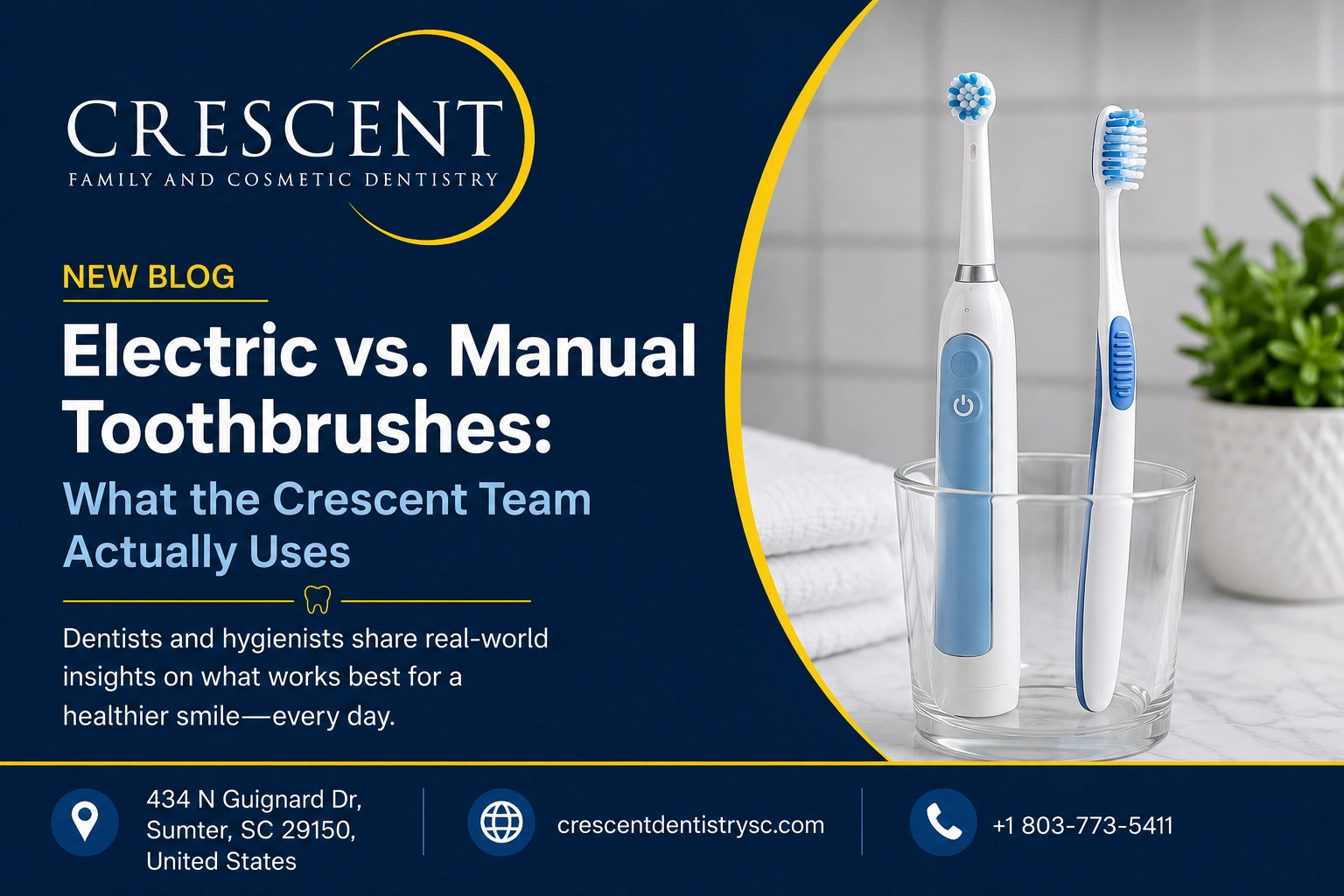
Electric vs. Manual Toothbrushes: What the Crescent Team Actually Uses
This question comes up constantly in dental offices:
“Do I really need an electric toothbrush, or is that just marketing?”
Here is the honest answer:
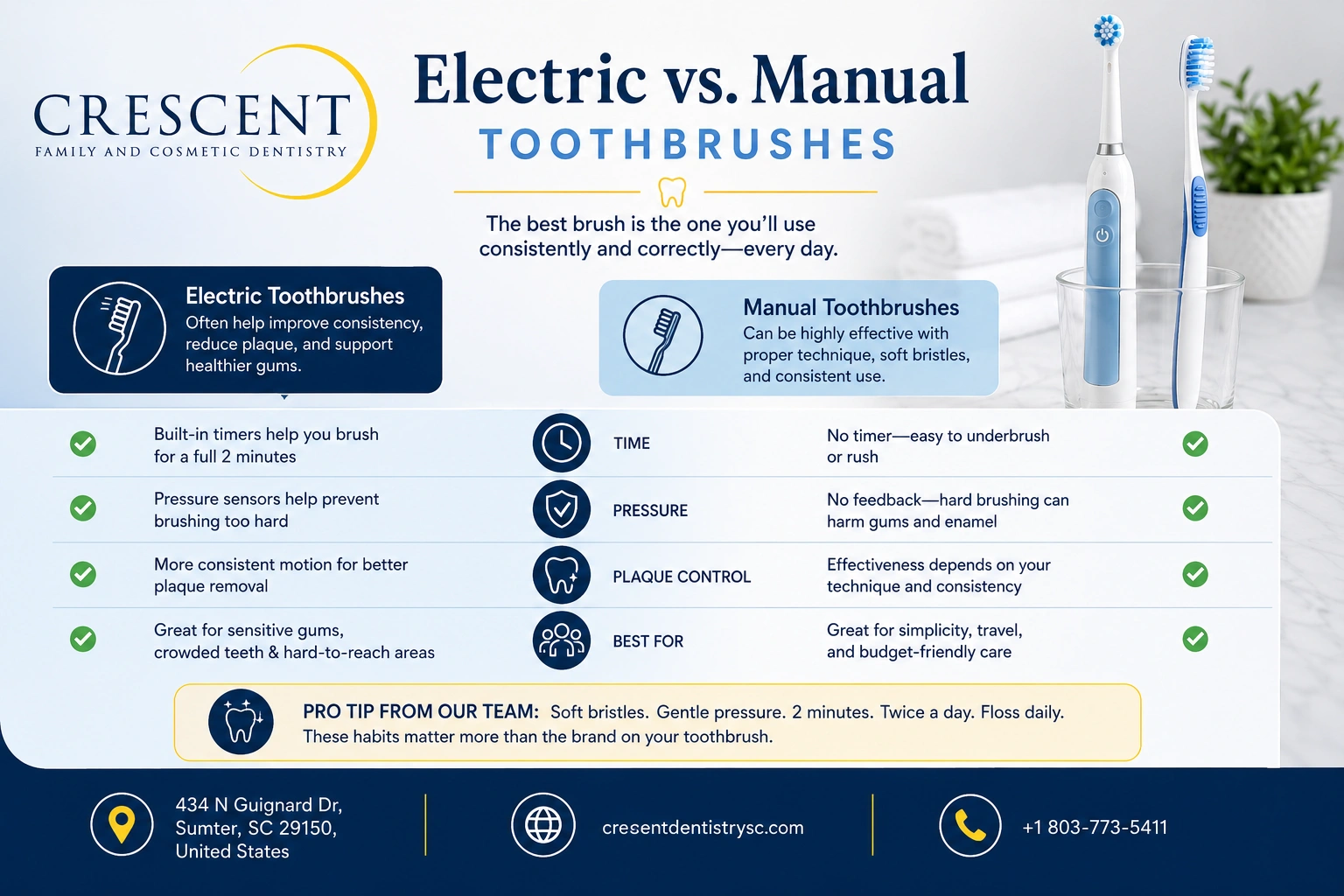
A manual toothbrush can absolutely clean your teeth effectively.
But most people brush better with an electric toothbrush.
That is the part that matters.
Ready to Upgrade Your Brushing Routine?
Get personalized toothbrush recommendations from the Crescent team. Call today to find what works best for your smile.
At Crescent Family & Cosmetic Dentistry, the dentists and hygienists in our Sumter and Columbia offices see the difference every day.
Patients using electric toothbrushes often have:
- less plaque buildup
- healthier gums
- less aggressive brushing damage
- more consistent brushing habits
That does not mean everyone needs a $300 toothbrush.
And honestly, some electric toothbrushes are overpriced.
But for many adults — especially people with gum inflammation, crowded teeth, braces, heavy plaque buildup, or inconsistent brushing habits — an electric toothbrush is usually the better tool.
The important word there is “tool.”
A great toothbrush used poorly still produces poor results.
And a basic toothbrush used correctly can still outperform an expensive toothbrush used carelessly.
So let’s talk about what actually matters, what the Crescent team tends to recommend, and what many dentists personally use at home.
The Short Answer: Electric Toothbrushes Usually Win for Real-World Patients
If we are talking pure effectiveness for the average person, electric toothbrushes generally perform better.
Why?
Because they help compensate for common brushing mistakes.
Most people:
- brush too hard
- brush too fast
- miss certain areas
- stop too early
- use poor technique
- rush the gumline
Electric toothbrushes improve consistency.
That matters more than branding.
The Biggest Mistake People Make With Manual Toothbrushes
Most manual brushers scrub.
Hard.
Especially adults.
People assume:
“Harder brushing = cleaner teeth.”
Usually the opposite is true.
Aggressive brushing can contribute to:
- gum recession
- enamel wear
- tooth sensitivity
- notching near the gumline
Dentists see this constantly.
Some patients have gums that look “injured,” not because they avoided brushing — but because they brushed too aggressively for years.
Many electric toothbrushes help reduce this problem because:
- the bristles move for you
- pressure sensors warn against hard brushing
- timers slow people down
- the brush does more of the work
That is one reason hygienists often recommend them.
What the Crescent Team Actually Sees Clinically
This is where real-world dentistry matters more than internet opinions.
Patients who consistently use quality electric toothbrushes often come into cleanings with:
- less tartar buildup
- reduced gingivitis
- healthier gum measurements
- fewer inflamed areas
- better plaque control around back teeth
Especially around:
- lower front teeth
- molars
- gumlines
- crowded teeth
Now, to be fair:
Some manual brushers have excellent oral hygiene.
Usually because they are:
- meticulous
- patient
- using proper technique
- brushing long enough
But the average patient does not brush perfectly.
Electric toothbrushes help bridge that gap.
What Many Dentists and Hygienists Personally Use
Here is the interesting part.
A large percentage of dental professionals personally use electric toothbrushes themselves.
Not because they are sponsored.
Because they work.
Most dental teams are not emotionally attached to toothbrush brands.
They care about:
- plaque removal
- gum health
- consistency
- long-term results
That said, not every expensive toothbrush is necessary.
Some premium models add features most people will never use.
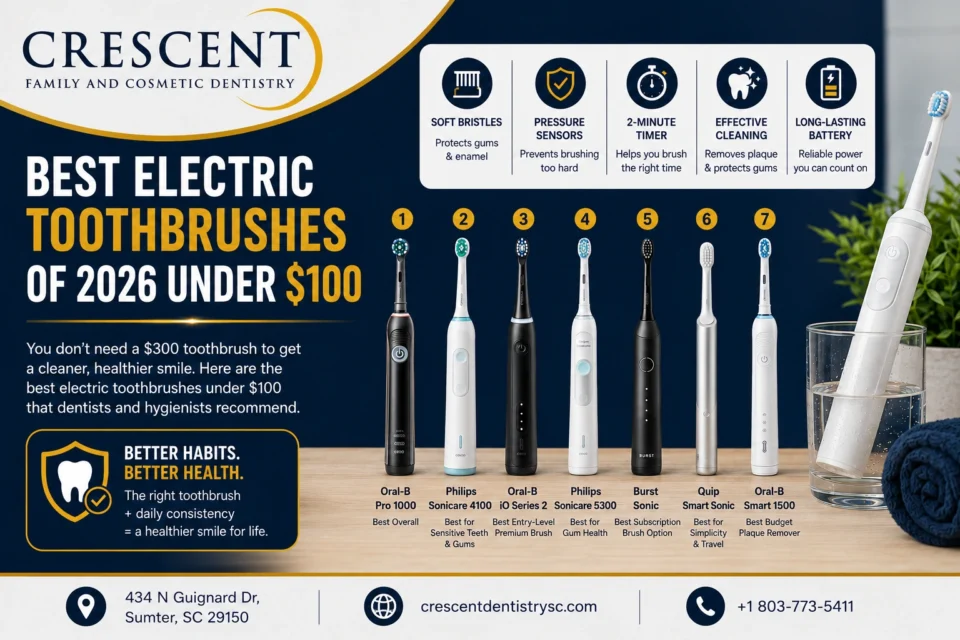
For patients comparing options, a look at the best electric toothbrushes under $100 can be more useful than focusing on premium models packed with features they may never need.
Sonic vs. Oscillating Toothbrushes
This is where patients get overwhelmed.
There are two major categories.
Sonic Toothbrushes
Examples include:
- Philips Sonicare
These use high-frequency vibration and sweeping motion.
Patients often like them because they:
- feel gentler
- cover larger surface areas
- create a “clean” feeling
- work well around gums
Many hygienists like sonic brushes for patients with sensitive gums.
Oscillating-Rotating Toothbrushes
Examples include:
- Oral-B electric models
These use small rotating heads.
They are often excellent for:
- plaque removal
- targeting individual teeth
- patients with heavy buildup
Some studies suggest oscillating brushes may slightly outperform sonic brushes for plaque removal.
But honestly, both are usually good options.
Technique and consistency matter more than obsessing over categories.
The Best Toothbrush Is the One You Will Actually Use Properly
This is the truth nobody likes because it is less exciting.
The “best” toothbrush is:
- comfortable
- consistent
- easy to maintain
- used twice daily
- paired with flossing
A $30 electric toothbrush used consistently beats a premium brush sitting in a drawer.

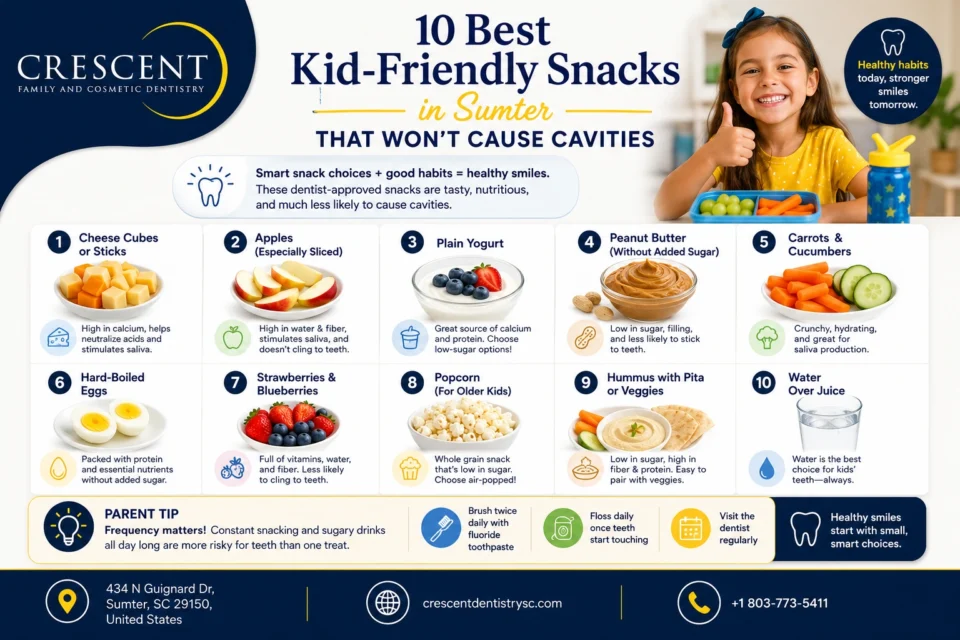
10 Best Kid-Friendly Snacks in Sumter That Won’t Cause Cavities
Parents in Sumter hear mixed messages about snacks constantly. One person says crackers are fine. Another says fruit is “full…
You Probably Do Not Need the Most Expensive Model
This is where dentists tend to disagree with marketing departments.
Many high-end electric toothbrushes now include:
- Bluetooth tracking
- brushing maps
- coaching apps
- AI brushing analysis
- multiple intensity modes
Some patients love that.
Most do not need it.
In many cases, a mid-range electric toothbrush performs extremely well.
The core features that actually matter are:
- soft bristles
- two-minute timer
- pressure sensor
- reliable brushing motion
Everything beyond that is optional.
Manual Toothbrushes Are Still Completely Acceptable
This part matters too.
Some patients assume dentists think manual brushes are “bad.”
Not true.
Manual toothbrushes can work very well.
Especially if:
- you use soft bristles
- your technique is good
- you brush for a full two minutes
- you angle toward the gumline properly
- you brush consistently
The problem is not the manual brush itself.
The problem is how most people use it.
Soft Bristles Matter More Than People Realize
This is one area dentists feel strongly about.
Use soft bristles.
Not medium.
Not hard.
Hard bristles are rarely necessary and often harmful.
Many patients mistakenly think firmer bristles clean better.
Usually they just create more abrasion.
If your toothbrush bristles flare outward quickly, you are probably brushing too aggressively.
Children Often Do Better With Electric Toothbrushes Too
Especially kids who:
- rush brushing
- dislike brushing
- wear braces
- struggle with coordination
Electric toothbrushes can make brushing easier and more engaging.
But supervision still matters.
A fancy toothbrush does not automatically produce good brushing habits.
What About Whitening Toothbrushes?
Most “whitening” toothbrush marketing is exaggerated.
Toothbrushes remove surface stains.
They do not fundamentally whiten teeth the way professional whitening or whitening agents do.
Some whitening-focused brushes are also too abrasive.
That is another reason soft bristles matter.
The Bigger Problem Usually Is Not the Toothbrush
Honestly?
Flossing is the bigger issue for most adults.
A great toothbrush still cannot fully clean between teeth.
That is where cavities and gum disease often begin.
Many patients focus heavily on:
- brush brands
- whitening claims
- fancy technology
…while barely flossing.
That is like washing only half your car.
Signs Your Current Toothbrush Routine Is Not Working
You may need to improve your brushing if you regularly experience:
- bleeding gums
- bad breath
- heavy tartar buildup
- gum recession
- recurring cavities
- staining near the gums
- plaque along lower front teeth
Sometimes technique adjustments alone help significantly.
Sometimes switching to an electric brush makes a noticeable difference quickly.
One Thing Many Patients Notice Immediately
Patients switching to electric toothbrushes often say:
“My teeth feel cleaner.”
That is not just marketing psychology.
Electric brushes tend to produce:
- more uniform brushing
- better gumline cleaning
- improved plaque disruption
Especially for patients who previously rushed manual brushing.
So What Does the Crescent Team Actually Recommend?
Usually something practical.
Not the most expensive option.
Not the trendiest influencer product.
Just a quality electric toothbrush with:
- soft bristles
- a timer
- pressure control
- reliable performance
And if a patient prefers manual brushing?
We focus on:
- technique
- pressure
- brushing time
- gumline cleaning
- flossing habits
Because ultimately, consistency beats hype.
The Bottom Line
Manual toothbrushes can absolutely work.
But in real-world dentistry, electric toothbrushes usually help patients clean more effectively and more consistently.
That is why many dentists and hygienists personally use them themselves.
At Crescent Family & Cosmetic Dentistry, the goal is not selling patients expensive gadgets.
It is helping patients in Sumter and Columbia build habits that realistically protect their teeth and gums long term.
And for many adults, an electric toothbrush is one of the easiest upgrades they can make for their oral health.
FAQs About Electric vs. Manual Toothbrushes
Are electric toothbrushes really better?
For most patients, yes.
Studies and clinical experience generally show improved plaque removal and gum health with electric toothbrushes.
What type of toothbrush do dentists recommend?
Usually soft-bristled brushes — often electric models with timers and pressure sensors.
Can brushing too hard damage teeth?
Yes.
Aggressive brushing can contribute to gum recession and enamel wear.
Are expensive toothbrushes worth it?
Sometimes, but not always.
Many mid-range electric toothbrushes perform extremely well.
Is Sonicare or Oral-B better?
Both can work very well.
The better choice is usually the one you will use consistently and correctly.
How often should toothbrush heads be replaced?
Usually every 3 months, or sooner if bristles become frayed.
Can kids use electric toothbrushes?
Yes.
Many children do very well with electric toothbrushes, especially with supervision.
What matters more than the toothbrush itself?
Consistency, technique, brushing duration, and flossing habits matter more than branding alone.
Electric or Manual? Let Us Help You Choose
Not sure which toothbrush is right for you? Get practical guidance from the Crescent team. Call us today.