10 Best Kid-Friendly Snacks in Sumter That Won’t Cause Cavities
Parents in Sumter hear mixed messages about snacks constantly.
One person says crackers are fine.
Another says fruit is “full of sugar.”
Then somebody hands your child gummy fruit snacks marketed as “healthy” while your dentist quietly watches another cavity form.
Here is the honest answer:
Kids do not get cavities simply because they eat sugar.
They get cavities because certain foods:
- stick to teeth
- feed cavity-causing bacteria
- stay on teeth for long periods
- are eaten constantly throughout the day
Frequency matters just as much as the snack itself.
Protect Their Smiles From Cavities
Discover kid-friendly snack choices that taste great and help keep little teeth healthy. Call us today for trusted pediatric dental care.
At Crescent Family & Cosmetic Dentistry, one of the biggest patterns we see in children with recurring cavities is not necessarily candy binges.
It is constant grazing.
Goldfish crackers every hour.
Juice boxes all afternoon.
Fruit snacks after sports.
Sweet tea in sippy cups.
Even snacks marketed as “organic” or “natural” can still be rough on teeth.
The good news?
There are plenty of realistic kid-friendly snacks that are much less likely to contribute to cavities.
And no, your child does not have to survive on celery sticks to protect their teeth.
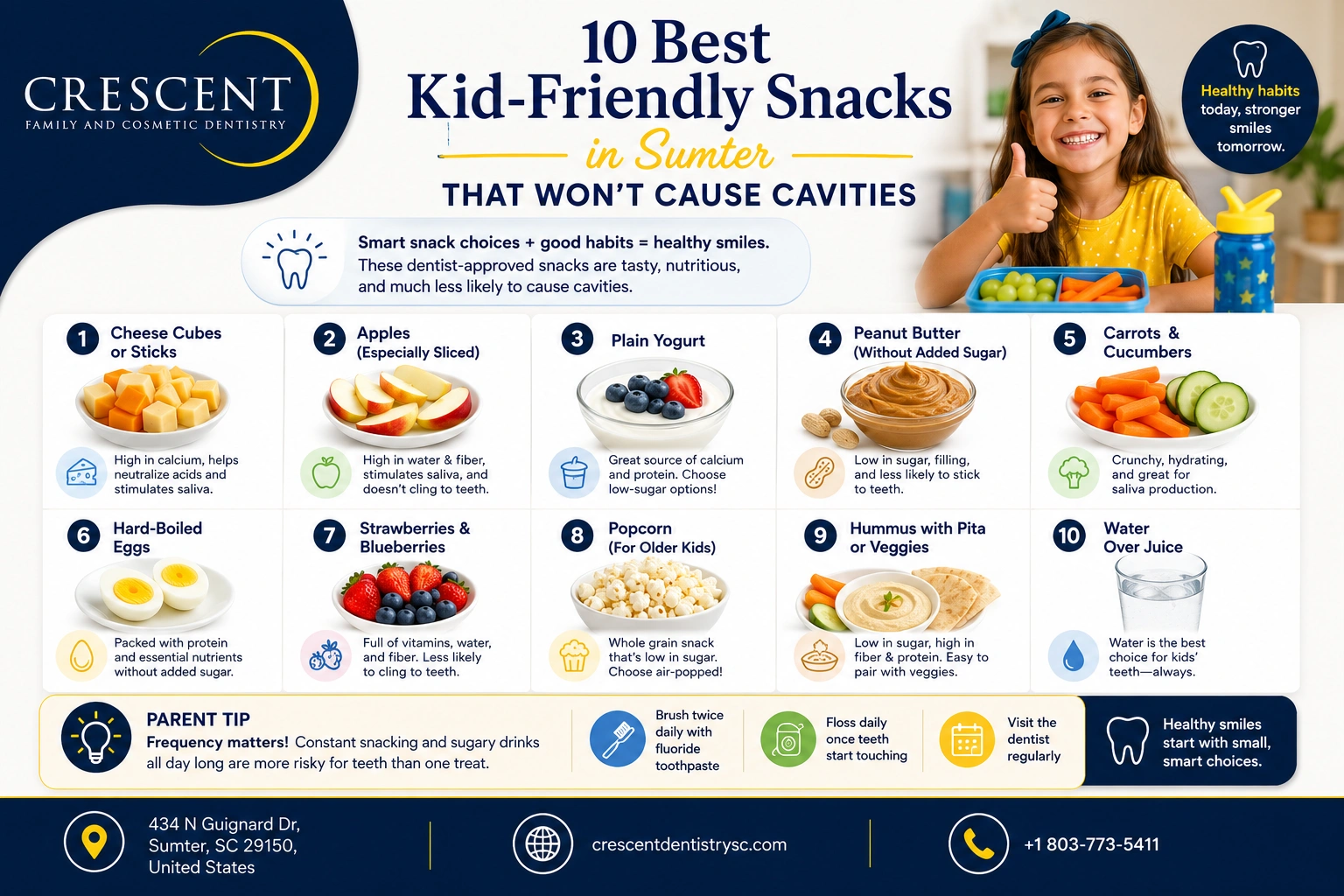
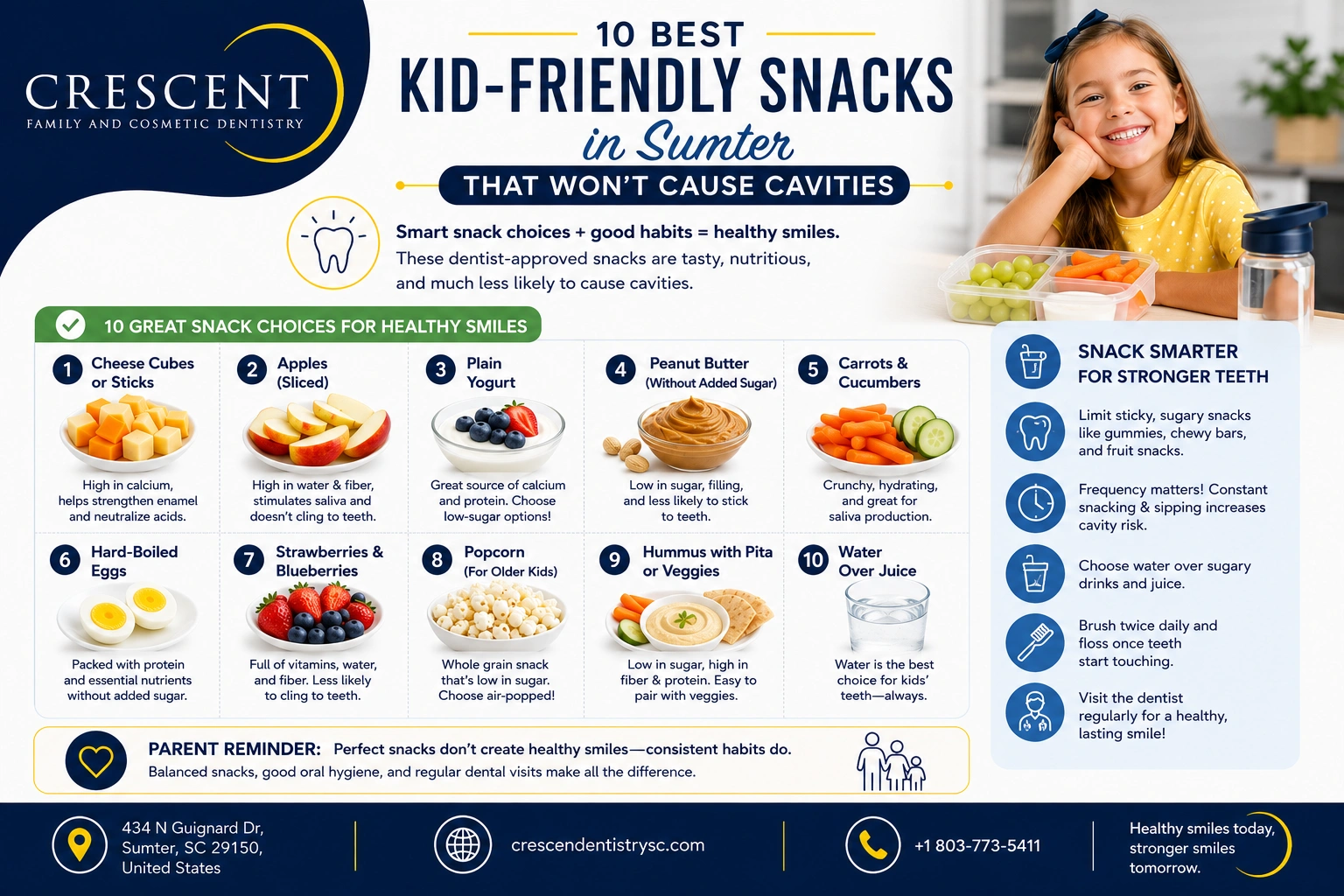
Here are 10 practical cavity-friendlier snacks many dentists actually like for kids in Sumter and Columbia.
1. Cheese Cubes or Cheese Sticks
This is one of the best dental snacks available.
Seriously.
Cheese helps because it:
- contains calcium and phosphorus
- stimulates saliva
- helps neutralize acids in the mouth
- is low in sugar
Saliva matters more than most parents realize.
It naturally helps wash bacteria and food particles away from teeth.
Cheese is also filling, portable, and realistic for busy families.
Good options:
- mozzarella sticks
- cheddar cubes
- Colby jack slices
Less ideal:
- sticky processed cheese spreads loaded with added sugars
2. Apples (Especially Sliced)
Apples are not “toothbrushes,” despite what the internet says.
But they are still a much better snack than gummy snacks or cookies.
Apples contain natural sugar, yes.
But they also:
- contain water
- stimulate saliva
- do not cling heavily to teeth
- are far less cavity-promoting than sticky processed snacks
Sliced apples are often easier and safer for younger children.
Bonus tip:
Pair apples with cheese or peanut butter for a more balanced snack.
3. Plain Yogurt
Yogurt can be excellent for teeth.
The problem is that many kid yogurts are basically dessert.
Some contain as much sugar as ice cream.
Better choices:
- plain yogurt
- lower-sugar Greek yogurt
- yogurt with fresh fruit added manually
Yogurt contains:
- calcium
- protein
- beneficial bacteria
Those are all positives for oral health.
Just avoid letting kids slowly sip sugary yogurt drinks all day long.
That constant sugar exposure matters.
4. Peanut Butter (Without Added Sugar)
Peanut butter is usually far less harmful than sticky candy or fruit snacks.
It provides:
- protein
- healthy fats
- satiety
And unlike gummies, it does not coat teeth with concentrated sugar crystals.
Good options:
- natural peanut butter
- almond butter
- unsweetened nut butters
Watch out for:
- heavily sweetened spreads
- peanut butter candies
- chocolate-hazelnut spreads marketed as “healthy”
Those are very different things.
5. Carrots and Cucumbers
Raw crunchy vegetables are excellent snack choices for many kids.
Especially:
- baby carrots
- cucumber slices
- bell pepper strips
These snacks:
- contain lots of water
- do not feed cavity bacteria aggressively
- stimulate chewing and saliva
Now, to be fair:
Vegetables are not magical cavity preventers.
But compared to sticky processed snack foods, they are much friendlier to teeth.
6. Hard-Boiled Eggs
This one surprises parents sometimes.
Eggs are fantastic low-sugar snacks.
They provide:
- protein
- phosphorus
- nutrients important for teeth
And importantly, they do not bathe the mouth in sugar.
They are also very filling, which can reduce constant snacking behavior.
7. Strawberries and Blueberries
Fruit is not the enemy.
Sticky processed snacks are usually far worse than whole fruit.
Berries are generally great options because they:
- contain fiber
- contain water
- do not cling aggressively to teeth
- are nutritionally dense
Frozen berries can also work well during hot South Carolina summers.
Just avoid:
- fruit gummies
- “fruit leather”
- sticky dried fruit snacks
Those are much rougher on teeth.
8. Popcorn (For Older Kids)
Plain popcorn is much better than many packaged snack crackers.
Especially compared to:
- chips
- cheesy crackers
- sticky snack mixes

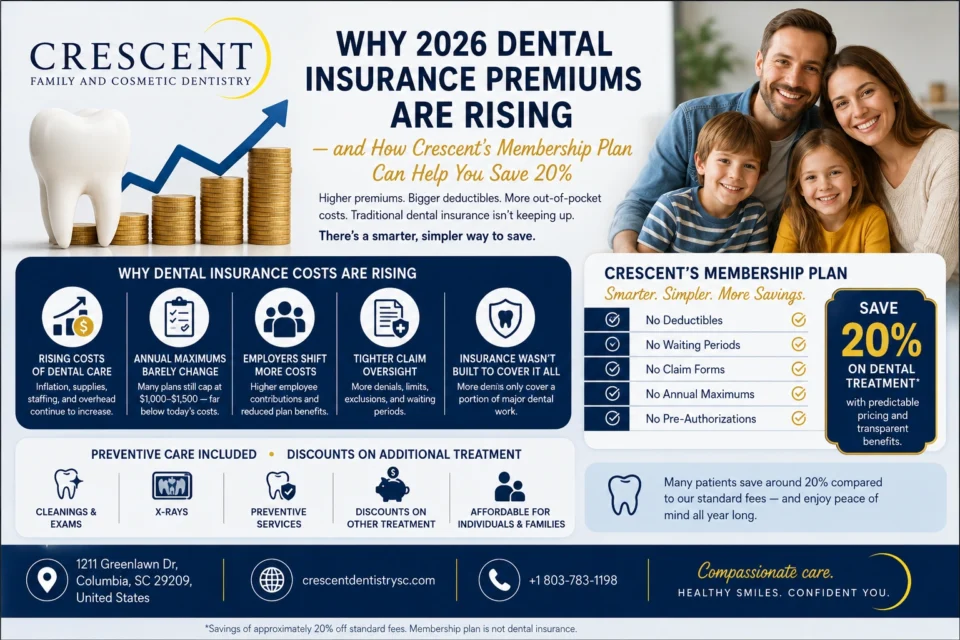
Why 2026 Dental Insurance Premiums Are Rising — and How Crescent’s Membership Plan Can Help You Save 20%
If your dental insurance premium increased for 2026, you are not imagining it. Across South Carolina and the rest of…
Why?
Because refined starches can break down into sugars that feed cavity-causing bacteria.
The downside:
Popcorn kernels can sometimes get stuck between teeth.
So flossing still matters.
Also:
Avoid heavily caramel-coated popcorn if the goal is cavity prevention.
9. Hummus and Pita or Veggies
Hummus is one of the more underrated kid snacks.
It is:
- lower in sugar
- filling
- easy to pair with vegetables
- less cavity-promoting than processed sweets
For picky eaters, hummus often works better than forcing plain vegetables alone.
10. Water Instead of Juice Boxes
This is the most important “snack” recommendation on the list.
What kids drink matters enormously.
Many children constantly sip:
- juice
- sports drinks
- flavored milk
- sweet tea
- soda
- fruit punch
Even 100% juice still exposes teeth to sugar and acid repeatedly.
Water is the best everyday drink for teeth.
Especially fluoridated water.
Parents are often shocked how many cavities improve simply by reducing constant sugary drink exposure.
The problem extends beyond children, too. The broader cavity crisis among South Carolina adults shows why building tooth-friendly eating and drinking habits early can matter well beyond childhood.
The Worst “Healthy” Snacks for Cavities
Some of the biggest cavity offenders are foods parents think are healthy.
Examples include:
- gummy fruit snacks
- raisins
- dried fruit
- fruit roll-ups
- chewy granola bars
- sports drinks
- juice pouches
- sticky vitamins
Why are these rough on teeth?
Because they:
- stick in grooves
- stay on teeth longer
- feed bacteria repeatedly
- are often consumed constantly throughout the day
Sticky carbohydrates are often worse than parents realize.
Frequency Matters More Than One Treat
This is one of the most important things parents should understand.
A child eating one cookie with dinner is usually less concerning than a child grazing on crackers and juice for six straight hours.
Why?
Because every sugary or starchy exposure creates an acid attack on teeth.
Constant snacking means constant acid production.
Teeth need recovery time between exposures.
This is why “snack sipping” all afternoon can create more cavities than one dessert eaten quickly.
Bedtime Snacks Are Especially Risky
This matters a lot.
Teeth are more vulnerable overnight because saliva production decreases while sleeping.
Sending kids to bed after:
- juice
- milk
- gummies
- crackers
- sugary snacks
…without brushing creates a much higher cavity risk.
Especially for younger children.
Genetics Matter Too
Some kids seem to get cavities despite decent habits.
Others eat questionable snacks constantly and somehow avoid them.
That is real.
Factors include:
- saliva composition
- enamel strength
- mouth bacteria
- crowding
- genetics
But diet and hygiene still matter enormously regardless of genetics.
Over time, cavities and previous dental work also need monitoring. For adults with older restorations, knowing the signs of problems with old silver fillings can help identify when a filling may need professional evaluation.
The Goal Is Realistic Habits — Not Perfect Parenting
This is important.
No child eats perfectly all the time.
And no dentist expects kids to avoid every sugary snack forever.
The goal is balance and consistency.
Healthy dental habits are usually built through:
- limiting constant sugar exposure
- encouraging water
- brushing twice daily
- flossing
- routine dental visits
- realistic snack choices most of the time
Not perfection.
The Bottom Line
The best kid snacks for teeth are usually:
- low in added sugar
- not sticky
- filling
- high in protein or fiber
- paired with water
And honestly, cavity prevention is often more about reducing constant grazing and sugary drinks than banning every treat.
At Crescent Family & Cosmetic Dentistry, the goal is helping families in Sumter and Columbia make practical decisions that protect children’s teeth without turning snack time into a battle.
Because healthy smiles are built more by consistent everyday habits than by occasional treats.
FAQs About Kids’ Snacks and Cavities
What snack causes the most cavities?
Sticky sugary snacks like gummies, fruit snacks, and chewy candies are some of the biggest contributors.
Is fruit bad for kids’ teeth?
Whole fruit is generally much better than sticky processed snacks and sugary drinks.
Are crackers bad for teeth?
Some crackers break down into sugars and stick in teeth, especially frequent snacking throughout the day.
Is juice healthier than soda for teeth?
Not necessarily.
Many juices still contain significant sugar and acid exposure.
What is the best drink for kids’ teeth?
Water.
Especially fluoridated water.
Are gummy vitamins bad for teeth?
They can be.
Many gummy vitamins stick to teeth similarly to candy.
Do kids really need flossing?
Yes.
Especially once teeth begin touching together.
What matters most for cavity prevention?
Consistent brushing, flossing, limiting constant sugar exposure, and regular dental visits matter more than one specific snack choice.
Keep Little Teeth Cavity-Free
Good snacks and regular dental care go hand in hand. Call today to give your child’s smile the protection it deserves.