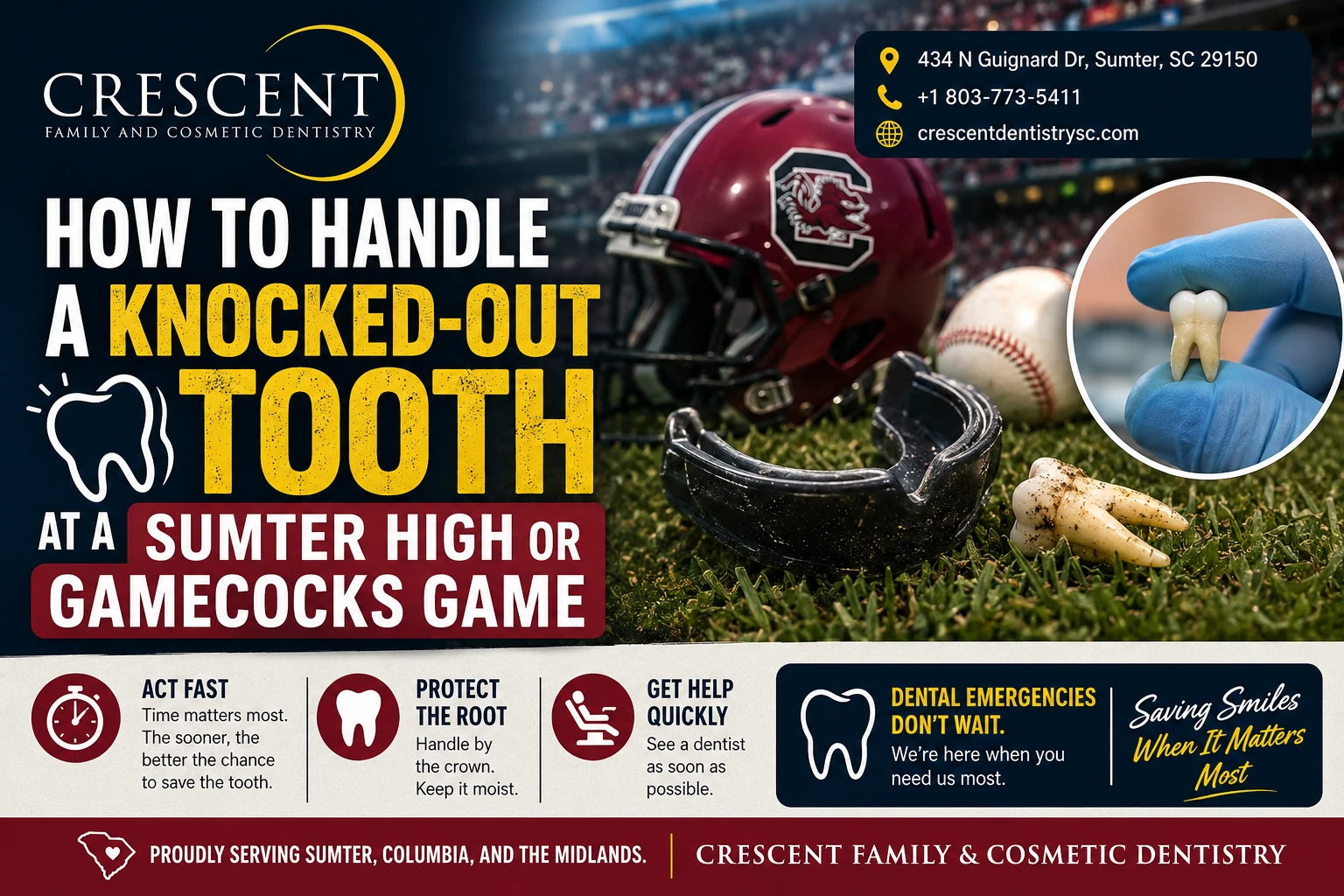
How to Handle a Knocked-Out Tooth at a Sumter High or Gamecocks Game
It happens faster than most parents expect.
A baseball takes a bad hop.
An elbow flies during a basketball rebound.
A football collision sends a player to the turf.
One moment everyone is focused on the game. The next, someone is holding their mouth and a tooth is lying on the ground.
If you’ve never dealt with a knocked-out tooth before, panic is a natural reaction.
But what you do in the next few minutes can dramatically affect whether that tooth can be saved.
The good news is that a knocked-out permanent tooth is one of the few true dental emergencies where immediate action can sometimes allow the tooth to be successfully replanted.
The bad news is that time matters.
Whether you’re at a Sumter High football game, a Gamecocks baseball game in Columbia, a youth soccer tournament, or a recreational sports event anywhere in the Midlands, knowing what to do could make the difference between saving and losing a tooth.
At Crescent Family & Cosmetic Dentistry, we regularly help patients experiencing dental emergencies. When it comes to a knocked-out tooth, preparation and quick action are often more important than people realize.
Knocked-Out Tooth? Act Fast.
Get immediate dental care to help save your tooth. Call now for urgent treatment after a sports injury.
First: Is the Entire Tooth Actually Out?
After a sports injury, emotions run high.
Before doing anything else, take a breath and assess the situation.
Not every dental injury is the same.
The tooth may be:
- Completely knocked out
- Chipped
- Cracked
- Loosened
- Pushed out of position
- Broken below the gumline
A completely knocked-out tooth is called an avulsed tooth.
This article focuses on that specific emergency.
If the tooth is merely chipped or loosened, immediate dental care is still important, but the treatment approach will be different.
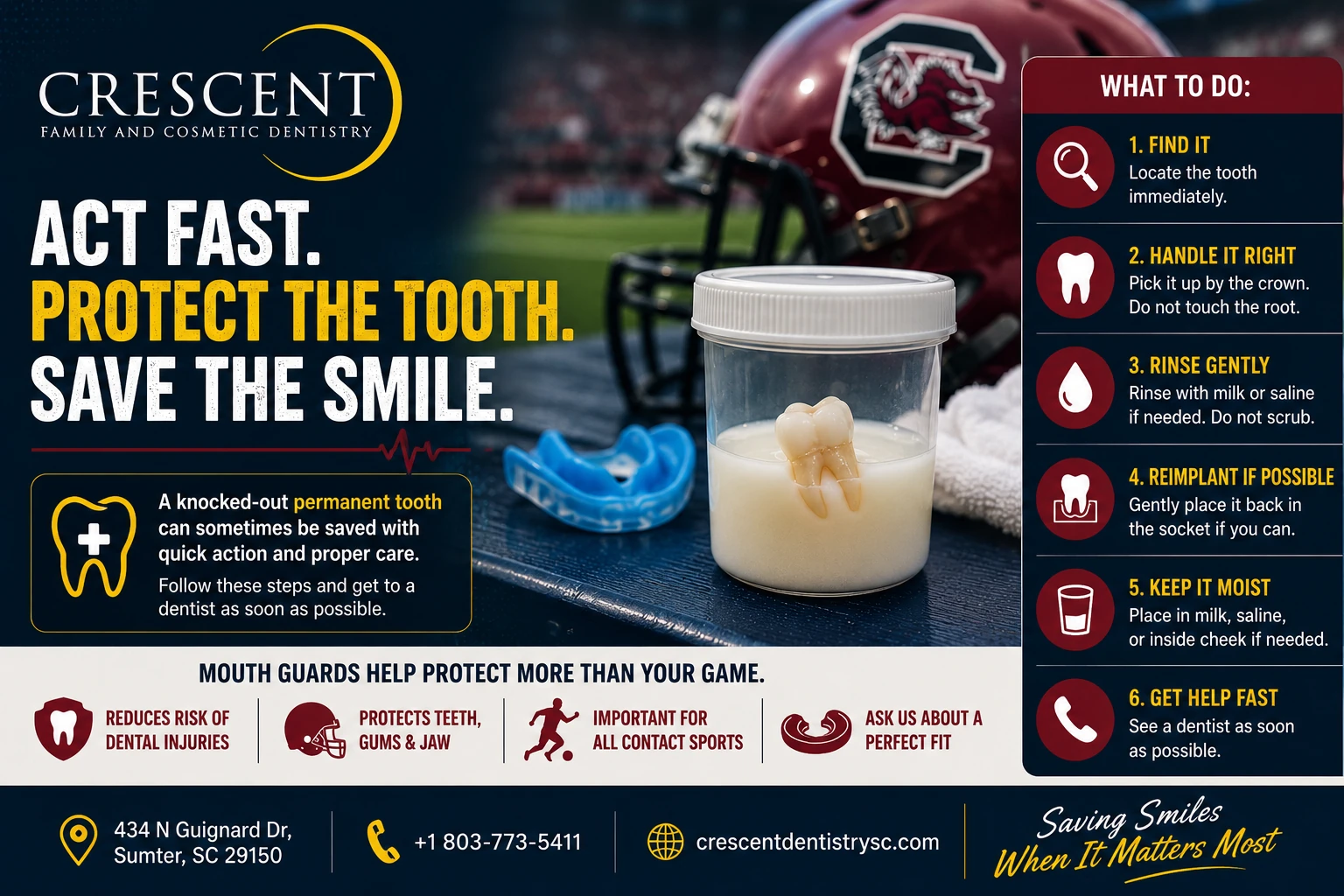
Step #1: Find the Tooth Immediately
This sounds obvious, but sporting events can be chaotic.
The first priority is locating the tooth.
Check:
- The playing surface
- Athletic equipment
- Clothing
- Mouth guards
- Nearby ground areas
If the tooth cannot be located, medical evaluation may be necessary to determine whether it was swallowed or inhaled.
Most of the time, however, the tooth can be found quickly.
Once you find it, how you handle it matters.
Step #2: Pick It Up by the Crown—Not the Root
This is one of the most important steps.
When handling a knocked-out tooth:
Only touch the crown.
The crown is the visible chewing portion of the tooth.
Avoid touching the root whenever possible.
Why?
The root surface contains delicate cells that help the tooth reattach after reimplantation.
Excessive handling can damage these cells and reduce the likelihood of successful treatment.
Think of the root as something you want to protect.
Step #3: If the Tooth Is Dirty, Rinse It Carefully
Many sports injuries occur on:
- Grass fields
- Dirt infields
- Gym floors
- Stadium walkways
The tooth may have dirt or debris attached.
If necessary:
- Gently rinse the tooth with milk or saline solution.
- Clean water can be used if nothing else is available.
- Keep rinsing brief.
Do not:
- Scrub the tooth
- Use soap
- Use disinfectants
- Brush the root
- Wrap it in tissue
A common mistake is aggressively cleaning the tooth.
The goal is removing visible debris while preserving the root surface.
Step #4: If Possible, Place the Tooth Back in the Socket
This is the step that surprises many people.
In some situations, the best place for a knocked-out permanent tooth is back in its socket.
If:
- The injured person is conscious
- They can cooperate
- The tooth is a permanent tooth
- The tooth is intact
carefully attempt to reposition it into the socket.
Once positioned:
- Have the patient gently bite down on gauze or clean cloth.
- Seek emergency dental treatment immediately.
This is not always possible.
Children, significant bleeding, anxiety, or severe trauma may make reimplantation difficult.
That’s okay.
The next step is still critically important.
Step #5: Keep the Tooth Alive
The biggest enemy of a knocked-out tooth is drying out.
A tooth left dry for an extended period becomes much harder to save.
If immediate reimplantation isn’t possible, place the tooth in:
Cold Milk
Milk is widely considered one of the best readily available transport media.
At many sporting events, milk can often be found at concession stands or nearby facilities.
Tooth Preservation Kits
Some athletic trainers carry emergency tooth preservation solutions specifically designed for dental trauma.
Saline Solution
If available, saline can help maintain the root surface.
Inside the Mouth (For Older Patients)
Sometimes the tooth can be stored between the cheek and gums.
This is generally appropriate only when there is no risk of swallowing the tooth.
Avoid Storing the Tooth In:
- Dry napkins
- Paper towels
- Pockets
- Ice
- Plain water for extended periods
The goal is keeping the root surface moist until professional treatment can occur.
Time Matters More Than Most People Realize
When it comes to saving a knocked-out tooth, the clock starts immediately.
The highest success rates generally occur when reimplantation happens quickly.
Ideally:
- Within 30 minutes
- Within 60 minutes whenever possible
This doesn’t mean the tooth is automatically lost after an hour.
However, earlier treatment generally improves the chances of a favorable outcome.
That’s why immediate action is so important.
What If It’s a Baby Tooth?
This is where many parents make a critical mistake.
If a baby tooth is knocked out:
Do not attempt to place it back into the socket.
Unlike permanent teeth, reimplanting baby teeth can potentially damage the developing permanent tooth underneath.
Instead:
- Control bleeding
- Locate the tooth
- Contact a dentist promptly
- Follow professional guidance
The treatment approach for baby teeth differs significantly from permanent teeth.

The Unexpected Connection Between Professional Dental Cleaning and Heart Health
Getting your teeth cleaned might feel like just another item on the to-do list, but skipping it could have bigger…
Common Sports Where Dental Injuries Occur
At local schools and athletic events, dental injuries frequently occur during:
Football
Football remains one of the leading causes of sports-related dental trauma.
Basketball
Elbows, collisions, and falls create substantial risk.
Baseball and Softball
Balls, bats, and unexpected impacts contribute to injuries.
Soccer
Player collisions are common.
Wrestling
Direct facial contact increases risk.
Cheerleading and Gymnastics
Falls can result in dental trauma.
The reality is that any contact sport carries some risk.
What About Mouth Guards?
One of the easiest ways to reduce the risk of dental injuries is wearing a properly fitted mouth guard.
Athletes participating in contact sports should strongly consider mouth protection.
Benefits include:
- Reduced tooth fractures
- Reduced avulsions
- Reduced soft tissue injuries
- Protection during collisions
No mouth guard prevents every injury.
However, they significantly reduce risk.
This is one reason dentists frequently recommend them for young athletes.
Signs You Need Emergency Dental Care Immediately
A knocked-out tooth is already an emergency.
But other symptoms may indicate additional injuries requiring urgent evaluation.
Watch for:
- Severe bleeding
- Difficulty breathing
- Suspected jaw fracture
- Facial asymmetry
- Loss of consciousness
- Significant swelling
- Multiple missing teeth
If serious medical injuries are suspected, seek emergency medical care first.
Dental treatment can follow once the patient is medically stable.
What Happens at the Dental Office?
Many patients wonder what happens after arrival.
Treatment depends on:
- How long the tooth was out
- Patient age
- Root condition
- Bone condition
- Associated injuries
Possible treatments include:
Reimplantation
If conditions are favorable, the tooth may be repositioned.
Stabilization
A temporary splint may be used to support healing.
Follow-Up Monitoring
The tooth will require ongoing evaluation.
Root Canal Therapy
Some replanted teeth eventually require additional treatment.
Every case is unique.
The sooner treatment occurs, the more options may be available.
Even when the immediate emergency is handled successfully, it can be helpful to understand the long-term side effects of tooth extraction in cases where a tooth cannot ultimately be saved and removal becomes necessary.
The Biggest Mistake People Make
Many people focus on stopping the bleeding and forget about the tooth itself.
While controlling bleeding is important, preserving the tooth should happen simultaneously whenever possible.
The most common mistakes include:
- Touching the root excessively
- Scrubbing the tooth
- Letting it dry out
- Delaying treatment
- Storing it improperly
Fortunately, these mistakes are preventable when you know what to do.
A Knocked-Out Tooth Is Frightening—But It Doesn’t Have to Be Hopeless
Sports injuries are stressful.
Parents panic.
Athletes worry.
Coaches feel pressure to make the right decision.
The encouraging news is that knocked-out permanent teeth can sometimes be successfully saved when immediate action is taken.
The key is remembering three priorities:
- Find the tooth.
- Protect the root.
- Get professional care quickly.
Those simple steps can make an enormous difference.
At Crescent Family & Cosmetic Dentistry, our doctors understand how overwhelming dental emergencies can feel. Whether the injury occurs at a Sumter High football game, a Gamecocks sporting event, or a local youth league, prompt evaluation and treatment can help determine the best path forward for protecting your smile.
If the injured tooth was already badly damaged, infected, or unstable before the accident, an emergency exam can also help identify signs you may need a tooth extraction instead of reimplantation or repair.
When the Final Whistle Blows, Know Where to Turn Next
No parent expects to leave a sporting event dealing with a dental emergency.
But when accidents happen, having a plan can make all the difference.
If a permanent tooth has been knocked out, immediate action and prompt dental care provide the best opportunity for saving it. Even if you’re unsure whether the tooth can be preserved, an emergency evaluation is important.
At Crescent Family & Cosmetic Dentistry, patients in Sumter, Columbia, and throughout the Midlands can receive guidance and treatment for dental trauma, sports-related injuries, and urgent dental concerns. The sooner you act, the more options may be available for protecting your long-term oral health.
Frequently Asked Questions
Can a knocked-out permanent tooth really be saved?
Yes. In many cases, prompt action and rapid dental treatment can allow a permanent tooth to be replanted successfully.
How long can a tooth stay out of the mouth?
The sooner treatment occurs, the better. Success rates are generally highest when reimplantation happens within the first hour.
Should I put a knocked-out tooth in water?
Water is generally not ideal for extended storage. Milk, saline solution, or a tooth preservation kit are usually preferred.
What if the tooth is dirty?
Gently rinse it without scrubbing. Avoid damaging the root surface.
Should baby teeth be put back in place?
No. Knocked-out baby teeth should not typically be reimplanted because doing so may affect the developing permanent tooth underneath. Always contact a dentist for guidance.
Dental Emergency During the Game?
A knocked-out tooth needs quick attention. Call now for prompt, professional emergency dental care.