Dental Anxiety: How Crescent’s 2026 VR “Distraction Therapy” Works
For many people, the hardest part of a dental appointment has nothing to do with a cavity, crown, or cleaning.
It’s the anxiety that starts days before the visit.
Maybe your heart races when you think about the sound of a dental drill. Maybe you had a bad experience years ago. Maybe you’ve avoided the dentist for so long that you’re embarrassed to come back.
If any of that sounds familiar, you’re far from alone.
Dental anxiety affects millions of Americans every year. In fact, some studies suggest that fear of dental treatment is one of the most common reasons people postpone care, even when they know they need it.
That’s why many dental practices—including innovative offices across the country—are exploring new ways to make treatment more comfortable. One of the most interesting developments is virtual reality (VR) distraction therapy.
At Crescent Family & Cosmetic Dentistry, patient comfort has always been a priority. As dental technology continues evolving in 2026, tools like VR distraction therapy are creating new possibilities for helping anxious patients feel calmer, more relaxed, and more in control during treatment.
But how does it actually work?
And can watching a virtual beach or mountain trail really make a dental appointment feel easier?
The answer may surprise you.
Nervous About Your Dental Visit?
Discover how Crescent’s VR distraction therapy can help make treatment feel more comfortable. Call today to get started.
What Is Dental Anxiety?
Dental anxiety is more than simply disliking dental visits.
Many anxious patients experience real physical symptoms before or during treatment, including:
- Increased heart rate
- Sweaty palms
- Muscle tension
- Difficulty sleeping before appointments
- Feelings of panic
- Nausea
- Elevated blood pressure
- Fear of pain
- Fear of loss of control
For some people, anxiety is mild.
For others, it’s severe enough to prevent them from scheduling care for years.
One of the biggest misconceptions about dental anxiety is that it only affects children.
In reality, many highly successful adults experience significant fear when sitting in a dental chair.
Teachers, executives, healthcare workers, business owners, military personnel, and retirees all experience dental anxiety.
It’s common. It’s real. And it deserves to be taken seriously.
Why Traditional Approaches Don’t Work for Everyone
Dentists have long used various strategies to help patients relax, including:
- Gentle communication
- Frequent breaks
- Nitrous oxide
- Oral sedation
- Noise-canceling headphones
- Comfort amenities
These approaches can be extremely effective.
However, not every patient wants medication.
Some people prefer a non-pharmaceutical option that allows them to remain fully alert and aware throughout treatment.
That’s where VR distraction therapy enters the conversation.
What Is VR Distraction Therapy?
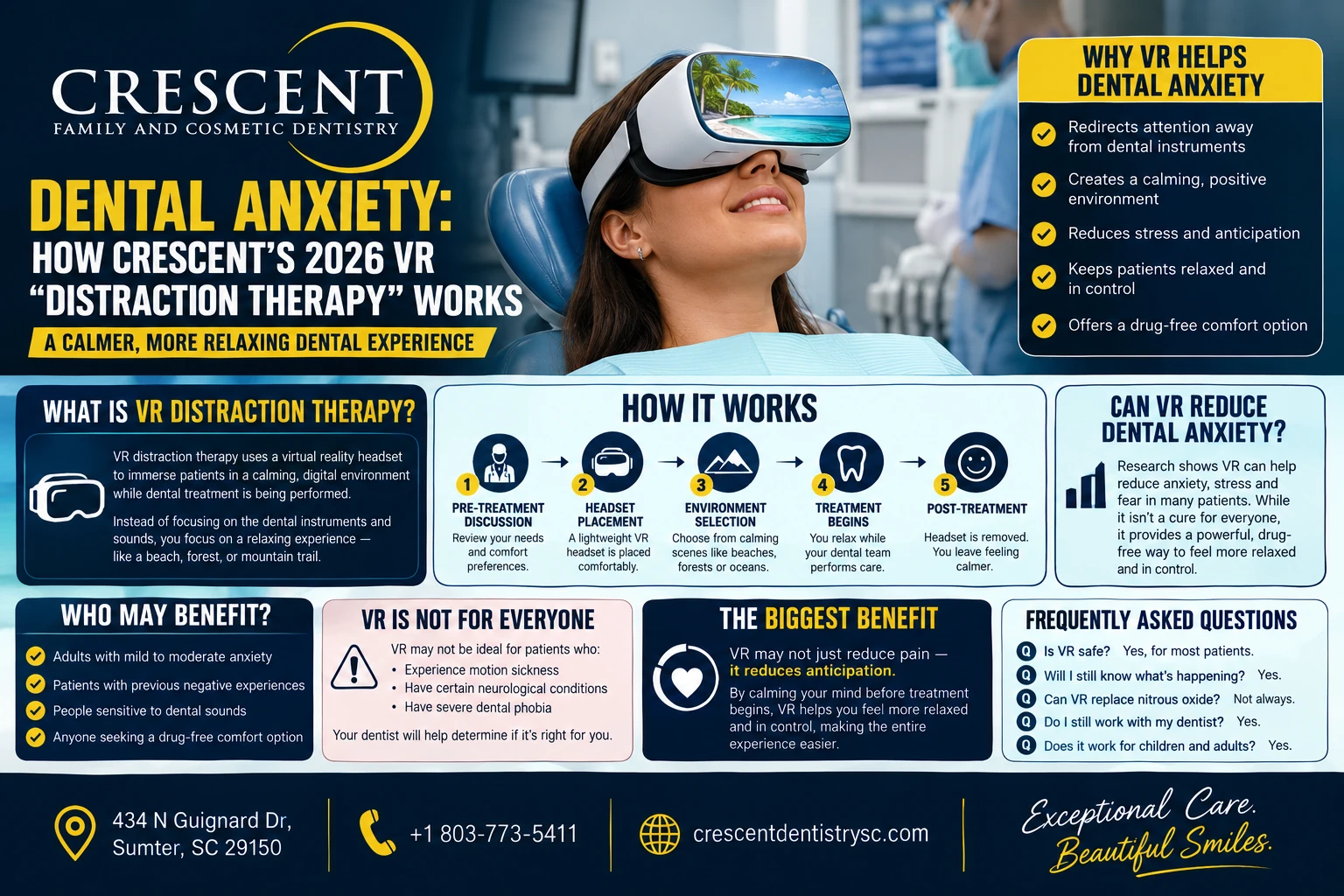
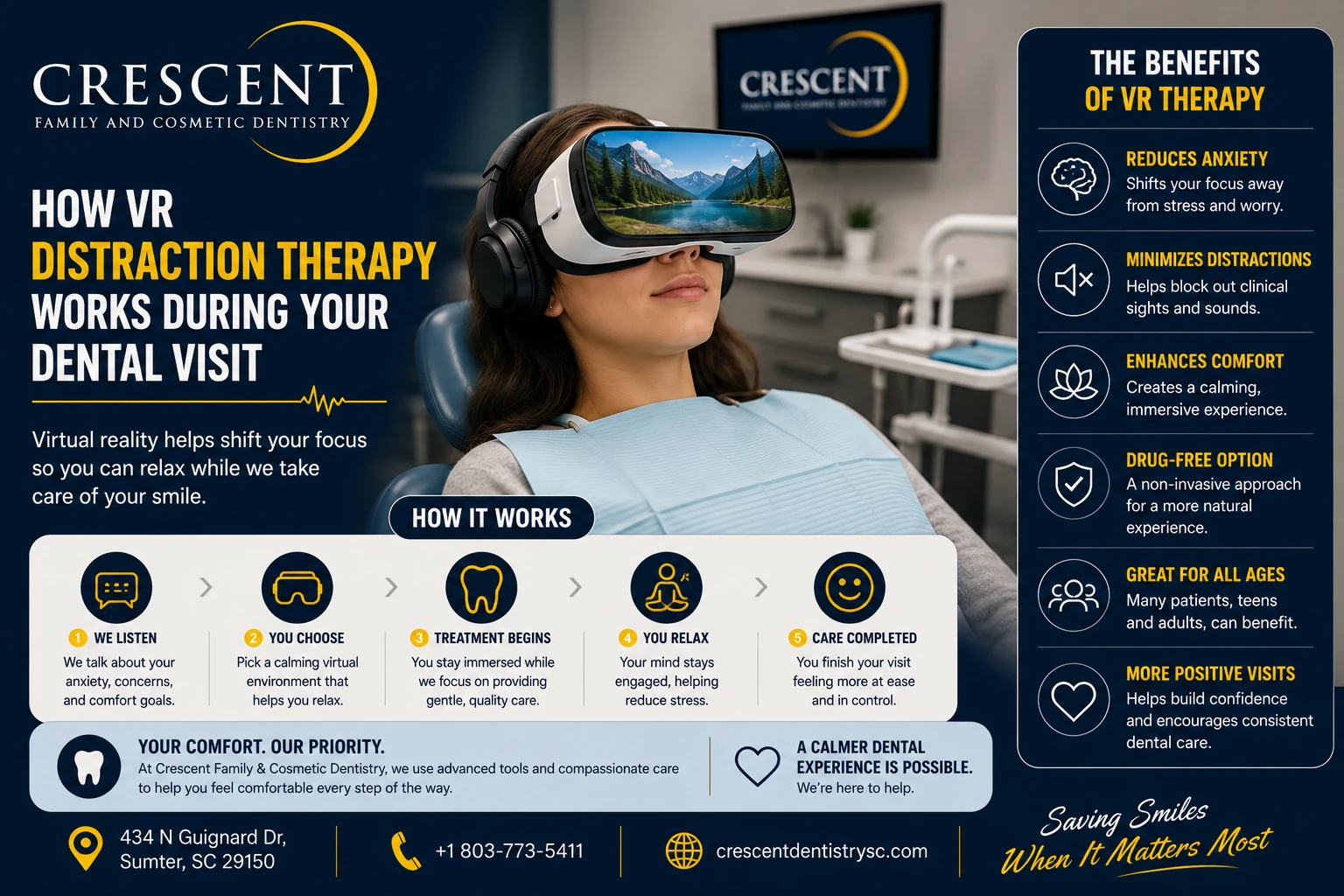
VR distraction therapy uses a virtual reality headset to immerse patients in a calming digital environment while dental treatment is being performed.
Instead of focusing on:
- Dental instruments
- Treatment sounds
- Clinical surroundings
- Anticipatory fear
Patients focus their attention on an entirely different experience.
For example, they may feel like they are:
- Walking through a forest
- Sitting on a tropical beach
- Exploring a peaceful mountain landscape
- Watching guided relaxation experiences
- Viewing immersive nature scenes
The goal isn’t to “knock you out.”
The goal is to redirect your attention.
And attention plays a powerful role in how humans experience stress.
Why Your Brain Responds to Virtual Reality
Here’s something many people don’t realize:
Your brain can only focus intensely on a limited number of things at once.
When anxiety increases, attention narrows.
Patients begin focusing on:
- What might happen
- What they hear
- What they feel
- What they fear
VR creates a competing source of attention.
The immersive visual experience gives your brain something else to process.
Psychologists sometimes refer to this as attentional distraction.
Instead of fixating on dental treatment, the mind becomes engaged elsewhere.
This doesn’t eliminate every sensation.
But it can reduce how much mental energy is devoted to anxiety.
What Happens During a VR Dental Experience?
Many patients imagine complicated gaming equipment.
In reality, the process is usually straightforward.
Step 1: Pre-Treatment Discussion
The dental team reviews:
- Medical history
- Anxiety concerns
- Treatment goals
- Comfort preferences
This helps determine whether VR distraction therapy may be appropriate.
Step 2: Headset Placement
A lightweight VR headset is placed comfortably on the patient.
Modern devices are significantly smaller and more comfortable than earlier virtual reality systems.
Step 3: Environment Selection
Patients may choose from various calming experiences, such as:
- Beaches
- Forests
- Oceans
- Guided meditation scenes
- Relaxation programs
Personal preference matters because different environments create different emotional responses.
Step 4: Treatment Begins
While treatment is performed, the patient remains immersed in the virtual environment.
The dental team continues monitoring comfort throughout the appointment.
Step 5: Post-Treatment Transition
Once treatment is complete, the headset is removed and patients return to the office environment.
Most describe the experience as surprisingly relaxing and less stressful than expected.
Can VR Actually Reduce Dental Anxiety?
Research continues to grow in this area.
Early studies involving medical and dental settings have shown encouraging results.
Virtual reality has been investigated for helping patients manage:
- Anxiety
- Stress
- Medical procedures
- Needle-related fears
- Pain perception
The concept isn’t entirely new.
Hospitals have explored VR technology for years in various healthcare settings.
What is changing in 2026 is accessibility.
The technology is becoming more affordable, more comfortable, and more realistic.
As a result, more healthcare providers are beginning to integrate it into patient care experiences.
Does VR Replace Sedation?
No.
This is an important distinction.
VR distraction therapy is not the same thing as:
- Nitrous oxide
- Oral sedation
- IV sedation
Patients remain awake and aware.
For mild to moderate anxiety, VR may provide meaningful relief on its own.
For severe dental phobia, sedation options may still be appropriate.
In some situations, both approaches could potentially be used together.
The best solution depends on:
- Anxiety level
- Treatment complexity
- Medical history
- Personal preferences
There is no one-size-fits-all answer.

CPAP vs. Dental Appliances for Sleep Apnea: A Midlands Showdown
If you have been diagnosed with obstructive sleep apnea, you have probably heard one treatment recommendation more than any other:…
Who Might Benefit Most From VR Distraction Therapy?
Certain patients may find virtual reality especially helpful.
Adults With Mild to Moderate Anxiety
Many people dislike dental visits but don’t necessarily require sedation.
VR can create a more pleasant experience while keeping patients fully alert.
Patients With Previous Negative Experiences
Bad memories often fuel future anxiety.
Creating a more positive experience can help rebuild trust. Learning how to overcome fear of going to the dentist can also help patients develop practical strategies for making future appointments feel more manageable.
Patients Sensitive to Sounds
Dental noises are a common trigger.
Immersive audiovisual environments can reduce awareness of surrounding distractions.
Technology-Friendly Patients
Many people already use virtual reality through gaming, education, or entertainment.
The concept feels familiar and approachable.
Patients Seeking Drug-Free Options
Some individuals prefer avoiding medications whenever possible.
VR offers an alternative comfort strategy.
Who May Not Be an Ideal Candidate?
While promising, VR is not perfect for everyone.
Certain individuals may not enjoy the experience.
For example:
Patients Prone to Motion Sickness
Some virtual environments can create discomfort for susceptible individuals.
Patients With Certain Neurological Conditions
Medical history should always be reviewed before using VR technology.
Severe Dental Phobia Cases
Patients with intense fear may require additional support beyond distraction therapy alone.
This is why personalized treatment planning remains important.
The Biggest Benefit Isn’t What Most People Think
Many patients assume VR’s biggest advantage is reducing pain.
In reality, its greatest value may be reducing anticipation.
Fear often becomes strongest before treatment begins.
The waiting.
The worrying.
The imagining.
The mental rehearsal of everything that might happen.
When patients become immersed in a relaxing virtual environment, that cycle of anticipation can be interrupted.
Many report feeling calmer before they ever notice a difference in physical sensations.
That’s significant because anxiety often amplifies discomfort.
Reducing fear can improve the entire experience.
Technology Doesn’t Replace Compassion
One thing is important to understand:
No headset can replace a caring dental team.
Technology is a tool.
The foundation of a comfortable dental experience still includes:
- Listening to patient concerns
- Clear communication
- Gentle treatment
- Respectful care
- Transparency
- Trust
The best patient experiences combine modern technology with human connection.
VR may help patients relax, but relationships remain the most important comfort tool in dentistry.
This becomes especially important during after-hours emergency dental calls, when pain and uncertainty can make an already anxious patient feel even more overwhelmed.
Why 2026 Could Be a Turning Point for Anxious Dental Patients
For decades, patients essentially had two choices:
- Endure anxiety.
- Use sedation.
Today, there are more options.
Virtual reality is part of a broader shift toward patient-centered care that recognizes something important:
Dental anxiety is not a weakness.
It’s a healthcare challenge that deserves thoughtful solutions.
As technologies continue improving, patients may have access to more personalized comfort experiences than ever before.
And for people who have avoided care because of fear, that could be life-changing.
Your Comfort Matters Just as Much as Your Smile
Too many people delay treatment because they assume anxiety is something they simply have to tolerate.
It isn’t.
Whether through advanced technology, personalized communication, comfort-focused care, or traditional sedation options, today’s dental practices have more tools available than ever before to help patients feel at ease.
At Crescent Family & Cosmetic Dentistry, our doctors understand that anxiety can be just as real as a toothache. Helping patients feel comfortable, informed, and respected throughout treatment is a critical part of delivering quality care—not an afterthought.
Imagine a Dental Visit That Feels Different Than the Last One
If dental anxiety has caused you to postpone treatment, avoid appointments, or feel stressed every time you think about visiting the dentist, it may be worth exploring the comfort options available today.
Many patients are surprised by how different modern dentistry feels compared to experiences they had years ago.
Whether you’re interested in emerging technologies like VR distraction therapy, want to learn about sedation options, or simply need a dental team that takes your concerns seriously, Crescent Family & Cosmetic Dentistry in Columbia and Sumter can help you understand what solutions may fit your needs.
The goal isn’t just healthier teeth. It’s creating an experience that helps you feel comfortable enough to get the care you deserve.
Frequently Asked Questions
Is VR distraction therapy safe?
For most patients, virtual reality is considered safe when used appropriately. Your dental team should review your medical history and discuss any concerns beforehand.
Will I still know what’s happening during treatment?
Yes. VR distraction therapy does not sedate you. Patients remain awake, alert, and able to communicate throughout treatment.
Can VR replace nitrous oxide?
For some patients with mild anxiety, VR may provide sufficient comfort. Others may still benefit from sedation options. The right approach depends on individual needs.
What if I wear glasses?
Many modern VR systems can accommodate glasses or be adjusted for comfort. Your dental team can help determine the best fit.
Does VR work for children and adults?
Potentially yes. Both children and adults may benefit from distraction-based approaches, although suitability varies depending on age, comfort level, and treatment needs.
Ease Dental Anxiety With VR
Experience a calmer dental visit with Crescent’s VR distraction therapy. Call now to schedule your appointment.