The Retiree Guide to Dental Implants and Medicare in the Midlands
If you’re retired—or approaching retirement—and considering dental implants, you’re probably asking two questions before anything else:
“Will Medicare cover dental implants?”
And:
“Can I realistically afford this?”
Those are fair questions.
Dental implants can be life-changing for retirees dealing with missing teeth, loose dentures, or declining oral health. But they also represent one of the largest investments many people will make in their dental care.
Unfortunately, there’s also a lot of confusion surrounding Medicare coverage, supplemental insurance plans, implant costs, and what options are actually available in South Carolina.
The short answer is this:
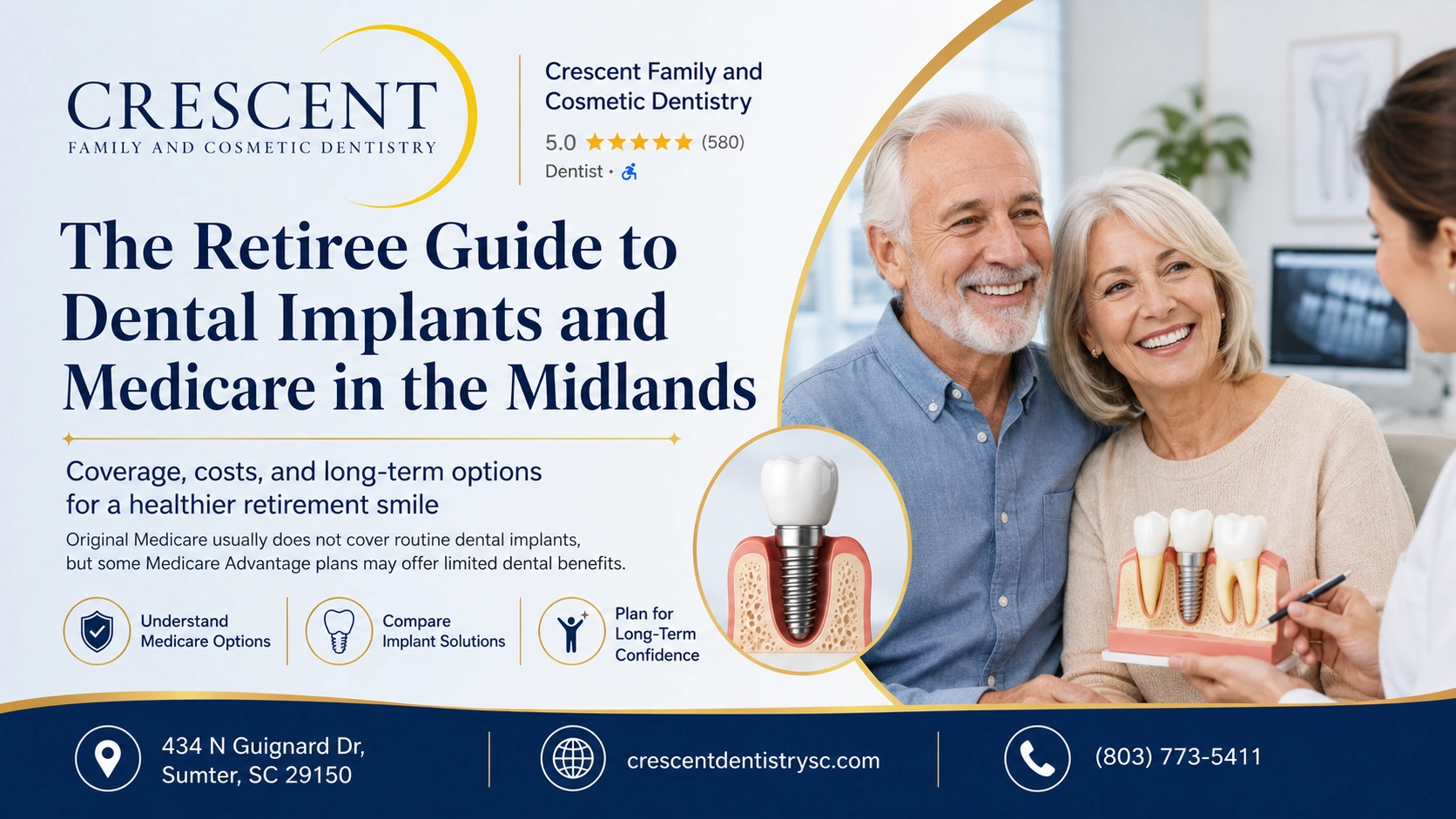
Original Medicare generally does not cover routine dental implants. However, some Medicare Advantage plans may provide limited dental benefits, and there are often multiple ways retirees can make implant treatment more affordable.
The bigger question isn’t simply whether Medicare pays.
It’s whether implants are the right long-term solution for your health, lifestyle, and retirement goals.
At Crescent Family & Cosmetic Dentistry, many implant consultations involve retirees from Columbia, Sumter, and surrounding Midlands communities who want honest answers about costs, coverage, and alternatives before making a decision.
Let’s walk through what retirees should know before pursuing dental implant treatment.
Considering Dental Implants?
Get the facts on dental implants, Medicare, and your options in the Midlands. Call today to schedule a consultation.
Why Missing Teeth Become More Common After Retirement
Tooth loss can happen at any age, but certain factors become more common later in life.
These may include:
- Previous dental work reaching the end of its lifespan
- Gum disease
- Bone loss
- Decades of wear and tear
- Medical conditions
- Dry mouth caused by medications
Many retirees also delayed treatment during their working years because of career demands, family responsibilities, or financial priorities.
Now that they have more time to focus on their health, they begin addressing issues they’ve lived with for years.
Common concerns include:
- Loose dentures
- Difficulty chewing
- Missing molars
- Embarrassment when smiling
- Bone loss in the jaw
- Difficulty eating favorite foods
This is often when dental implants enter the conversation.
What Exactly Is a Dental Implant?
A dental implant is a replacement tooth root that is surgically placed into the jawbone.
Once healing occurs, the implant supports a restoration such as:
- A dental crown
- A bridge
- A denture
Unlike removable dentures, implants become integrated with the jawbone.
This provides stability and support that many patients find life-changing.
The result can feel much closer to having natural teeth.
Why Retirees Often Choose Dental Implants
People frequently assume implants are primarily cosmetic.
While appearance matters, retirees often pursue implants for functional reasons.
Improved Chewing Ability
Many patients struggle with:
- Steak
- Apples
- Corn
- Nuts
- Fresh vegetables
Implants can often restore significant chewing function.
Denture Stability
Loose dentures remain one of the most common frustrations among retirees.
Implant-supported dentures can dramatically improve stability.
Bone Preservation
When teeth are missing, the jawbone can gradually shrink.
Implants help stimulate the bone and reduce ongoing loss.
Confidence
Many retirees simply want to smile, laugh, and socialize without worrying about missing teeth or shifting dentures.
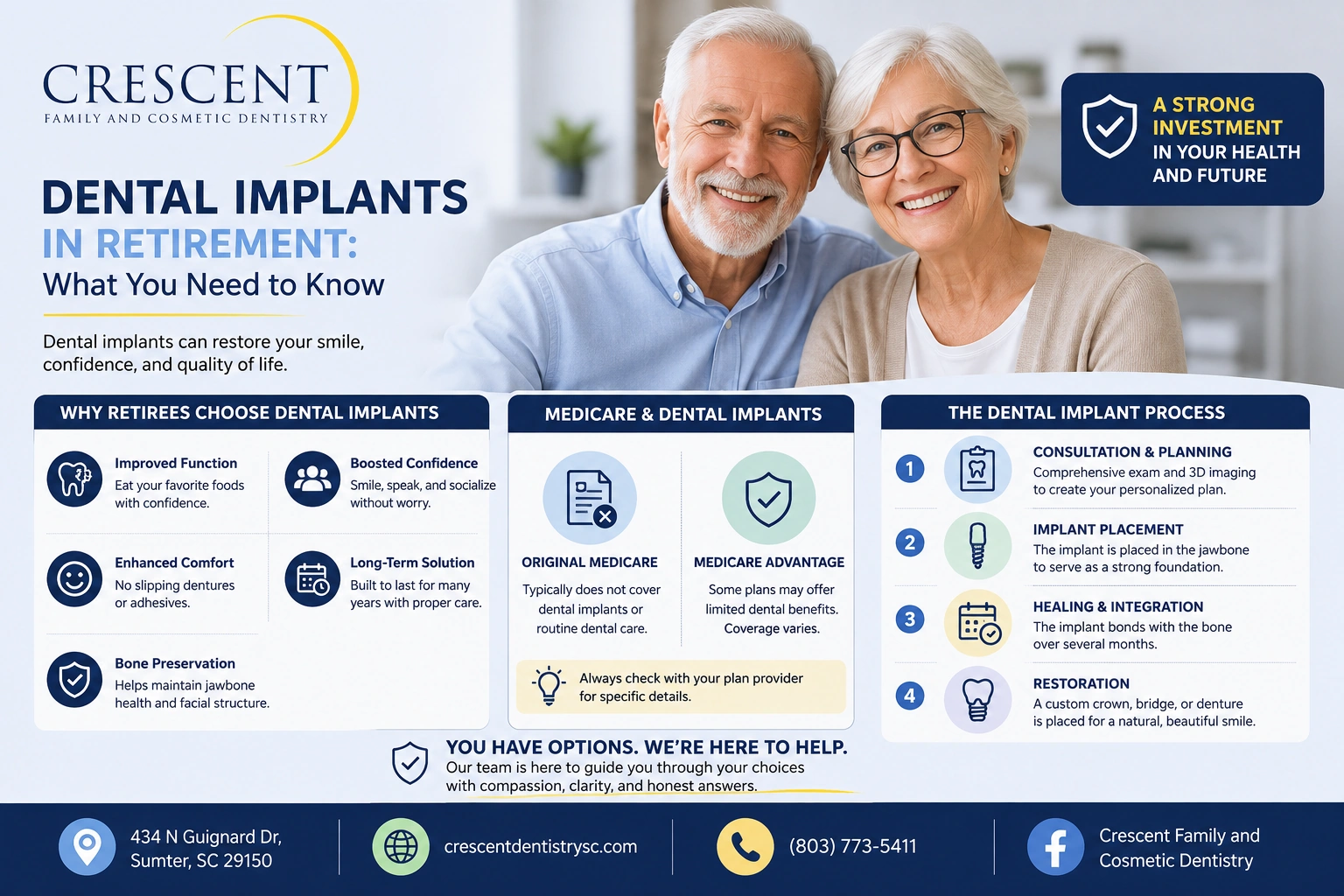
Does Medicare Cover Dental Implants?
This is where things become confusing.
Original Medicare (Part A and Part B)
In most situations:
Original Medicare does not cover routine dental care or dental implants.
This generally includes:
- Implant placement
- Implant crowns
- Bone grafting
- Routine extractions
- Dentures
For many retirees, this comes as an unwelcome surprise.
After paying into Medicare for decades, they naturally assume major dental procedures may be included.
Unfortunately, that is usually not the case.
What About Medicare Advantage Plans?
This is where the answer becomes more complicated.
Many Medicare Advantage plans offer supplemental dental benefits.
However, coverage varies dramatically.
Some plans may provide:
- Preventive care
- Cleanings
- Exams
- X-rays
Others may offer partial coverage for more extensive treatment.
The important thing to understand is:
Not all Medicare Advantage plans are the same.
Coverage depends on:
- Insurance carrier
- Specific plan
- Annual benefit limits
- Deductibles
- Waiting periods
Before assuming implants are covered, carefully review your plan documents.
The Most Common Medicare Misunderstanding
Many retirees hear:
“My Medicare plan covers dental.”
Then they assume implants are included.
Unfortunately, dental coverage and implant coverage are not the same thing.
A plan may cover:
- Exams
- Cleanings
- Fillings
while offering little or no assistance for implant treatment.
Always verify details directly with the insurer.
What Do Dental Implants Typically Cost?
One of the reasons implant coverage matters is cost.
Dental implants represent a significant investment.
The final price depends on factors such as:
Number of Missing Teeth
Replacing one tooth differs dramatically from replacing an entire arch.
Bone Quality
Some patients require:
- Bone grafts
- Sinus lifts
- Additional procedures
before implant placement.
Restoration Type
Costs vary depending on whether the implant supports:
- One crown
- A bridge
- A full denture

From Clear Aligners to Tooth Extractions: Navigating Your Complete Dental Journey
A healthy, confident smile is more than just straight teeth—it reflects your overall oral health and well-being. With advances in…

Complexity
Every patient’s anatomy and treatment needs are different.
As a general rule, implant treatment often costs several thousand dollars per tooth and may increase significantly for larger cases.
This is why personalized treatment planning is so important.
Why the Cheapest Option Can Become Expensive
Retirees are often careful shoppers.
That’s a good thing.
However, implants are not a commodity.
A lower price doesn’t always represent a better value.
Important factors include:
- Surgeon experience
- Treatment planning
- Materials used
- Long-term support
- Restoration quality
The goal isn’t finding the cheapest implant.
The goal is finding the right solution that will serve you well for years.
Are Dental Implants Worth It in Retirement?
This is one of the most personal decisions retirees face.
Some patients wonder:
“At my age, is it really worth it?”
The answer depends entirely on the individual.
Many retirees enjoy:
- Active lifestyles
- Frequent travel
- Dining out
- Social activities
- Decades of expected life ahead
For these patients, restoring function and comfort can have a significant impact on quality of life.
Age alone rarely determines candidacy.
Health, bone quality, and personal goals matter much more.
Who May Be a Good Candidate?
Many retirees qualify for implants if they have:
Adequate Bone Support
Bone levels can often be evaluated with modern imaging.
Good General Health
Medical conditions do not automatically disqualify patients.
However, they may influence treatment planning.
Healthy Gums
Periodontal health remains important for long-term success.
Realistic Expectations
Implants are excellent solutions, but they are not magic.
Understanding the process helps create better outcomes.
Alternatives to Dental Implants
Not every retiree chooses implants.
Alternative options may include:
Traditional Dentures
Often the most affordable solution.
Implant-Supported Dentures
A middle ground between removable dentures and full implant reconstruction.
Dental Bridges
May be appropriate when adjacent teeth can support treatment.
Each option has advantages and limitations.
The best solution depends on the patient’s goals, anatomy, and budget.
Questions Every Retiree Should Ask
Before committing to treatment, consider asking:
What Will My Insurance Actually Cover?
Get specifics.
Avoid assumptions.
What Is Included in the Fee?
Ask whether pricing includes:
- Implant placement
- Restoration
- Imaging
- Follow-up care
Are Financing Options Available?
Many retirees appreciate flexible payment arrangements.
What Are My Alternatives?
A good dentist should explain multiple options whenever appropriate.
How Long Will Treatment Take?
Implants often involve multiple phases.
Understanding the timeline helps avoid surprises.
The Real Return on Investment Isn’t Just Financial
When retirees evaluate implants, they often focus on cost.
That’s understandable.
However, many implant patients ultimately judge success differently.
They talk about:
- Eating comfortably again
- Smiling confidently
- Speaking clearly
- Avoiding denture frustrations
- Enjoying social events
These quality-of-life improvements are difficult to measure in dollars.
Yet they often become the most meaningful benefits.
Retirement Shouldn’t Mean Settling for Dental Problems
Many retirees spent years putting others first.
They prioritized careers, children, mortgages, education expenses, and countless other responsibilities.
Retirement often creates an opportunity to finally address long-standing dental concerns.
Dental implants are not right for everyone. But for many patients, they provide a stable, long-term solution that improves comfort, function, and confidence. Understanding your Medicare benefits, treatment options, and financial considerations is the first step toward making an informed decision.
At Crescent Family & Cosmetic Dentistry, our doctors help retirees understand the realities of implant treatment—including costs, alternatives, timelines, and expected outcomes—so they can choose the path that makes the most sense for their future.
Your Next Chapter Deserves a Healthy, Confident Smile
If you’re exploring dental implants and wondering how Medicare, insurance, or financing may affect your options, start with a conversation—not assumptions.
Every retiree’s situation is different.
Some patients discover implants are more achievable than they expected. Others learn that alternative treatments may better align with their goals and budget.
At Crescent Family & Cosmetic Dentistry, patients throughout Columbia, Sumter, and the Midlands can receive a personalized implant evaluation, clear treatment recommendations, and transparent discussions about costs and coverage. The goal isn’t simply replacing missing teeth—it’s helping you make a confident decision about your long-term oral health and quality of life.
Frequently Asked Questions
Does Medicare pay for dental implants?
Original Medicare generally does not cover routine dental implants. Some Medicare Advantage plans may offer limited dental benefits, but coverage varies significantly.
Are implants too expensive for retirees?
Not necessarily. Treatment options, financing arrangements, and phased treatment plans may make care more manageable than many patients initially assume.
Am I too old for dental implants?
Age alone rarely determines eligibility. Overall health, bone support, and treatment goals are typically more important factors.
How long do dental implants last?
With proper care, dental implants can last for many years and often decades. Longevity depends on oral hygiene, health factors, and maintenance.
What if I cannot afford full-mouth implants?
Alternative options such as implant-supported dentures, traditional dentures, or bridges may provide effective solutions at different price points.
Dental Implants After Retirement
Understand your dental implant options and how Medicare may affect your costs. Call today to explore your options.