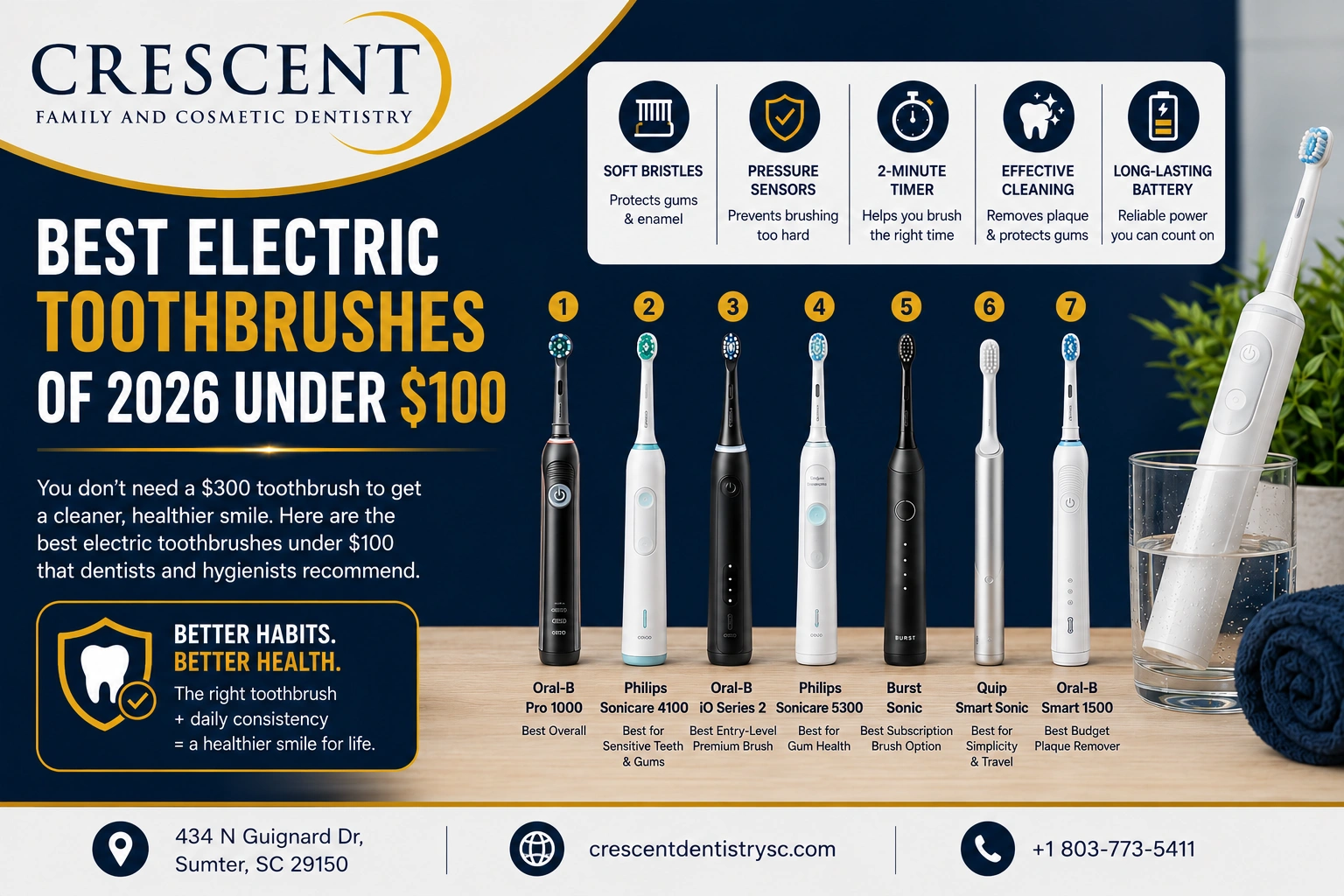
Best Electric Toothbrushes of 2026 Under $100
Most people do not need a $300 toothbrush.
Seriously.
A lot of premium electric toothbrushes now come with:
- Bluetooth tracking
- AI brushing maps
- coaching apps
- pressure heat maps
- brushing “scores”
And honestly?
Most patients in Sumter and Columbia just want a toothbrush that:
- cleans well
- protects their gums
- lasts
- is easy to use
- does not cost a car payment
Find the Right Electric Toothbrush Under $100
Upgrade your daily brushing without overspending. Discover top electric toothbrushes that deliver powerful cleaning at an affordable price.
At Crescent Family & Cosmetic Dentistry, patients constantly ask:
“What electric toothbrush do you actually recommend?”
Not influencer recommendations.
Not sponsored rankings.
Real-world recommendations from people who clean teeth every day.
Here is the honest answer:
Most patients do very well with a quality electric toothbrush under $100.
You do not need the most expensive model to significantly improve your oral hygiene.
What matters more is:
- consistency
- soft bristles
- brushing technique
- pressure control
- brushing long enough
That said, some toothbrushes are genuinely better designed than others.
Here are the electric toothbrushes dentists and hygienists most commonly recommend in 2026 for patients who want strong performance without overspending.
What Actually Matters in an Electric Toothbrush?
Before talking brands, let’s simplify this.
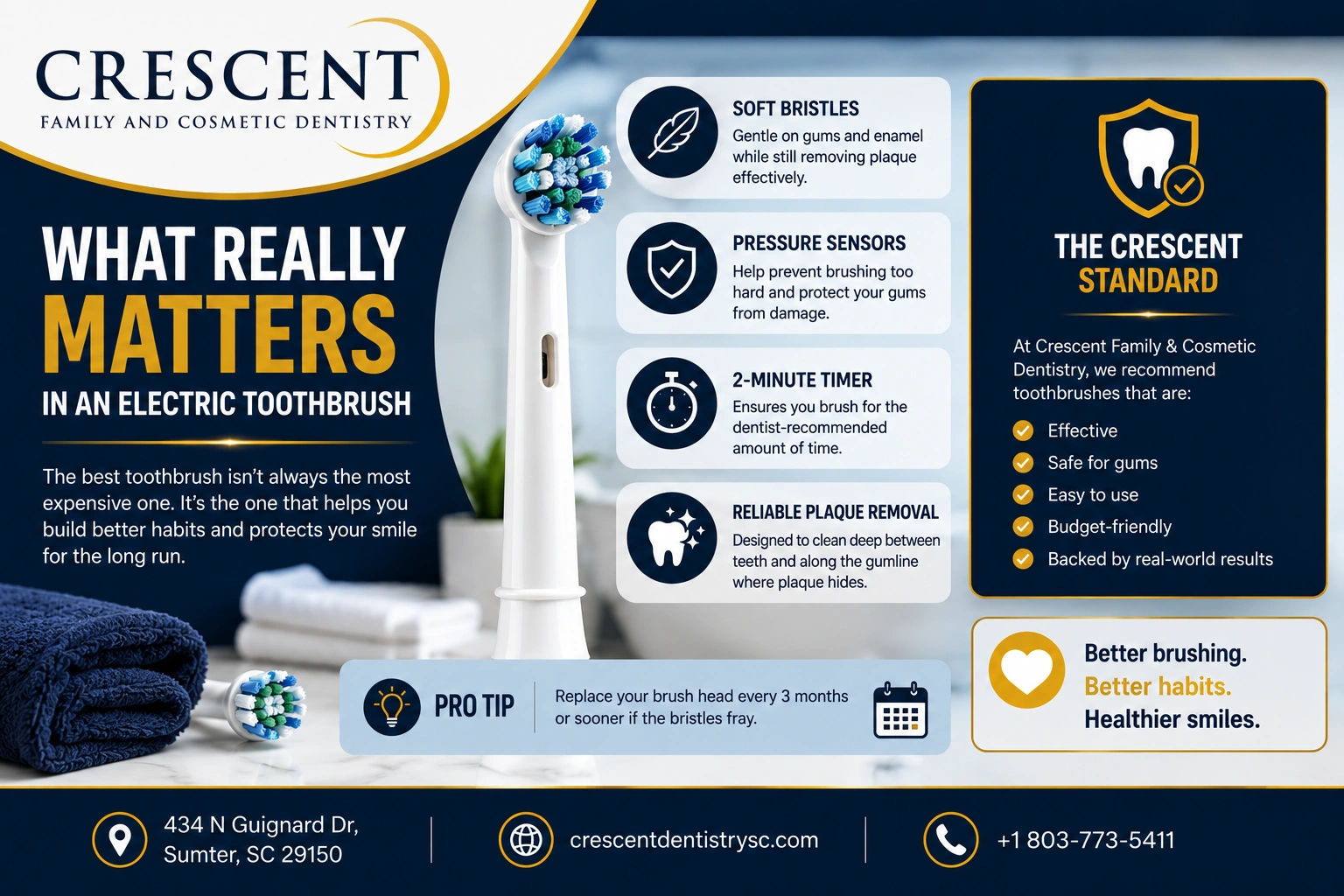
The most important features are usually:
Soft Bristles
This matters more than fancy technology.
Hard bristles can contribute to:
- gum recession
- enamel wear
- tooth sensitivity
Soft bristles clean effectively without damaging tissue.
Pressure Sensors
Many adults brush too hard.
Especially manual brushers switching to electric models.
Pressure sensors help prevent:
- aggressive scrubbing
- gum trauma
- toothbrush abrasion
Honestly, this is one of the most useful modern features.
Two-Minute Timer
Most people dramatically underestimate how long they brush.
A built-in timer helps improve consistency.
Reliable Plaque Removal
This is the actual point.
The brush should effectively clean:
- gumlines
- back molars
- crowded teeth
- lower front teeth
Without requiring perfect technique.
1. Oral-B Pro 1000
Best Overall for Most Adults
This is one of the most consistently recommended electric toothbrushes by dental professionals.
Why?
Because it focuses on the features that actually matter.
Pros:
- strong plaque removal
- pressure sensor
- simple controls
- rotating oscillating head
- affordable replacement heads
Cons:
- louder than sonic brushes
- fewer premium features
- basic aesthetics
Why dentists like it:
It works.
A lot of hygienists quietly recommend this model because it delivers excellent cleaning performance without unnecessary extras.
Typical price:
Around $50–$70
2. Philips Sonicare 4100
Best for Sensitive Teeth and Gums
Many patients with gum recession or sensitivity prefer sonic brushes.
The Sonicare 4100 is one of the better values under $100.
Pros:
- gentle brushing feel
- pressure sensor
- quieter operation
- slim lightweight design
- excellent for sensitive gums
Cons:
- replacement heads can cost more
- less aggressive plaque removal feel for some patients
Why patients like it:
It feels smoother and less “scrubby” than rotating brushes.
Typical price:
Around $50–$80
3. Oral-B iO Series 2
Best Entry-Level “Premium” Brush
The iO line improved Oral-B’s feel significantly.
This model gives patients many premium benefits without the extremely high-end pricing.
Pros:
- quieter magnetic motor
- smoother brushing experience
- pressure feedback
- excellent cleaning power
Cons:
- replacement heads cost more
- battery life shorter than some Sonicare models
Why it stands out:
It feels noticeably more refined than older Oral-B brushes.
Typical price:
Around $80–$100
4. Philips Sonicare ProtectiveClean 5300
Best for Gum Health
This brush is especially popular among patients focused on gum improvement.
Pros:
- gentle gumline cleaning
- multiple intensity settings
- pressure sensor
- excellent battery life
Cons:
- slightly pricier
- less aggressive feeling for heavy plaque buildup
Why hygienists often recommend it:
Patients with bleeding gums often tolerate this brush very comfortably.
Typical price:
Around $80–$100
5. Burst Sonic Toothbrush
Best Subscription Brush Option
Burst gained popularity through dental professionals surprisingly quickly.
Unlike many influencer-heavy brands, many hygienists genuinely ended up liking the brush itself.
Pros:
- soft charcoal bristles
- strong sonic vibration
- long battery life
- sleek design
Cons:
- subscription-focused model
- fewer long-term durability studies than legacy brands
Why some dental professionals recommend it:
It performs well at a reasonable price point.
Typical price:
Around $70–$90
6. Quip Smart Sonic
Best for Simplicity and Travel
Quip is intentionally minimalist.
This is not the strongest cleaner on the list.
But many patients brush more consistently because it is simple and convenient.
Pros:
- slim travel-friendly design
- easy maintenance
- subscription head replacements
- gentle brushing feel
Cons:
- weaker cleaning power
- less ideal for heavy plaque buildup
Best for:
Light plaque patients, travelers, or electric toothbrush beginners.
Typical price:
Around $40–$70

Best Toothpastes for Sensitive Teeth in 2026: A Dentist’s Comparison
Quick answer: For most people the best toothpaste for sensitive teeth is a fluoride toothpaste that also contains potassium nitrate…
7. Oral-B Smart 1500
Best Budget Plaque Remover
This is one of the stronger cleaning performers under $100.
Pros:
- powerful oscillating cleaning
- pressure sensor
- timer
- affordable
Cons:
- louder
- more vibration-heavy feel
Best for:
Patients with heavier tartar buildup or inconsistent brushing history.
Typical price:
Around $60–$90
Sonic vs. Oscillating: Which Is Actually Better?
Patients obsess over this question.
The honest answer?
Both work well.
Sonic Brushes
Usually:
- gentler feeling
- quieter
- preferred for sensitivity
Oscillating Brushes
Usually:
- stronger plaque removal
- more targeted cleaning
- better for heavy buildup
Most dentists care less about category and more about whether patients use the brush consistently.
The Most Expensive Toothbrush Is Usually Not Necessary
This is important.
Many premium toothbrushes now exceed $250.
Most patients do not need:
- AI coaching
- brushing maps
- app analytics
- mouth tracking
Those features are not harmful.
But they rarely determine oral health outcomes.
Daily brushing habits matter far more.
What Toothbrushes Do Dentists Personally Use?
Honestly?
Usually practical ones.
Many dentists and hygienists personally use:
- Oral-B
- Sonicare
- Burst
Not because of marketing.
Because they consistently see good clinical results from patients using them.
For a closer look at electric vs. manual toothbrushes and what our dental team uses, it helps to compare not just the brands themselves, but how each option fits different brushing habits, sensitivity levels, and daily routines.
What Matters More Than the Toothbrush Itself
This part is crucial.
A great electric toothbrush cannot compensate for:
- never flossing
- brushing once daily
- constant soda sipping
- smoking
- poor diet
- skipping dental visits
Some patients buy expensive brushes hoping technology replaces habits.
It does not.
The toothbrush is the tool.
Consistency is the real difference-maker.
When an Electric Toothbrush Makes the Biggest Difference
Electric brushes tend to help most with:
- gum inflammation
- crowded teeth
- braces
- limited dexterity
- aggressive brushing habits
- inconsistent brushing technique
- heavy plaque buildup
For many adults, switching to electric noticeably improves cleaning quality quickly.
When a Manual Toothbrush May Still Be Fine
Some patients do perfectly well with manual brushes.
Usually because they:
- brush carefully
- use soft bristles
- floss consistently
- maintain strong technique
The problem is that most people brush manually too aggressively or too briefly.
Electric brushes improve consistency.
That is their biggest advantage.
The Bottom Line
You do not need an ultra-expensive electric toothbrush to significantly improve your oral hygiene.
Most patients do extremely well with quality models under $100 that include:
- soft bristles
- pressure sensors
- timers
- reliable cleaning performance
At Crescent Family & Cosmetic Dentistry, the goal is not pushing trendy gadgets.
It is helping patients in Sumter and Columbia find realistic tools that improve long-term oral health without overcomplicating daily habits.
And honestly, almost any quality electric toothbrush used consistently is usually better than perfect brushing intentions that never become routine.
FAQs About Electric Toothbrushes
Are electric toothbrushes really better?
For most patients, yes.
They generally improve plaque removal and gum health compared to manual brushing.
What electric toothbrush do dentists recommend most?
Common recommendations include Oral-B and Philips Sonicare models.
Is Sonicare or Oral-B better?
Both are excellent.
The best choice often depends on sensitivity, brushing style, and personal preference.
Are expensive toothbrushes worth it?
Usually not beyond a certain point.
Mid-range models often provide nearly all the important benefits.
How often should toothbrush heads be replaced?
Usually every 3 months or sooner if bristles fray.
Do pressure sensors matter?
Yes.
They help reduce aggressive brushing that can damage gums and enamel.
Can kids use electric toothbrushes?
Absolutely.
Many children brush more effectively with electric toothbrushes.
What matters more than the toothbrush itself?
Consistency, flossing, brushing technique, and regular dental visits matter most overall.
Ready for a Better Brushing Experience?
Get more from your daily routine with an electric toothbrush that fits your needs and budget. Find the right option today.