
Periodontist vs. Family Dentist for Gum Surgery
A family dentist can diagnose and treat many gum problems, but more complex cases may need the advanced surgical training of a periodontist. If you have severe gum disease, significant gum recession, bone loss, complicated implant needs, or a condition that has not responded well to non-surgical treatment, your family dentist may recommend working with a periodontal specialist.
At Crescent Family and Cosmetic Dentistry, our role is to help patients understand what level of care makes sense for their individual condition. Sometimes that treatment can be handled in a general dental setting. Other times, coordinating care with a periodontist gives the patient access to specialized procedures and experience.
Don’t Delay Gum Treatment
Gum problems can worsen without proper care. Call now to have your gums evaluated and explore your treatment options.
What Is the Difference Between a Family Dentist and a Periodontist?
A family dentist, also called a general dentist, provides a broad range of dental care for adults and children.
Depending on the practice, services may include:
- Routine dental examinations
- Professional cleanings
- Fillings
- Crowns and bridges
- Dental emergencies
- Preventive care
- Gum disease screening
- Scaling and root planing
- Restorative treatment
- Cosmetic procedures
- Some implant-related care
Family dentists are often the first dental professionals to identify signs of gum disease because periodontal screening is part of routine dental care.
A periodontist is a dentist who has completed additional specialized training focused on the gums, bone, and other structures that support the teeth.
The American Academy of Periodontology states that periodontists receive at least three additional years of specialized education after dental school and focus on preventing, diagnosing, and treating periodontal disease as well as placing dental implants.
Their training includes both non-surgical and surgical periodontal care.
The difference therefore is not that one provider is a “real dentist” and the other is not. Both are dentists.
The difference is the scope and depth of specialized training.
Can a Family Dentist Treat Gum Disease?
Yes.
Many cases of early or uncomplicated gum disease can be managed by a general or family dentist.
For example, a patient with gingivitis may need:
- Improved brushing and flossing
- Professional removal of plaque and tartar
- More frequent preventive visits
- Treatment of areas where plaque is accumulating
Patients with periodontitis may initially receive scaling and root planing, sometimes called a deep cleaning.
The American Dental Association identifies scaling and root planing as a primary non-surgical treatment for periodontitis. Treatment is designed to remove bacterial plaque and calculus from the tooth and root surfaces so the gums have a healthier environment in which to heal.
Many patients respond well to non-surgical periodontal therapy.
The American Academy of Periodontology notes that some people need no additional active treatment after scaling and root planing beyond ongoing periodontal maintenance.
If deeper pockets, ongoing inflammation, or significant structural damage remain, however, surgery may become part of the discussion.
When Does Gum Disease Require Surgery?
Gum surgery is generally considered when non-surgical treatment alone cannot adequately control the disease or when gum and bone anatomy needs to be corrected.
The ADA notes that many moderate to advanced cases may require surgical access so the dentist or periodontist can thoroughly clean the root surfaces and reduce periodontal pocket depths.
Surgery may also be recommended for issues that are not primarily caused by active gum disease.
Examples include:
- Significant gum recession
- Exposed tooth roots
- Bone defects around teeth
- Advanced periodontal pockets
- Certain cosmetic gum concerns
- Preparing an area for restorative treatment
- Rebuilding tissue around certain teeth
- Dental implant-related procedures
A recommendation for surgery does not automatically mean that the tooth is in immediate danger.
The objective is often to create conditions that are easier to keep clean and more stable over the long term.
Should a Family Dentist Perform Gum Surgery?
Some general dentists perform selected periodontal procedures.
There is no rule that every gum surgery must automatically be performed by a periodontist.
The appropriate provider depends on several factors, including:
- The type of surgery
- The severity of the periodontal problem
- The dentist’s training and experience
- The number of teeth involved
- The amount of bone or gum tissue affected
- The patient’s medical history
- Whether implants are involved
- The likelihood that regenerative treatment will be required
A family dentist who regularly performs a particular procedure may feel comfortable treating an uncomplicated case.
A more complex case may be referred.
The American Academy of Periodontology specifically notes that some general dentists manage less serious periodontal conditions while referring more challenging cases to periodontists.
That referral is not a sign that something has gone wrong.
It is often simply the most appropriate way to match the procedure with the provider who has the most relevant training.
When Should You See a Periodontist?
There is no single symptom that automatically means you need a specialist.
Referral becomes more likely when periodontal disease is advanced or the treatment required is more complex.
You may be referred to a periodontist if you have:
- Moderate or severe periodontitis
- Significant bone loss
- Very deep periodontal pockets
- Recurrent periodontal problems despite treatment
- Loose teeth caused by loss of supporting tissue
- Extensive gum recession
- Multiple areas requiring grafting
- Complex implant needs
- Insufficient bone for an implant
- Complications around existing implants
- Gum or bone defects requiring regeneration
The American Academy of Periodontology lists bleeding or swollen gums, gum recession, loose teeth, changes in the bite, and discomfort around the gums among signs that may accompany more advanced periodontal disease requiring specialist care.
Your family dentist can help determine whether your specific findings justify referral.
What Types of Gum Surgery Does a Periodontist Perform?
Periodontists perform a wide range of surgical procedures involving soft tissue and the bone supporting the teeth.
Gum Graft Surgery
Gum grafting is commonly recommended when recession has exposed the roots of the teeth.
During a graft, tissue is added to an area where gum coverage has been lost.
The American Academy of Periodontology explains that grafting may help cover exposed roots, reduce additional recession, protect against further bone loss, and in some cases reduce sensitivity.
The tissue may come from another area of the patient’s mouth or from another approved grafting source, depending on the procedure.
Periodontal Pocket Reduction Surgery
Advanced gum disease can create deep spaces between the teeth and gums.
These pockets may become difficult to keep clean with brushing, flossing, and professional non-surgical treatment.
During pocket reduction surgery, gum tissue can be carefully moved back so the roots and affected areas can be cleaned more thoroughly.
The tissue is then repositioned.
The goal is generally to reduce pocket depth and create an environment that is easier for the patient to maintain.
Regenerative Procedures
Periodontal disease can destroy bone and other supporting structures around teeth.
In selected cases, regenerative surgery may be used to encourage the body to rebuild some of those tissues.
According to the ADA and AAP, regenerative procedures may involve materials such as bone grafts, membranes, or biologic materials designed to support new tissue formation.
Not every area of bone loss can be regenerated.
The shape and extent of the defect, tooth condition, oral hygiene, smoking status, health history, and other factors can affect treatment options.
Crown Lengthening
Crown lengthening involves reshaping the gum tissue, and sometimes the underlying bone, to expose more of a tooth.
This may be done for restorative reasons.
For example, a tooth may be broken or decayed close to the gumline, making it difficult to place a properly fitting crown without first exposing more healthy tooth structure.
Crown lengthening may also be performed for selected cosmetic reasons.
Dental Implant Procedures
Periodontists also receive advanced training in dental implant surgery.
Some general dentists place implants as well, while others work with an oral surgeon or periodontist for the surgical stage.
Referral may be particularly appropriate when bone grafting, sinus augmentation, multiple implants, or complex soft-tissue management is required.
Do You Always Need Surgery for Gum Disease?
No.
Most patients with gum disease do not begin with surgery.
Treatment typically starts with the least invasive approach capable of controlling the condition.
For many patients, that involves:
- Improving daily plaque removal
- Professional periodontal cleaning
- Scaling and root planing
- Addressing contributing dental problems
- Periodontal maintenance visits
- Managing risk factors such as smoking or poorly controlled diabetes
After non-surgical treatment, the gums are allowed time to respond.
The ADA notes that periodontal tissues may require several weeks after scaling and root planing before the full response to treatment can be assessed.
The dentist may then measure periodontal pockets again, evaluate bleeding and inflammation, and review whether the areas are easier to maintain.
If deep pockets or active disease remain, surgery may be considered.
What Happens If Your Dentist Refers You to a Periodontist?
The periodontist generally begins with an examination rather than scheduling surgery automatically.
They may review:
- Your medical history
- Current medications
- Previous periodontal treatment
- Dental X-rays
- Gum recession
- Tooth mobility
- Your bite
- Periodontal pocket measurements
- The amount and pattern of bone loss
The American Academy of Periodontology describes this type of detailed periodontal assessment as part of a typical first specialist visit.
The periodontist may agree with the original treatment recommendation, suggest another approach, or recommend additional non-surgical care before surgery.
After specialist treatment, many patients return to their family dentist for routine restorative and preventive care.
In other cases, periodontal maintenance may alternate between the two offices.

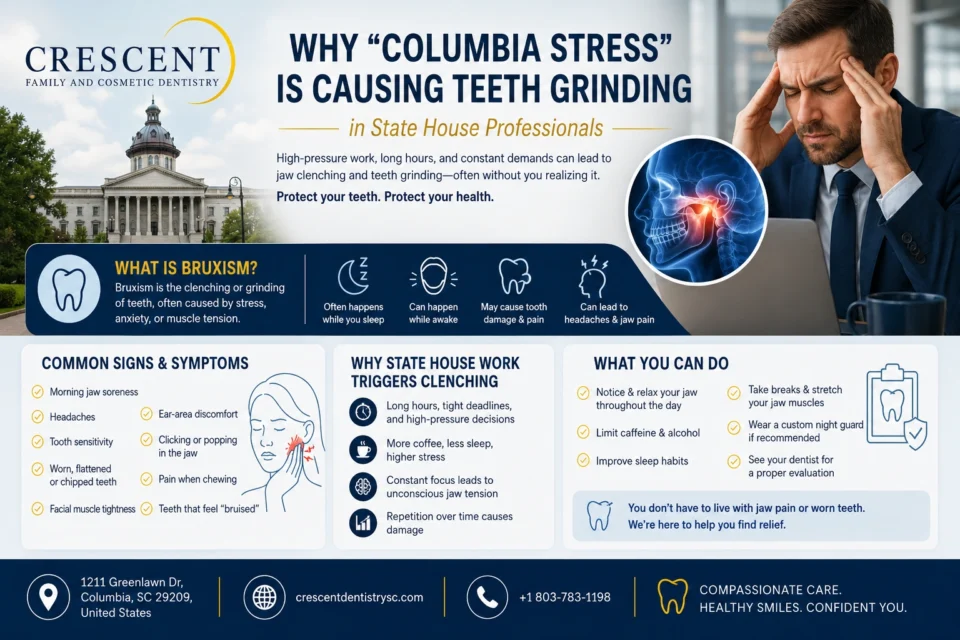
Why “Columbia Stress” Is Causing Teeth Grinding in State House Professionals
If you work around the South Carolina State House, you probably do not need someone to explain stress to you.…
Can Your Family Dentist and Periodontist Work Together?
Yes, and this is often the best model for complex periodontal care.
The American Academy of Periodontology specifically recommends a team approach in which the general dentist and periodontist remain involved in the patient’s diagnosis, treatment, and long-term care.
Each provider has a different role.
The family dentist understands the patient’s overall dental history and manages broader needs such as:
- Cavities
- Crowns
- Bridges
- Bite concerns
- Preventive visits
- General restorative treatment
The periodontist contributes specialized knowledge of:
- Advanced gum disease
- Bone loss
- Gum surgery
- Tissue grafting
- Periodontal regeneration
- Complex implant treatment
Neither provider necessarily replaces the other.
For many patients, collaboration provides continuity while adding specialist care where it is needed.
Is Gum Surgery Painful?
Periodontal surgery is generally performed using local anesthesia so the treatment area is numb during the procedure.
Depending on the procedure, patient needs, and provider, other comfort options may also be available.
Periodontists receive specialized surgical training that includes management of anesthesia and patient comfort during periodontal procedures.
After treatment, some soreness, swelling, or tenderness is common.
The exact recovery varies according to:
- The procedure performed
- The number of sites treated
- Whether tissue was harvested from another area
- Whether bone grafting was involved
- The patient’s general health
- Smoking or tobacco use
- How closely postoperative instructions are followed
Your provider will give you specific instructions for pain control, eating, brushing, and caring for the surgical area.
How Long Does Recovery From Gum Surgery Take?
Recovery varies substantially by procedure.
A small gum graft involving one tooth is different from a more extensive regenerative surgery affecting several teeth.
Many patients can return to routine non-strenuous activities relatively quickly, but the tissues themselves take longer to fully heal.
During recovery, patients may be asked to:
- Avoid brushing directly over the surgical area temporarily
- Use a prescribed or recommended rinse
- Eat softer foods
- Avoid smoking and tobacco
- Avoid pulling the lip or cheek to inspect grafted tissue
- Take prescribed medications as directed
- Return for scheduled postoperative checks
Even if discomfort has resolved, the gum and bone tissues may still be healing underneath the surface.
Following the surgeon’s instructions is important for protecting the treatment site.
Will Gum Surgery Save a Loose Tooth?
Sometimes, but it depends on why the tooth is loose and how much supporting tissue remains.
Advanced periodontal disease can destroy the bone and ligaments holding teeth in place.
Treatment may stop further progression and, in selected cases, regenerative procedures may improve the supporting structures.
However, periodontal surgery cannot save every tooth.
The ADA includes extraction of teeth that cannot be predictably treated among the possible components of advanced periodontal management.
Your dentist or periodontist should explain the expected prognosis before recommending surgery.
The objective is not to perform surgery on a tooth with little chance of long-term success simply because treatment is technically possible.
Does Insurance Cover Gum Surgery?
Coverage varies significantly.
Dental insurance may cover some periodontal procedures when they are considered medically necessary for treating periodontal disease.
However, plans may have:
- Deductibles
- Annual maximums
- Waiting periods
- Frequency limitations
- Missing-tooth clauses
- Percentage-based coverage
- Requirements for X-rays or periodontal charting
- Prior authorization or pre-treatment review
Cosmetic periodontal procedures may have little or no insurance coverage.
Before treatment, ask the dental office for an estimate and contact your insurer if you need clarification about benefits.
Keep in mind that an insurance company’s coverage decision is not the same as a clinical recommendation.
Your dentist or periodontist may recommend treatment based on your oral health even if your insurance plan provides limited coverage.
What Questions Should You Ask Before Gum Surgery?
Before agreeing to a periodontal procedure, you should understand why it is being recommended.
Useful questions include:
- What condition is the surgery treating?
- Have non-surgical treatments already been tried?
- What happens if I delay treatment?
- What are the alternatives?
- Who will perform the procedure?
- How often does that provider perform this type of surgery?
- Will I need a specialist referral?
- What kind of anesthesia will be used?
- How long is the expected recovery?
- Will I need time away from work?
- How will the surgery affect future dental treatment?
- What follow-up visits will I need?
- What will insurance cover?
- What costs may be my responsibility?
A good treatment discussion should leave you knowing both what is being done and why.
What Happens After Periodontal Surgery?
Surgery is not the end of periodontal care.
A person who has developed periodontitis remains at increased risk for recurrence.
The ADA notes that patients with a history of periodontitis require long-term supportive care even after successful treatment because periodontal susceptibility does not simply disappear.
Your long-term plan may include:
- More frequent professional cleanings
- Periodontal pocket measurements
- Monitoring bone levels
- Careful plaque removal at home
- Cleaning around restorations and implants
- Smoking cessation
- Diabetes management when applicable
Patients with more advanced disease may need periodontal maintenance more frequently than someone receiving routine preventive cleanings.
FAQs About Family Dentists and Periodontists
Can a regular dentist perform gum surgery?
Some general dentists perform selected periodontal procedures depending on their training and experience. More complicated surgeries are often referred to a periodontist.
Does seeing a periodontist mean my gum disease is severe?
Not always. Periodontists also treat gum recession, implant-related needs, cosmetic gum concerns, and other conditions that may not involve severe periodontitis.
Can a family dentist treat periodontal disease?
Yes. General dentists commonly diagnose gum disease and can manage many mild to moderate cases, including non-surgical periodontal treatment.
When is a periodontist usually recommended?
Referral may be recommended for advanced bone loss, deep periodontal pockets, extensive recession, complicated grafting, regenerative procedures, or complex implant treatment.
Will I still see my regular dentist after seeing a periodontist?
Usually, yes. Family dentists and periodontists frequently work together. Your general dentist can continue managing your routine and restorative care while the periodontist addresses specialized periodontal needs.
Does all gum recession need surgery?
No. Treatment depends on the severity and cause of the recession, symptoms, progression, and risk to the tooth. Some cases can be monitored while others may benefit from grafting.
Start With a Gum Evaluation at Crescent Family and Cosmetic Dentistry
You do not have to decide on your own whether you need a family dentist or a periodontist for gum surgery.
That decision starts with an accurate diagnosis.
At Crescent Family and Cosmetic Dentistry, we evaluate the health of your gums, measure periodontal pockets, assess recession, review bone levels when appropriate, and determine whether non-surgical treatment can address the problem.
If your condition requires care beyond what is appropriate in a general dental setting, we can discuss specialist referral and help coordinate the next stage of treatment.
The goal is not to refer every patient with gum disease or to perform surgery when simpler treatment may work. It is to match the level of care to the condition.
If you have bleeding gums, gum recession, loose teeth, persistent periodontal pockets, or have been told you may need gum surgery, contact Crescent Family and Cosmetic Dentistry to schedule an evaluation. We can help you understand your options and determine whether treatment with your family dentist, a periodontist, or a combination of both is the appropriate next step.
Need Gum Surgery? Know Who to Call
Get expert periodontal care for your gums. Call today to discuss the right treatment for your needs.