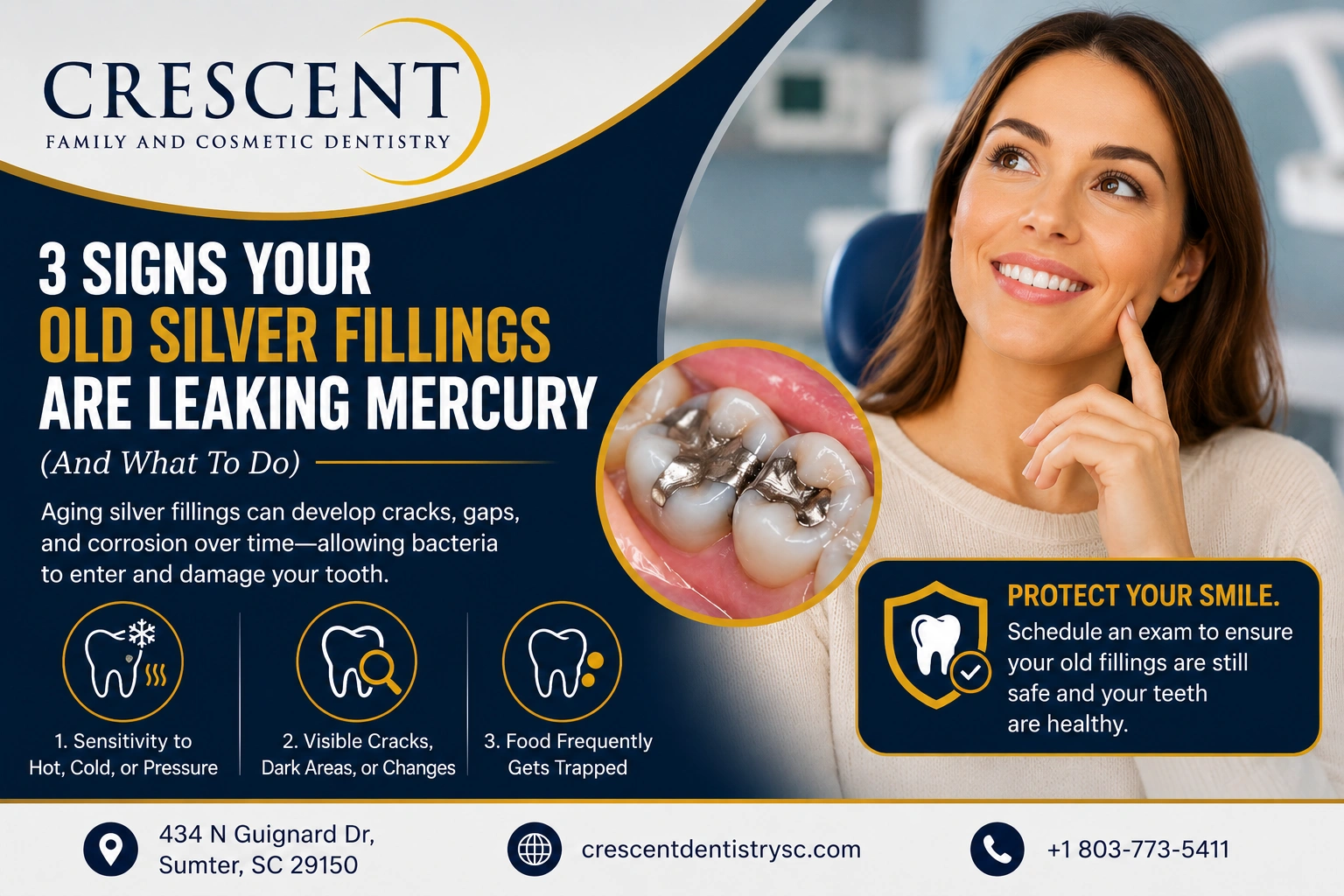
3 Signs Your Old Silver Fillings Are Leaking Mercury (And What To Do)
If you’ve had silver fillings in your mouth for 10, 20, or even 30 years, you’ve probably seen alarming claims online about mercury poisoning, toxic fillings, and urgent removal procedures.
Some websites make it sound like every silver filling is a health emergency.
Others insist there’s absolutely nothing to worry about.
So what’s the truth?
The short answer is this:
Most old silver fillings are not actively poisoning patients, but aging amalgam fillings can develop problems over time—including cracks, gaps, corrosion, and leakage that may compromise the tooth underneath.
The bigger concern for most patients is often not mercury toxicity itself. It’s whether the filling is failing and allowing bacteria to enter the tooth.
At Crescent Family & Cosmetic Dentistry, patients in Columbia and Sumter frequently ask whether their old silver fillings should be replaced. The answer depends less on the age of the filling and more on its condition today.
Let’s separate the facts from the fear and discuss the signs that an old silver filling may be failing.
Concerned About Your Old Silver Fillings?
Know the warning signs of leaking mercury. Call today for a professional evaluation and safer treatment options.
First, What Are Silver Fillings Made Of?
Silver fillings—also called dental amalgam fillings—have been used for more than 150 years.
Despite the name, they are not made entirely of silver.
Dental amalgam typically contains a combination of:
- Silver
- Tin
- Copper
- Other metals
- Mercury
Mercury is used because it binds the other metals together into a durable filling material.
This is where most patient concerns begin.
Many people are surprised to learn their fillings contain mercury.
The good news is that major organizations including the American Dental Association, FDA, and World Health Organization have historically maintained that dental amalgam is considered safe for most patients when properly placed.
However, that doesn’t mean old fillings last forever.
The Real Problem Is Usually a Failing Filling
When patients search for “mercury leaking from fillings,” they often imagine mercury physically dripping into the body.
That’s generally not how dental problems develop.
Instead, older fillings can:
- Expand and contract over time
- Develop microscopic gaps
- Corrode
- Crack surrounding tooth structure
- Allow bacteria to enter beneath the restoration
The result is often tooth decay, fractures, and sensitivity—not necessarily mercury poisoning.
That distinction is important because it changes how dentists evaluate treatment needs.
Sign #1: The Tooth Becomes Sensitive to Hot, Cold, or Pressure
One of the earliest signs of a failing silver filling is increased sensitivity.
You may notice discomfort when:
- Drinking cold water
- Eating ice cream
- Drinking hot coffee
- Biting down
- Chewing certain foods
This sensitivity can develop for several reasons.
The Filling May No Longer Seal Properly
Over time, microscopic spaces can develop between the filling and the tooth.
When fluids enter these spaces, nerve irritation can occur.
Decay May Be Developing Underneath
Bacteria can sometimes enter around older restorations.
Because the decay is hidden beneath the filling, patients may not realize a problem exists until symptoms appear.
The Tooth May Be Cracking
Large silver fillings can place stress on natural tooth structure over decades.
In some cases, tiny fractures begin forming around the restoration.
If a tooth with an old filling suddenly becomes sensitive, it deserves evaluation.
Sensitivity doesn’t automatically mean mercury exposure.
But it can indicate that the restoration is no longer functioning properly.
Sign #2: Visible Cracks, Dark Areas, or Changes Around the Filling
Many failing fillings can actually be seen.
When looking in a mirror, you might notice:
- Dark lines around the filling
- Cracks in the tooth
- Discoloration
- Chipped edges
- Rough surfaces
- Gaps between the filling and tooth
Some discoloration is normal with age.
However, certain changes can suggest structural problems.
Silver Fillings Expand Over Time
One lesser-known characteristic of amalgam is that it can expand slightly over many years.
That expansion can place pressure on surrounding tooth structure.
In some cases, dentists discover cracked teeth beneath large silver restorations.
The filling itself may appear intact while the tooth around it is damaged.
Corrosion Can Occur
Older amalgam fillings may develop corrosion products on the surface.
While some corrosion can help seal microscopic gaps, excessive deterioration may indicate the restoration has reached the end of its useful lifespan.
This is why visual exams and dental X-rays remain important.
Problems beneath an old filling often cannot be seen at home.
Sign #3: Food Frequently Gets Trapped Around the Filling
This symptom is often overlooked.
Patients commonly say:
- “Food always gets stuck there.”
- “Floss catches in that spot.”
- “Something doesn’t feel smooth anymore.”
These complaints may indicate:
- Broken filling margins
- Open contacts between teeth
- Worn restoration edges
- Decay developing beneath the filling
When bacteria repeatedly collect around a failing restoration, the risk of further tooth damage increases.
This is one of the most practical warning signs that something has changed.
If a filling that previously felt normal suddenly starts trapping food, it may be time for an examination.

Does a Leaking Filling Mean Mercury Poisoning?
This is where online information often becomes misleading.
Many websites jump directly from “old filling” to “toxic mercury exposure.”
The reality is more nuanced.
Small Amounts of Mercury Vapor Can Be Released
Research has shown that amalgam fillings can release small amounts of mercury vapor, particularly during:
- Chewing
- Grinding
- Placement
- Removal
This fact is not controversial.
The debate centers on whether those levels create meaningful health risks for most patients.
Most Patients Do Not Experience Mercury Toxicity From Fillings
For the average healthy adult, existing evidence has generally not shown widespread mercury poisoning from properly functioning amalgam restorations.
This is why millions of patients have had silver fillings for decades.

Who Offers the Best Tooth Fillings in Mountain Brook, SC
If you’re looking for reliable and professional tooth fillings in Mountain Brook, SC, Crescent Family and Cosmetic Dentistry is the…
The Bigger Dental Concern Is Often Structural Failure
When dentists recommend replacing old amalgam fillings, the reason is frequently:
- Recurrent decay
- Cracks
- Fractures
- Poor fit
- Wear
Not necessarily mercury exposure.
Patients deserve to understand that distinction.
Should Every Silver Filling Be Removed?
No.
This is one of the biggest misconceptions surrounding amalgam fillings.
Many silver fillings continue functioning successfully for decades.
Replacing a filling solely because it is old may not always be the best decision.
Dentists typically evaluate:
- Current condition
- Presence of decay
- Structural integrity
- Symptoms
- Tooth health
- Restoration margins
A stable filling with no evidence of failure may not require immediate replacement.
Treatment decisions should be based on clinical findings—not fear.
When Replacement May Be Recommended
Dentists often recommend replacement when:
Decay Exists Under the Filling
If bacteria have entered beneath the restoration, replacement is often necessary.
This is especially important because untreated decay can progress quietly. The broader cavity crisis affecting South Carolina adults is a reminder that waiting until a tooth hurts can allow a manageable problem to become much more expensive and complex.
The Tooth Is Cracked
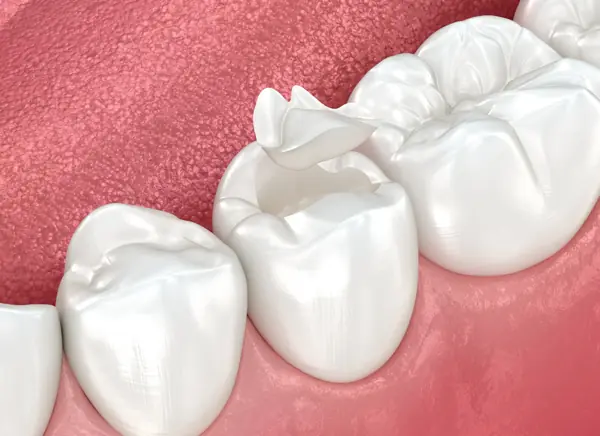
A cracked tooth may require a new restoration or even a crown depending on severity.
The Filling Is Broken
Damaged fillings cannot adequately protect the tooth.
Significant Wear Is Present
Older restorations eventually reach the end of their lifespan.
Cosmetic Concerns Matter
Some patients simply prefer tooth-colored alternatives.
That can be a valid reason for replacement as long as the tooth is healthy enough for treatment.
What Are the Alternatives to Silver Fillings?
Today, many patients choose tooth-colored composite restorations.
Benefits may include:
- More natural appearance
- Less visible dental work
- Conservative treatment approaches
- Strong bonding to tooth structure
In some situations, dentists may also recommend:
- Ceramic restorations
- Onlays
- Crowns
The best option depends on how much healthy tooth remains.
Should Mercury Fillings Be Removed “Just in Case”?
This is where caution is important.
Removing fillings is a dental procedure—not a cosmetic cleanup project.
Every time a filling is removed:
- Tooth structure is affected
- Risks exist
- Costs are incurred
- Additional treatment may become necessary
For that reason, many dentists recommend replacing amalgam restorations when there is a clear clinical reason rather than automatically removing every silver filling in the mouth.
The goal should be preserving healthy teeth whenever possible.
What To Do If You’re Concerned About Old Fillings
If you’re worried about silver fillings, start with an evaluation—not assumptions.
A comprehensive dental exam can determine:
- Whether the fillings are intact
- Whether decay is present
- Whether cracks have developed
- Whether replacement is necessary
- Which treatment options are available
Most patients are relieved to learn that the answer is often less dramatic than what they’ve read online.
Sometimes the filling needs replacement.
Sometimes it doesn’t.
The key is getting accurate information about your specific situation.
Healthy daily habits matter too. Choosing kid-friendly snacks that are less likely to cause cavities can help families reduce repeated sugar exposure early, which may lower the need for future restorative work in the first place.
Don’t Let Internet Fear Decide What Happens to Your Teeth
The internet tends to frame silver fillings as either completely harmless or dangerously toxic.
Neither extreme helps patients make informed decisions.
The reality is that old amalgam fillings should be evaluated based on their current condition, not simply their age. While mercury concerns often drive the conversation, dentists are frequently more concerned about hidden decay, cracks, failing margins, and structural damage that can threaten the tooth itself.
At Crescent Family & Cosmetic Dentistry, our doctors help patients understand whether an existing restoration is functioning properly or whether replacement may be appropriate. Every recommendation should be based on clinical findings and long-term tooth health—not fear-based marketing.
Wondering Whether Your Silver Fillings Are Still Protecting Your Teeth?
If you’ve had silver fillings for years and are noticing sensitivity, food trapping, visible changes, or simply have questions about their condition, the first step is a thorough evaluation.
Many older fillings continue working well. Others may be showing signs of wear that deserve attention before larger problems develop.
At Crescent Family & Cosmetic Dentistry, patients in Columbia and Sumter can receive an honest assessment of their existing restorations, understand the pros and cons of replacement, and learn which treatment options make the most sense for their long-term dental health. The goal isn’t to replace fillings unnecessarily—it’s to help you make confident decisions based on facts.
Frequently Asked Questions
Are silver fillings made of mercury?
Yes. Dental amalgam contains mercury along with other metals such as silver, tin, and copper.
Should all mercury fillings be replaced?
Not necessarily. Many silver fillings remain functional for years. Replacement is typically recommended when evidence of failure, decay, cracks, or other problems exists.
Can old fillings cause tooth sensitivity?
Yes. A failing restoration can allow bacteria, fluids, or pressure changes to irritate the tooth and create sensitivity.
Are tooth-colored fillings safer?
Tooth-colored composite fillings do not contain mercury and are a popular modern alternative. The best choice depends on the specific tooth and clinical situation.
How long do silver fillings last?
Some amalgam fillings last 15 to 30 years or longer. Longevity depends on factors such as tooth location, bite forces, oral hygiene, and overall restoration condition.
Don’t Ignore a Failing Silver Filling
Old fillings may need attention sooner than you think. Schedule an evaluation today to protect your smile.