
Why the “Sweet Tea Culture” in Sumter Is Staining Your Enamel
If you grew up in Sumter, there is a good chance sweet tea was not just a drink.
It was part of the house.
A pitcher in the fridge.
A cup at every restaurant.
Refills at church lunches, cookouts, family dinners, and summer baseball games.
In South Carolina, sweet tea is not really viewed as soda.
It feels more normal than that.
More harmless.
That is the problem.
Don’t Let Stains Set In
Noticing discoloration from your sweet tea habit? Get personalized dental care designed to keep your smile looking its best. Call now to schedule.
At Crescent Family & Cosmetic Dentistry, one of the most common things we hear from patients in Sumter and Columbia is:
“I don’t even drink that much soda.”
But many of those same patients sip sweet tea all day long.
And unfortunately, sweet tea can be surprisingly rough on teeth.
Not because tea itself is evil.
But because the combination of:
- sugar
- acidity
- staining compounds
- constant sipping
…creates the perfect environment for enamel staining and tooth decay over time.
Here is the honest breakdown of what sweet tea is actually doing to your teeth, why the damage tends to build slowly, and how to enjoy it more safely without pretending South Carolina is suddenly switching to plain water overnight.
The Short Answer
Sweet tea stains enamel because tea naturally contains dark staining compounds called tannins, while the added sugar feeds cavity-causing bacteria.
And when people sip sweet tea continuously throughout the day, teeth stay exposed to sugar and acid almost constantly.
That combination contributes to:
- yellowing
- brown staining
- enamel weakening
- plaque buildup
- cavities
- gum inflammation
The biggest issue is usually not one glass of sweet tea with dinner.
It is the all-day sipping culture.
That is what dentists worry about most.
Tea Itself Can Stain Teeth — Even Without Sugar
This surprises people.
Many patients assume only coffee stains teeth.
Actually, black tea is often one of the strongest staining beverages.
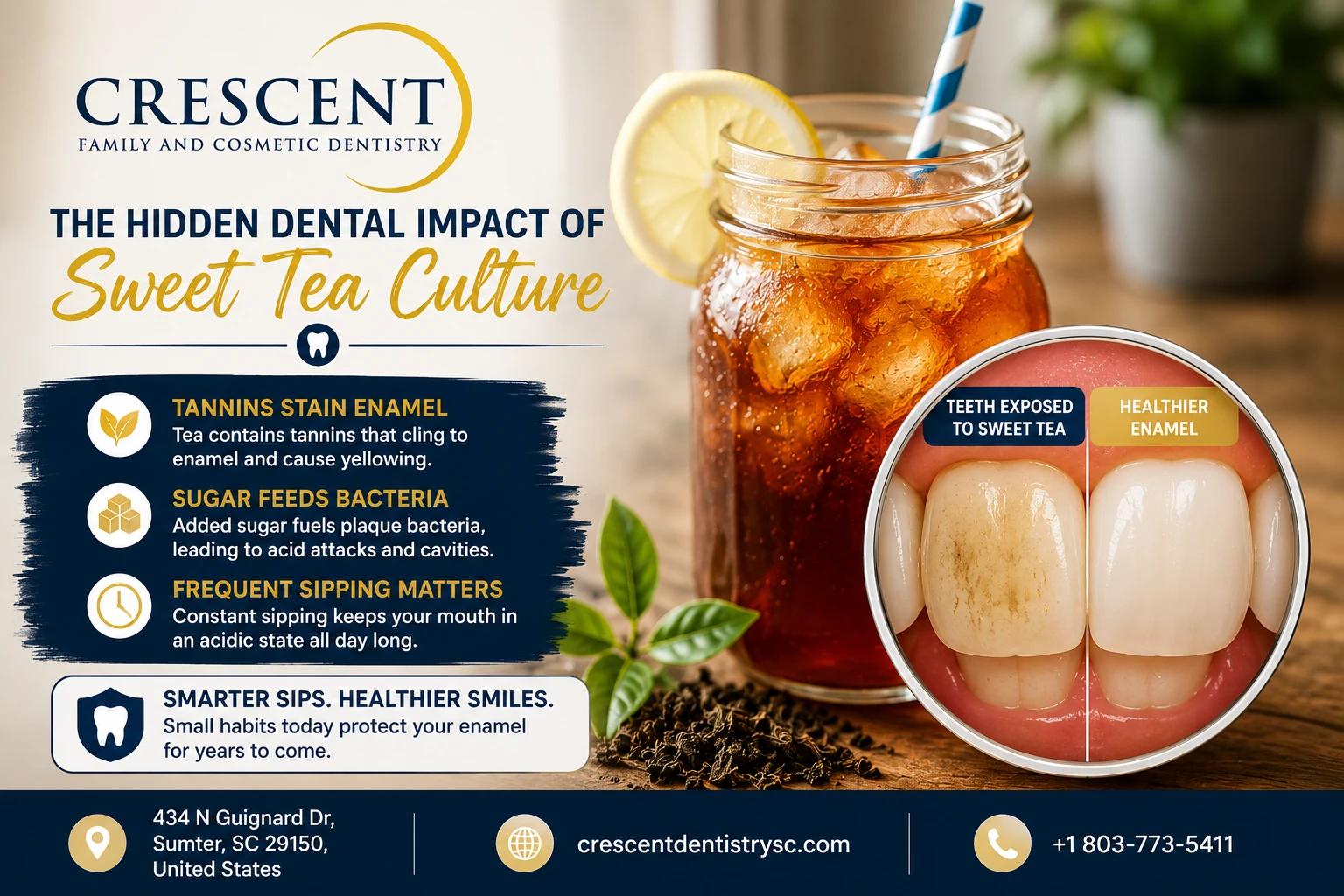
Tea contains tannins, which are natural compounds that easily cling to enamel.
Over time, tannins contribute to:
- yellow discoloration
- brown surface stains
- dull-looking enamel
In many adults, tea stains develop gradually enough that people barely notice until they compare older photos.
And honestly, some heavy tea staining in the South is extremely recognizable to dental professionals.
Dentists can often tell when someone is a chronic tea drinker before they even mention it.
Sweet Tea Adds a Second Problem: Sugar
Now add the sugar.
Traditional Southern sweet tea often contains enormous amounts of added sugar.
Not “slightly sweet.”
Actual syrup-level sugar concentrations sometimes.
That matters because mouth bacteria feed on sugar and produce acids.
Those acids weaken enamel.
So while the tea stains the surface, the sugar simultaneously increases cavity risk underneath.
That combination is rough on teeth long term.
The Real Problem Is Usually Frequency
This is the part many people misunderstand.
One glass of sweet tea with lunch is usually not catastrophic.
The bigger issue is prolonged exposure.
A lot of adults in Sumter sip sweet tea:
- throughout workdays
- while driving
- during meals
- at night
- from refill cups all day long
That means the mouth stays in a near-constant acidic state.
Teeth never fully recover between exposures.
Dentists call this repeated acid attack.
And frequency often matters more than quantity.
“But I Brush My Teeth” Is Only Part of the Equation
Good brushing absolutely helps.
But brushing cannot fully erase constant sugar exposure.
Especially if:
- sweet tea is consumed all day
- teeth are coated repeatedly
- brushing happens only twice daily
- dry mouth is present
- flossing is inconsistent
This is why some patients feel frustrated.
They brush regularly but still develop:
- staining
- cavities
- gum inflammation
Dietary habits matter too.
Sweet Tea Can Be Worse Than Soda in One Important Way
People tend to drink soda faster.
Sweet tea often gets sipped slowly for hours.
That prolonged exposure is the real issue.
Every sip essentially restarts the acid cycle.
So while soda is certainly rough on teeth, slowly sipping sweet tea all afternoon may create more continuous exposure.
Especially if the tea is heavily sweetened.
Enamel Does Not “Grow Back”
This is important.
Enamel is incredibly strong, but once it is significantly worn away, the body cannot regenerate it naturally.
That means long-term erosion and staining eventually become harder to reverse.
Early signs may include:
- yellowing
- sensitivity
- dull enamel
- rough texture
- staining near the gumline
More advanced wear can contribute to:
- chipping
- transparency at tooth edges
- increased sensitivity
- higher cavity risk
Sweet Tea Is Also Drying for Some People
Tea contains caffeine.
And caffeine can contribute to dry mouth in some patients.
Why does that matter?
Because saliva protects teeth.
Saliva helps:
- neutralize acids
- wash away sugars
- protect enamel
- reduce bacterial buildup
A dry mouth combined with sugary drinks becomes a much higher-risk environment for cavities.
Lemon in Tea Makes Things Even More Acidic
Many people in South Carolina add lemon to sweet tea.
Which tastes great.
But lemon increases acidity significantly.
Now the teeth face:
- sugar exposure
- tannin staining
- acid erosion
All at the same time.
Again, one glass is not catastrophic.
But chronic exposure adds up.
Whitening Toothpaste Usually Will Not Fully Fix Tea Stains
This is where many patients get frustrated.
Tea staining often becomes deeply embedded over time.
Whitening toothpaste mainly removes superficial surface stains.
And many whitening toothpastes are abrasive.
That means aggressive scrubbing may:
- irritate gums
- worsen sensitivity
- wear enamel gradually
Especially in patients already brushing too hard.
Professional cleanings and whitening treatments generally work better for established tea stains.
The “Healthy Drink” Confusion
Some people assume sweet tea is healthier because it is “tea.”
Compared to soda nutritionally, maybe in some contexts.
For teeth?
The difference is not always dramatic if the tea contains large amounts of sugar.
From a cavity perspective, bacteria mainly care about sugar exposure frequency.
Not Southern traditions.
Kids in Sumter Often Start Sweet Tea Young
This is something dentists notice frequently in the South.
Children are introduced to sweet tea extremely early in some households.
Unfortunately, prolonged sugary drink exposure during childhood increases cavity risk significantly.
Especially when kids:
- sip from cups throughout the day
- drink tea before bed
- skip brushing at night
- snack constantly alongside sugary drinks
Baby teeth absolutely can decay from sweet tea exposure.
And yes, dentists in South Carolina see this regularly.
You Probably Do Not Need to Quit Sweet Tea Completely
This part matters because unrealistic advice gets ignored.
Most lifelong Southerners are not permanently abandoning sweet tea.
And honestly, most dentists understand that.
The goal is moderation and smarter habits.
Not pretending cultural foods and drinks do not exist.
How to Drink Sweet Tea More Safely
Dentists usually recommend reducing frequency more than obsessing over perfection.
Some realistic improvements include:
Drink It With Meals Instead of Constantly
This reduces prolonged exposure.
Use a Straw When Possible
Especially for iced tea.
Less contact with front teeth may reduce staining.
Rinse With Water Afterward
Simple but effective.
Reduce Sugar Gradually
Even small reductions help.
Many patients eventually adjust to less sweetness surprisingly well.
Avoid Brushing Immediately After Acidic Drinks
Wait about 30 minutes.
Brushing immediately after acidic exposure may worsen enamel wear.
Get Professional Cleanings Consistently
Tea stains tend to accumulate slowly.
Routine cleanings help manage buildup before staining becomes severe.
Some Patients Are More Vulnerable Than Others
Not everyone stains equally.
Factors include:
- enamel thickness
- genetics
- saliva quality
- smoking
- dry mouth
- oral hygiene habits
- existing enamel wear
Some people drink tea daily for decades with modest staining.
Others stain quickly.
The Bigger Problem Is Usually the Entire Pattern
Sweet tea alone is rarely the entire issue.
The larger pattern often includes:
- frequent snacking
- inconsistent flossing
- dry mouth
- delayed cleanings
- smoking
- nighttime sipping
- poor hydration
Oral health problems usually develop from combined habits over time.
Not one single food or drink.
The Bottom Line
Sweet tea is deeply woven into life in Sumter and throughout South Carolina.
But from a dental perspective, it is one of the most common contributors to:
- enamel staining
- cavity risk
- acid exposure
- long-term discoloration
Not because tea itself is terrible.
But because constant sugary sipping creates a perfect storm for teeth.
At Crescent Family & Cosmetic Dentistry, the goal is not shaming patients for enjoying Southern traditions.
It is helping patients in Sumter and Columbia understand how daily habits affect enamel long term — and how small realistic changes can protect their smile without giving up everything they enjoy.
FAQs About Sweet Tea and Teeth
Does tea stain teeth more than coffee?
In many cases, yes.
Black tea contains tannins that can create significant staining over time.
Is unsweet tea better for teeth?
Usually yes.
Removing sugar reduces cavity risk substantially, though staining can still occur.
Does sweet tea cause cavities?
Frequent sugary tea exposure can absolutely contribute to cavities.
Is adding lemon worse for enamel?
Yes.
Lemon increases acidity, which may contribute to enamel erosion.
Can whitening remove tea stains?
Often yes, especially professional whitening and cleanings.
But severe staining may require more involved cosmetic treatment.
Is sweet tea worse than soda?
Sometimes the problem is frequency.
People often sip sweet tea continuously for hours, creating prolonged exposure.
Should kids drink sweet tea regularly?
Dentists generally recommend limiting sugary drinks for children to reduce cavity risk.
What is the best drink for enamel?
Water remains the best everyday beverage for protecting teeth.
Sweet Tea Leaving Stains?
Enjoy your Southern favorite without hiding your smile. Let our dental team help tackle stubborn enamel stains. Call now for an appointment.