
Financing Dental Trauma: Emergency Costs for Sumter Sports Injuries
Sports-related dental injuries can cost anywhere from a few hundred dollars for a minor chipped tooth to several thousand dollars when extensive restoration is necessary. For Sumter families, understanding emergency dental costs, insurance coverage, and financing options can make an unexpected sports injury easier to manage without delaying important treatment.
At Crescent Family and Cosmetic Dentistry, we help athletes and families address broken, cracked, and knocked-out teeth. Whether an injury happens during football practice, a basketball game, or a weekend recreational activity, knowing what treatment may cost and how to pay for it helps families make informed decisions.
How Much Does Emergency Dental Treatment Cost After a Sports Injury?
The cost of treating sports-related dental trauma depends on the severity of the injury, the number of teeth affected, and the procedures required.
A small chip might only need dental bonding, while a severely fractured tooth could require root canal therapy, a crown, or extraction.
Estimated Emergency Dental Costs in Sumter, SC
The following estimates reflect pricing published by Crescent Family and Cosmetic Dentistry for common emergency treatments.
| Emergency Dental Treatment | Estimated Cost |
| Emergency consultation and examination | 100–200 |
| Dental X-rays | 50–150 |
| Dental bonding for minor chips | 150–500 |
| Dental crown | 800–2,000 |
| Root canal treatment | 600–1,200 |
| Tooth reimplantation | 300–2,000 |
| Tooth extraction | 200–600 |
| Soft tissue suturing | 200–500 |
These are published estimates, not guaranteed fees. Actual costs depend on the patient’s condition, examination findings, treatment complexity, and any additional procedures.
For example, an athlete with a chipped front tooth might need an examination, X-rays, and bonding. A more serious injury involving the tooth’s nerve could require several procedures and follow-up appointments.
We recommend obtaining an individualized treatment estimate so you understand the immediate expenses and any possible future costs.
What Sports Injuries Commonly Cause Dental Emergencies?
Dental trauma can occur in contact sports, recreational activities, and accidental falls.
Athletes do not need to participate in a high-contact sport to experience a serious tooth injury.
Football and Basketball Injuries
Football and basketball involve sudden movements, collisions, and accidental contact with other players.
An elbow to the mouth, a fall onto the court, or a direct impact can cause:
- Chipped or fractured teeth
- Knocked-out permanent teeth
- Displaced or loosened teeth
- Cuts to the gums and lips
- Jaw injuries
The severity of the damage may not be immediately apparent. Even a tooth that looks intact can sustain internal trauma.
Baseball, Softball, and Soccer Injuries
A ball striking the face or an unexpected player collision can damage teeth and supporting structures.
Baseball and softball injuries may involve high-speed impacts, while soccer injuries can happen during headers, tackles, and accidental contact.
Athletes experiencing tooth movement, bleeding, or persistent pain should receive prompt dental evaluation.
Wrestling, Cheerleading, and Recreational Sports
Wrestling, cheerleading, gymnastics, cycling, and skateboarding also carry dental injury risks.
Falls and sudden impacts can cause cracks or damage to existing fillings and crowns.
For Sumter families with children involved in school athletics, understanding these risks can help with both emergency preparation and preventive care.
What Should You Do Immediately After a Sports-Related Dental Injury?
Taking the correct steps immediately after an injury can affect whether a damaged tooth can be saved.
Financial concerns are understandable, but a time-sensitive dental emergency should be assessed before treatment is delayed to compare prices or financing options.
If a Permanent Tooth Is Knocked Out
A knocked-out permanent tooth requires immediate attention.
Follow these steps:
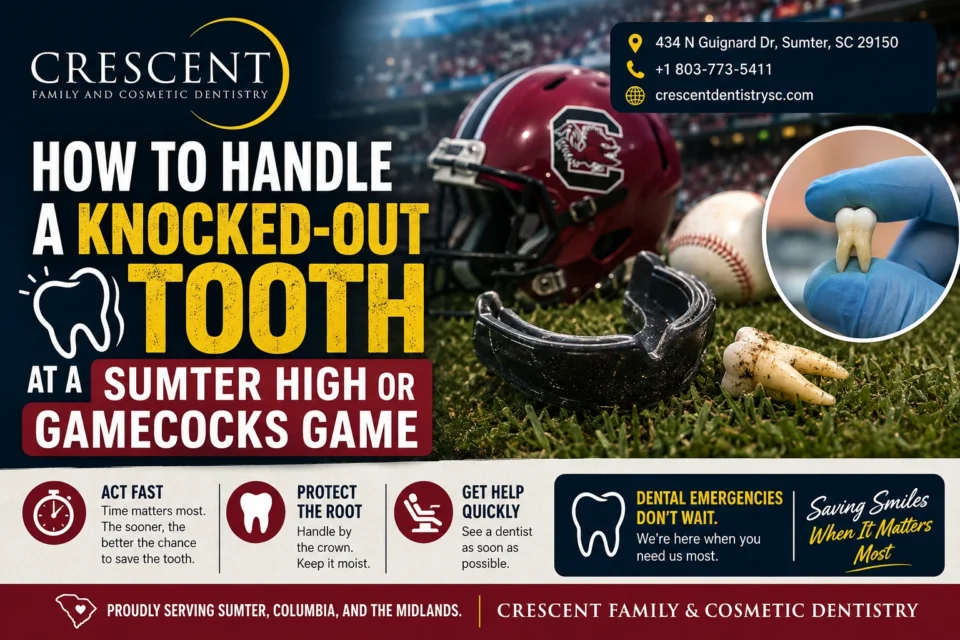
- Find the tooth and hold it by the crown, not the root.
- If dirty, gently rinse it with milk or saline. Do not scrub it.
- If possible, carefully place it back into its socket without forcing it.
- If reinsertion is not possible, place it in milk or an appropriate tooth-preservation solution.
- Seek emergency dental treatment immediately, ideally within 30 minutes.
Do not attempt to reimplant a baby tooth, as doing so can damage the developing permanent tooth.
For young children, seek immediate professional guidance if you are unsure whether the knocked-out tooth is permanent.
If a Tooth Is Chipped or Cracked
Rinse the mouth gently with water and apply a cold compress outside the cheek if swelling develops.
Save any broken tooth fragments and bring them to the appointment.
Avoid chewing with the injured tooth until a dentist has evaluated the damage.
If There Is Significant Bleeding or Facial Trauma
Apply gentle pressure with clean gauze for bleeding from the gums or lips.
Go to an emergency department for uncontrolled bleeding, suspected jaw fractures, difficulty breathing, significant facial trauma, or symptoms of a head injury.
Dental treatment can follow once immediate medical concerns are addressed.
Why Can Dental Trauma Become Expensive?
A sports injury may require more than one appointment or procedure.
The initial emergency visit often focuses on assessing the injury, managing pain, and stabilizing the affected teeth.
Additional treatment may be necessary after the initial examination.
The Depth of the Tooth Injury
Minor enamel damage generally requires less extensive treatment than a fracture extending into the dentin or pulp.
If the inner tooth tissue becomes damaged or infected, root canal treatment may be necessary.
Teeth that cannot be restored may require extraction and eventual replacement.
Damage to Multiple Teeth
An impact affecting several teeth can increase expenses considerably.
For example, an athlete might have one chipped tooth, another that has shifted position, and an injured lip.
Each problem may require separate treatment.
Follow-Up Care
Some dental injuries require monitoring for months or longer.
A tooth that initially appears stable can later develop pulp complications or changes around the root.
Follow-up X-rays and examinations help identify these issues, but they may also add to the overall treatment cost.
When we discuss treatment, we encourage families to consider both the immediate procedure and any recommended monitoring.
Does Dental Insurance Cover Sports-Related Tooth Injuries?
Many dental insurance policies provide benefits for emergency examinations and restorative treatment, but coverage varies significantly.
An emergency procedure is not automatically covered in full simply because an accident caused the injury.
What Dental Insurance May Cover
Depending on the policy, benefits may apply to:
- Emergency examinations
- Diagnostic X-rays
- Dental bonding and fillings
- Root canal treatment
- Dental crowns
- Tooth extractions
- Certain tooth replacement procedures
Coverage percentages, annual maximums, deductibles, and waiting periods can affect the final bill.
Some plans also have restrictions on specific restorative procedures or replacement teeth.
Could Medical Insurance Help?
In certain cases, medical insurance may cover treatment associated with accidental dental injuries.
This depends on the policy’s accident benefits, exclusions, and whether the treatment qualifies as a covered medical service.
For example, treatment for a jaw fracture or significant facial trauma may fall under medical insurance.
Routine dental restoration following an accident may be handled differently.
Families should contact both insurance carriers when appropriate and ask whether accident-related dental benefits are available.
What About School or Athletic Insurance?
Some school athletic programs or sports organizations offer supplemental accident insurance.
These policies may help cover certain expenses after primary insurance has processed a claim.
However, coverage is not universal, and benefits may depend on the specific activity, injury, and policy conditions.
Parents can contact the school’s athletic department or program administrator to ask whether supplemental coverage applies.
How Can You Finance Emergency Dental Treatment in Sumter?
Unexpected dental expenses can strain a household budget, particularly when extensive restorative care is required.
Fortunately, families may have several payment options.
1. Dental Payment Plans
Some dental practices offer payment arrangements that divide treatment expenses into more manageable payments.
At Crescent Family and Cosmetic Dentistry, we offer flexible payment and financing options for qualifying dental care.
The available arrangements may depend on the treatment plan, financing terms, and any applicable approval requirements.
We encourage patients to discuss their financial concerns with our team before treatment whenever circumstances allow.
2. Third-Party Dental Financing
Healthcare financing programs may allow qualified patients to spread treatment costs over a specified repayment period.
Depending on the financing provider, options may include promotional financing or fixed monthly payments.
Before accepting an offer, review:
- The interest rate and annual percentage rate (APR)
- Any deferred-interest conditions
- The monthly payment amount
- The repayment period
- Late payment fees
- The total amount payable
A financing plan can make immediate treatment expenses more manageable, but borrowing costs should be considered carefully.
3. Health Savings Accounts (HSAs)
If your family has a Health Savings Account, eligible emergency dental treatment can generally be paid for using available HSA funds.
Qualified dental procedures may include emergency examinations, X-rays, root canals, crowns, and other medically necessary restorative services.
HSA funds generally remain available from year to year.
4. Flexible Spending Accounts (FSAs)
Healthcare FSA funds can also generally be used for qualifying dental treatment.
However, FSAs may have annual spending deadlines, grace periods, or limited carryover provisions.
Patients should confirm the rules with their plan administrator.
5. Combining Insurance and Financing
Families may be able to use dental insurance for covered services and arrange financing for their remaining out-of-pocket expenses.
For example, insurance might cover part of a root canal while the patient uses HSA funds or an approved payment arrangement for the balance.
Our team can help patients review estimated costs and discuss available payment arrangements before proceeding.