
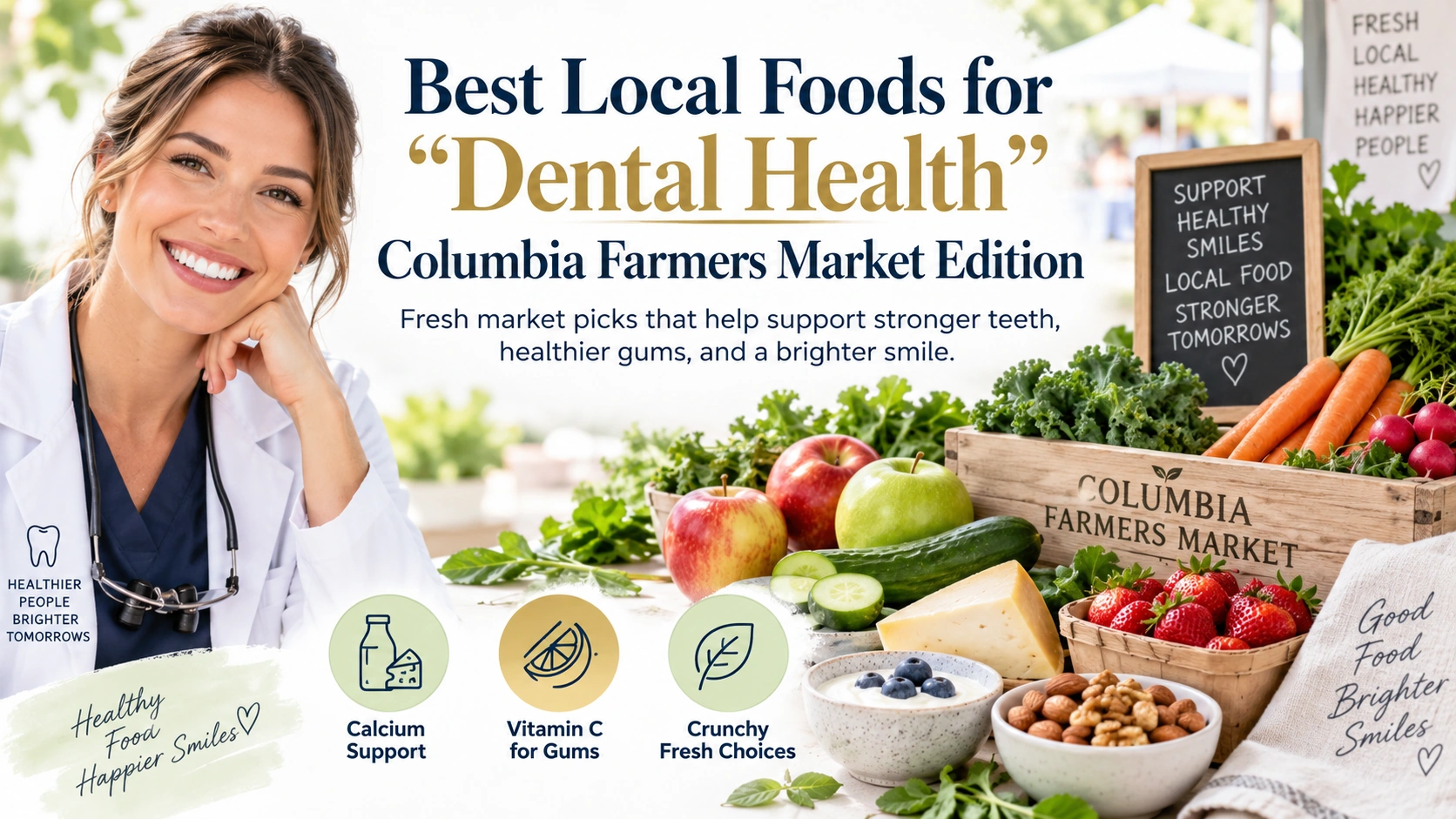
Best Local Foods for “Dental Health”: Columbia Farmers Market Edition
A trip to a farmers market usually starts with one question:
What looks good today?
But what if you added another question?
What foods are good choices for my teeth and gums?
At Crescent Family and Cosmetic Dentistry, we spend plenty of time talking about brushing, flossing, fluoride, and professional cleanings. Those things are essential, but your everyday food choices also influence your oral health.
And living in the Columbia area gives us access to an impressive variety of fresh produce and locally produced foods.
From crunchy apples and carrots to leafy greens and dairy products, a farmers market can provide plenty of ingredients for meals and snacks that support a healthy mouth.
That does not mean there is a magical vegetable that prevents cavities.
Dental health is more complicated than that.
But choosing nutrient-dense foods while limiting frequent exposure to added sugars and acidic beverages can support both your smile and your overall health.
So grab your market bag.
Here are some of our favorite types of farmers market finds for a healthier smile.
First Stop: Columbia’s Farmers Markets
Columbia and the surrounding Midlands offer several places to shop for fresh and locally produced foods.
The South Carolina State Farmers Market in West Columbia is one of the area’s major options, offering produce and specialty products throughout the year.
Columbia also has community markets where shoppers can find seasonal produce and locally made foods.
What you find will depend on the season.
That is part of the fun.
Instead of walking into the market looking for one specific “superfood,” look for categories of foods that can contribute to a balanced, tooth-friendly diet.
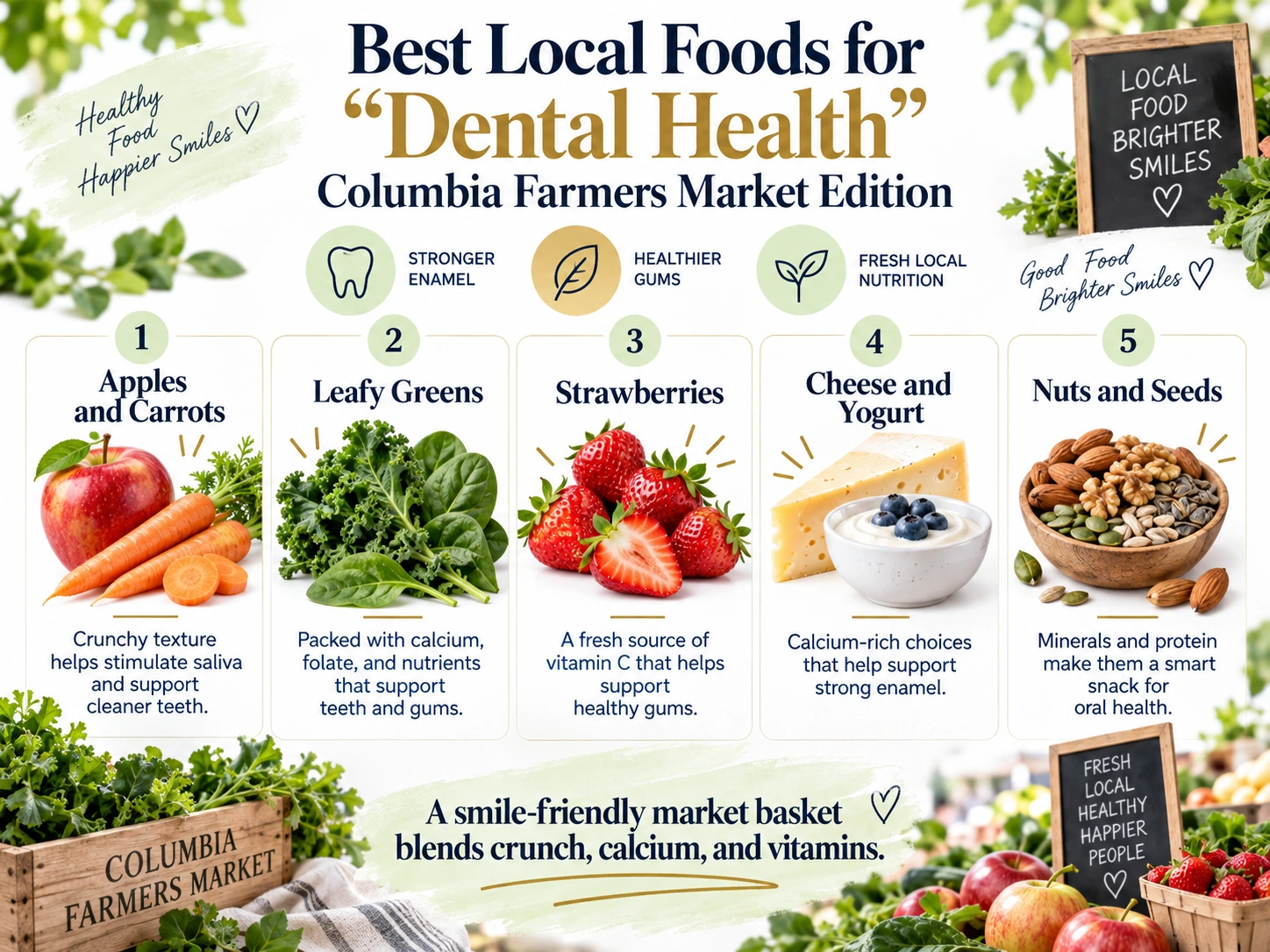
#1: Crunchy Apples
There is a reason apples frequently appear in conversations about tooth-friendly snacks.
Apples contain water and fiber, and chewing a crisp apple stimulates saliva production.
Saliva is extremely important for oral health.
It helps wash food particles away from teeth and neutralize acids in the mouth.
That does not mean eating an apple is equivalent to brushing your teeth.
It is not.
Apples also contain natural sugars and acids, so they should still be viewed as food rather than a dental cleaning tool.
But compared with sticky candy or sugary baked snacks, a fresh apple can be a sensible choice.
A Simple Farmers Market Snack
Try slicing an apple and pairing it with cheese or unsweetened nut butter.
The combination can be satisfying without relying on candy, cookies, or other foods containing large amounts of added sugar.
Just remember that brushing and flossing still need to happen later.
No amount of apple crunch replaces your toothbrush.
#2: Carrots
Fresh carrots are another excellent market-bag candidate.
Their firm, crunchy texture requires plenty of chewing, which can encourage saliva production.
Carrots also provide fiber and nutrients as part of a balanced diet.
Raw carrots work particularly well as a convenient snack because they are portable and naturally crunchy.
You can slice them into sticks and pair them with hummus or another low-sugar dip.
One caution: if you have cracked teeth, significant dental restorations, braces, or other dental concerns, biting directly into extremely hard foods may not be appropriate.
Cutting crunchy vegetables into smaller pieces can make them easier to enjoy.
#3: Leafy Greens
Collards are practically part of South Carolina’s culinary identity.
Fortunately, leafy greens can also fit nicely into a diet that supports oral and overall health.
Depending on the season, your local market may offer:
- Collard greens
- Kale
- Spinach
- Turnip greens
- Mustard greens
- Lettuce
Leafy green vegetables provide a variety of vitamins and minerals and tend to contain relatively little sugar.
They are also versatile.
You can add greens to:
- Salads
- Omelets
- Soups
- Sandwiches
- Grain bowls
- Smoothies
- Side dishes
Of course, how you prepare them matters.
Loading vegetables with large amounts of sugary sauces changes the nutritional equation.
Let the produce do most of the work.
#4: Cheese and Other Dairy Foods
Depending on the vendors at your local market, you may find locally produced cheese, milk, yogurt, or other dairy products.
Dairy foods can provide calcium and phosphorus, nutrients involved in maintaining teeth and bones.
Cheese can also be an appealing alternative to sugary snacks.
Try pairing cheese with:
- Apple slices
- Fresh vegetables
- Nuts
- Whole-grain crackers
- Pear slices
Be mindful of flavored yogurts, however.
Some contain significant amounts of added sugar.
Plain or lower-sugar varieties may be more tooth-friendly choices.
#5: Cucumbers
On a hot Columbia day, few things are as refreshing as a crisp cucumber.
Cucumbers have a high water content, making them an easy addition to meals and snacks when temperatures rise.
Slice them for salads, add them to sandwiches, or eat them with hummus.
Their mild flavor also makes them useful for replacing some processed snack foods.
For example, instead of reaching for sticky fruit snacks or candy between meals, try sliced cucumbers, carrots, and cheese.
Your teeth are exposed to fewer added sugars, and you still get a satisfying snack.
#6: Fresh Peppers
Bell peppers provide crunch without the added sugar found in many packaged snacks.
Depending on what is available at the market, you may find green, red, yellow, or orange peppers.
Slice them into strips and eat them raw, add them to salads, or cook them with other local vegetables.
Peppers also pair well with cheese, eggs, lean proteins, and dips.
Again, there is no single vegetable that “cleans” your teeth.
The advantage comes from building meals around whole, nutrient-dense foods instead of constantly snacking on highly processed sugary products.
#7: Strawberries
South Carolina strawberries can be difficult to resist when they are in season.
They provide vitamin C and other nutrients, but we need to clear up one dental myth.
Strawberries do not whiten your teeth.
You may see homemade whitening recipes online involving mashed strawberries and baking soda.
We do not recommend treating fruit as a DIY whitening product.
Strawberries are naturally acidic.
Repeatedly rubbing acidic substances against enamel is not a safe substitute for professional whitening.
Enjoy strawberries for what they are: delicious fruit.
Eat them as part of a balanced diet rather than turning them into homemade toothpaste.
#8: Peaches
Few foods say South Carolina quite like a ripe peach.
Peaches can absolutely be part of a healthy diet.
However, like other fruits, they contain natural sugars.
That does not mean you should avoid them.
The bigger dental concern is usually the frequency and form in which sugar is consumed.
Eating a fresh peach with a meal is very different from repeatedly sipping a peach-flavored sugary beverage throughout the afternoon.
Fresh fruit also provides fiber and nutrients that sweetened drinks do not provide in the same way.
So when peach season arrives, enjoy the real thing.
#9: Watermelon
A cold slice of watermelon on a hot Midlands afternoon is hard to beat.
Watermelon contains a large amount of water, making it a refreshing seasonal option.
Like other fruit, it contains natural sugar, so it is not “sugar-free.”
But choosing whole fruit instead of candy or a sugary frozen dessert can be a sensible swap.
Watermelon can also help make hydration more appealing during hot weather.
Just remember that your primary source of hydration should still be water.
#10: Nuts and Seeds
Some farmers markets and specialty vendors offer nuts, seeds, or products made from them.
Unsweetened nuts can make an excellent snack.
They provide protein, fats, and minerals without bathing your teeth in added sugar.
However, patients with certain dental restorations should be careful with extremely hard nuts.
Do not use your teeth to crack shells.
And if you have a temporary crown, cracked tooth, or other vulnerable restoration, ask us which foods you should avoid.
Healthy food can still break a tooth if you bite something harder than your dental work can handle.
The Farmers Market Foods to Treat More Carefully
A farmers market is full of wonderful foods.
It can also contain plenty of sugar.
Local does not automatically mean tooth-friendly.
You may encounter:
- Honey
- Jams
- Jellies
- Pastries
- Cakes
- Cookies
- Sweetened beverages
- Syrups
- Candied nuts
- Dried fruits
There is nothing wrong with enjoying a treat occasionally.
The problem is assuming something cannot affect your teeth simply because it is homemade, organic, locally produced, or purchased from a farm.
Sugar is still sugar from the perspective of cavity-causing bacteria.
The Honey Myth
Local honey is popular at farmers markets.
It may be delicious.
But honey is still a source of sugar.
Your oral bacteria do not give honey a free pass because it came from a local beekeeper.
If you enjoy honey, treat it as a sweetener.
Use it reasonably rather than continuously exposing your teeth to it throughout the day.
Be Careful With Dried Fruit
Dried fruit can look like an extremely healthy snack.
Nutritionally, it can provide useful nutrients.
From a dental perspective, however, there is another factor to consider: texture.
Some dried fruits are sticky.
They can cling to grooves and spaces between teeth longer than fresh fruit.
They may also provide a concentrated source of natural sugars because much of the water has been removed.
That does not mean dried fruit is forbidden.
It simply means fresh fruit may often be a friendlier everyday choice for your teeth.
Frequency Matters Almost as Much as the Food
One of the biggest lessons in dental nutrition is that how often your teeth encounter sugar matters.
Imagine eating a sweet dessert immediately after dinner.
Now compare that with sipping sweet tea every 15 minutes for five hours.
The second pattern repeatedly supplies oral bacteria with fermentable carbohydrates.
Those bacteria produce acids that contribute to enamel demineralization.
This is why constantly grazing on sugary snacks or sipping sweetened beverages can be problematic.
Giving your mouth breaks between meals allows saliva to help restore a healthier oral environment.
Yes, We Need to Talk About Sweet Tea
This is South Carolina.
We cannot pretend sweet tea does not exist.
You do not necessarily need to eliminate every glass of sweet tea to care about your dental health.
But how you drink it matters.
Sipping sweet tea continuously throughout the day repeatedly exposes your teeth to sugar.
A better strategy is to enjoy it with a meal rather than carrying a cup around for hours.
Drink water afterward.
And make plain water your primary everyday beverage.
Build a “Dental-Friendly” Farmers Market Bag
If we were walking through a Columbia-area market and filling a bag with foods for a smile-conscious household, we might choose:
Crunch:
Apples, carrots, cucumbers, and peppers.
Greens:
Collards, kale, spinach, or other seasonal leafy vegetables.
Fruit:
Peaches, berries, watermelon, pears, or whatever is currently in season.
Protein and minerals:
Cheese, unsweetened dairy products, nuts, seeds, eggs, or other appropriate local options.
Hydration:
Water rather than relying on sweetened beverages.
The exact selection changes with the season.
That variety is one of the biggest advantages of shopping locally.
Food Helps, but It Cannot Replace Dental Care
You could eat leafy greens at every meal and still develop a cavity.
You could snack on carrots every afternoon and still develop gum disease if plaque is not removed effectively.
Nutrition is one part of oral health.
You still need to:
- Brush twice daily with fluoride toothpaste
- Clean between your teeth
- Limit frequent added-sugar exposure
- Drink plenty of water
- Attend regular dental examinations
- Receive professional cleanings as recommended
Think of food as supporting your dental routine rather than replacing it.
Make Your Next Columbia Market Trip a Smile-Friendly One
Shopping at a local farmers market gives you an opportunity to support area growers while bringing more fresh foods into your kitchen.
It can also make healthy eating more interesting.
Instead of thinking about dental nutrition as a long list of foods you cannot have, focus on adding more foods that provide nutrients without constantly exposing your teeth to added sugar.
Grab the crunchy vegetables.
Try a new variety of leafy greens.
Pick up fresh seasonal fruit.
Pair an apple with cheese instead of reaching for another packaged sweet.
Small choices repeated consistently can make a meaningful difference.
Healthy Food + Healthy Habits = A Stronger Smile
At Crescent Family and Cosmetic Dentistry, we want our patients to think about oral health beyond the dental chair.
What you eat, what you drink, how frequently you snack, and how well you clean your teeth all work together.
So the next time you visit a Columbia-area farmers market, take a second look at what is in your basket.
Your grocery choices cannot replace brushing, flossing, or professional dentistry, but they can become another part of a healthier routine.
And if you are wondering whether your current diet or oral hygiene habits are affecting your teeth and gums, schedule an appointment with Crescent Family and Cosmetic Dentistry. We can help you build a preventive dental routine designed to keep your smile healthy between every farmers market season.