Why Your Breath Still Smells Under Your Mask: The “Biofilm” Reality
Wearing a mask can make you notice your own breath in a way you normally would not.
You put on a mask for work, travel, a medical appointment, or another situation, and suddenly there it is: an unpleasant smell that seems impossible to ignore.
Many people assume the mask itself is creating the odor.
Usually, it is not.
At Crescent Family and Cosmetic Dentistry, we often explain that persistent bad breath is frequently connected to what is happening inside the mouth. One of the biggest contributors is something called biofilm.
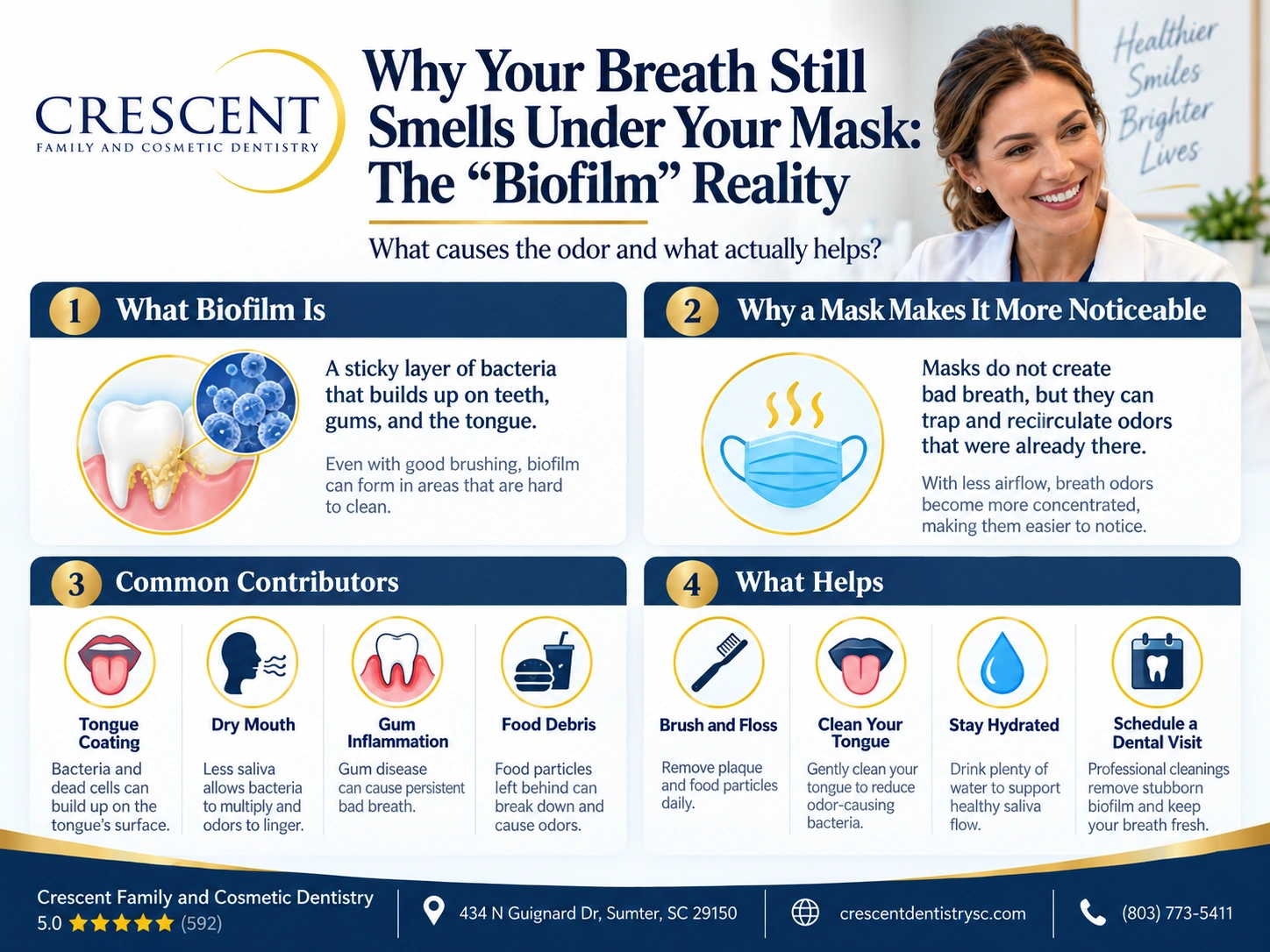
Biofilm is a sticky community of bacteria that forms on the teeth, gums, tongue, and other oral surfaces. If it is not removed effectively, it can contribute to bad breath, gum inflammation, tooth decay, and other oral health concerns.
Your mask may simply be making the odor easier for you to notice.
Understanding the role of biofilm can help you address the actual source instead of relying on mints, gum, or mouthwash to temporarily cover the smell.
What Is Oral Biofilm?
Biofilm is more than loose bacteria floating around in your mouth.
It is an organized layer of microorganisms that attaches to surfaces.
Dental plaque is one of the most familiar examples of oral biofilm.
After you brush your teeth, bacteria quickly begin attaching to the enamel again. Over time, they combine with proteins, food particles, and other substances to form a sticky layer.
If that layer is not removed regularly, it becomes thicker and more difficult to manage.
Biofilm commonly develops:
- Along the gumline
- Between teeth
- Around dental restorations
- On the tongue
- Around orthodontic appliances
- Beneath removable dental appliances
- In periodontal pockets
Some of the bacteria living in these areas can produce compounds with strong odors.
That is one reason bad breath may persist even if you brush your teeth every morning.
Why Does Bad Breath Smell Worse Under a Mask?
A mask can trap exhaled air closer to your nose.
Normally, much of the air you breathe out disperses into the surrounding environment. When you are wearing a mask, some of that air remains close to your face.
This can make you much more aware of odors coming from your mouth.
The mask does not necessarily create bad breath.
It may simply reveal it.
Think of it like walking into a room after someone sprayed perfume. The scent may be easier to notice in an enclosed space than outdoors.
The same basic idea applies to breath odors.
If odor-producing compounds are already present, wearing a mask can make them more noticeable.
The Bacteria Behind the Smell
Many cases of oral bad breath involve bacteria that break down proteins.
As these bacteria process proteins from food particles, saliva, dead cells, and other organic material, they can release substances known as volatile sulfur compounds.
These compounds can create odors commonly described as:
- Rotten eggs
- Sulfur
- Sour
- Metallic
- Musty
This is why simply brushing the visible surfaces of your teeth may not completely solve persistent bad breath.
The bacteria may be concentrated somewhere you are not cleaning effectively.
For many patients, one of those places is the tongue.
Your Tongue Can Hold a Surprising Amount of Biofilm
Look at the surface of your tongue closely.
It is not smooth.
The tongue contains tiny structures and grooves that can trap bacteria, food debris, and dead cells.
A coating can gradually form, particularly toward the back of the tongue.
That coating can become a major source of odor.
Patients sometimes brush their teeth carefully twice a day but never clean their tongues. They then wonder why their breath continues to smell.
Adding tongue cleaning to your routine may help reduce bacterial buildup.
You can use a toothbrush or a tongue scraper, depending on what feels comfortable.
The goal is not to scrub aggressively.
Gentle, regular cleaning is usually more appropriate.
Plaque Along the Gumline Can Also Cause Bad Breath
Healthy gums fit closely around the teeth.
When plaque remains along the gumline, the bacteria can irritate the tissues and cause inflammation.
This early stage of gum disease is known as gingivitis.
Common symptoms may include:
- Red gums
- Swelling
- Bleeding during brushing or flossing
- Tenderness
- Persistent bad breath
Because gingivitis may not cause significant pain, some people ignore it.
But bleeding gums and chronic bad breath should not be considered normal.
They may indicate that biofilm is accumulating in areas that need better cleaning or professional attention.
What Happens When Biofilm Moves Below the Gumline?
When gum disease progresses, deeper spaces known as periodontal pockets can develop between the teeth and gums.
These pockets can collect bacteria and debris.
Because they extend below the gumline, normal brushing and flossing may not adequately clean them.
This can create an environment where odor-producing bacteria continue to thrive.
Advanced periodontal disease may also be associated with:
- Gum recession
- Bone loss
- Loose teeth
- Changes in the bite
- Persistent bad taste
- Ongoing bad breath
If bad breath remains despite good home care, periodontal disease is one condition we may evaluate.
Why Mouthwash May Not Fix the Problem
Mouthwash can make your mouth feel fresher.
Some products also contain ingredients designed to reduce certain bacteria.
But mouthwash cannot physically remove every layer of established biofilm.
If plaque remains stuck between teeth or hardened tartar is attached to the tooth surface, rinsing alone will not remove it.
That is why you may experience this familiar cycle:
You use mouthwash.
Your breath smells better for a while.
A few hours later, the odor returns.
The mouthwash addressed the symptom temporarily, but the source remained.
This does not mean mouthwash is useless.
It means rinsing should support brushing, interdental cleaning, tongue cleaning, and professional dental care rather than replace them.
Tartar Makes Biofilm Harder to Control
Plaque is relatively soft when it first develops.
If it remains on the teeth, minerals in saliva can cause it to harden into tartar, also called calculus.
Once tartar develops, you cannot reliably brush it away at home.
Its rough surface also gives additional plaque more places to attach.
Professional dental cleaning is necessary to remove these hardened deposits.
For patients who have not had a cleaning in a long time, tartar accumulation may be contributing to both gum inflammation and persistent bad breath.
Flossing Matters More Than Many People Realize
You can brush your teeth extremely well and still leave bacteria between them.
A toothbrush is not designed to clean every contact point thoroughly.
Food debris and plaque can remain between teeth, where bacteria continue breaking down organic material.
If you have ever flossed after skipping it for several days and noticed that the floss itself has an unpleasant smell, you have seen one example of what can accumulate in those spaces.
Daily interdental cleaning can make a significant difference.
Traditional floss works well for many people, but other options may include:
- Interdental brushes
- Water flossers
- Floss picks
- Specialized tools for bridges or orthodontic appliances
We can help recommend an option based on your teeth and gum health.
Dry Mouth Can Make Bad Breath Stronger
Saliva plays a major role in keeping the mouth clean.
It helps wash away food particles, neutralize acids, and limit bacterial buildup.
When saliva production decreases, odor-producing compounds may become more concentrated.
Dry mouth can occur for many reasons, including:
- Certain medications
- Dehydration
- Mouth breathing
- Alcohol consumption
- Tobacco use
- Some medical conditions
- Sleeping with the mouth open
Mask use itself is not necessarily the root cause, but some people may notice that they breathe through their mouths more frequently while wearing one.
That can contribute to dryness.
Drinking water regularly and addressing persistent dry mouth with your dental or medical provider may help.
Coffee Can Make the Situation Worse
Many people notice stronger breath after drinking coffee.
Coffee has a strong aroma of its own, but it can also contribute to oral dryness in some situations.
If you add milk, cream, or sugar, additional residue may remain in the mouth for bacteria to break down.
Combine coffee with existing tongue coating, plaque, or gum inflammation, and the odor can become much more noticeable under a mask.
Rinsing with water after coffee and maintaining consistent oral hygiene may help reduce lingering odors.
What About Garlic and Onions?
Not all bad breath comes from oral biofilm.
Certain foods can affect your breath after they are digested.
Compounds from foods such as garlic and onions may enter the bloodstream and eventually be released through the lungs when you breathe.
That means brushing your teeth may not immediately eliminate the odor.
However, food-related breath is generally temporary.
If your breath smells unpleasant every day regardless of what you eat, an ongoing oral source may be more likely.
Cavities Can Sometimes Contribute to Odor
Tooth decay does not always cause bad breath, but certain cavities can trap food and bacteria.
Large areas of decay, broken teeth, or defective restorations may create spaces that are difficult to clean.
Patients may notice food repeatedly getting stuck in the same area.
If bacteria and debris remain there, an unpleasant smell or taste can develop.
A dental examination can help us identify these areas.
Dental Appliances Need Cleaning Too
Anything worn in the mouth can collect biofilm.
That includes:
- Dentures
- Partial dentures
- Retainers
- Nightguards
- Clear aligners
- Sports mouthguards
If an appliance is not cleaned regularly, bacteria and odor can build up on its surface.
Putting a contaminated appliance back into a freshly brushed mouth simply reintroduces that biofilm.
Follow the cleaning instructions provided for your specific appliance.
Avoid using harsh chemicals or extremely hot water unless specifically recommended, since some materials can become damaged or distorted.
Could the Odor Be Coming From Somewhere Other Than Your Mouth?
Yes.
Although the mouth is a common source of bad breath, it is not the only possible source.
Persistent odor can sometimes be associated with issues involving the nose, sinuses, throat, digestive system, or other medical conditions.
That is why ongoing bad breath should not automatically be blamed on poor brushing.
If we evaluate your mouth and do not identify a clear dental cause, we may recommend discussing the issue with your medical provider.
The goal is to identify the source, not simply disguise the symptom.
How Can You Reduce Oral Biofilm?
Consistent daily care is the foundation.
A strong oral hygiene routine generally includes:
- Brush twice each day.
Use fluoride toothpaste and clean every surface of your teeth, including along the gumline. - Clean between your teeth daily.
Use floss or another interdental cleaning method recommended for you. - Clean your tongue.
Gently remove coating and debris, particularly toward the back of the tongue. - Stay hydrated.
Water supports saliva production and helps rinse away loose debris. - Clean removable appliances.
Do not allow biofilm to accumulate on retainers, aligners, dentures, or nightguards. - Attend regular dental cleanings.
Professional care can remove tartar and identify areas that are difficult to maintain at home. - Address bleeding gums.
Persistent bleeding may indicate inflammation or gum disease that needs attention.
When Should You See a Dentist About Bad Breath?
An occasional episode of bad breath is normal.
Persistent bad breath is different.
Consider scheduling a dental evaluation if:
- Your breath remains unpleasant despite regular brushing and flossing
- Your gums bleed frequently
- You have persistent gum swelling
- You notice a bad taste that keeps returning
- Your teeth feel loose
- Food repeatedly becomes trapped in one area
- You have not had a professional cleaning recently
- Other people regularly mention your breath
- You are constantly using mints or mouthwash to hide odor
We can examine your teeth, gums, tongue, and restorations to look for potential dental causes.
Your Mask May Be Telling You Something Useful
Nobody enjoys realizing their breath smells unpleasant.
But noticing the odor may actually give you useful information.
Instead of viewing your mask as the problem, consider it a reminder to evaluate what might be happening inside your mouth.
Persistent bad breath is often manageable once the underlying cause is identified.
For some patients, improving brushing and tongue cleaning is enough.
Others may need a professional cleaning, periodontal care, treatment for decay, or help managing dry mouth.
The key is treating the cause rather than endlessly covering the smell.
Fresh Breath Starts With a Healthier Mouth
At Crescent Family and Cosmetic Dentistry, we look beyond temporary freshness.
Our goal is to help patients understand why bad breath is occurring and whether biofilm, gum health, tartar buildup, tooth decay, dry mouth, or another dental concern may be contributing.
If you keep noticing unpleasant breath under your mask even though you brush every day, it may be time to take a closer look at your oral health.
Schedule a dental examination and cleaning with Crescent Family and Cosmetic Dentistry. We can help identify where odor-causing biofilm may be hiding and create a plan to keep your mouth healthier, cleaner, and fresher.