Can Teeth Grow Back After Extraction? No — Here’s Why, and What Works Instead
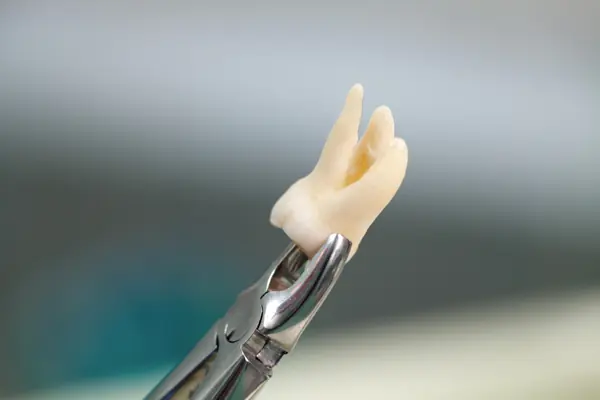
Quick answer: No. Adult (permanent) teeth cannot grow back after they are pulled or fall out, because humans only form two sets of tooth buds and both have been used by the late teens. The only teeth that are “replaced” are baby teeth, which give way to the permanent tooth already waiting underneath. A missing permanent tooth is replaced with an implant, a bridge or a partial denture.
Reviewed by the dental team at Crescent Family and Cosmetic Dentistry, Sumter and Columbia, SC. Last reviewed September 2026.
Why permanent teeth don’t grow back
Humans are diphyodont: we develop one set of 20 primary (baby) teeth and one set of 32 permanent teeth, and every one of them starts as a tooth bud that forms before birth or in early childhood. Once a permanent tooth has erupted, the bud that made it is gone and no reserve bud exists. Sharks, alligators and some rodents keep regenerating teeth because they keep a supply of dental stem cells in the jaw; humans do not. That is the whole answer, and no supplement, diet or exercise changes it.
The three situations people are usually asking about
| Situation | Will a tooth come back? | What actually happens |
|---|---|---|
| A baby tooth is pulled or falls out | Yes – the permanent tooth erupts | Usually within weeks to 6 months. Front teeth are replaced around age 6–8, canines and premolars 9–12, second molars 11–13. |
| A permanent tooth (incisor, premolar, molar) is extracted | No | The gum closes over the socket in 1–2 weeks and bone fills it in 2–3 months, but no tooth forms. Neighbors start drifting into the gap within months. |
| A wisdom tooth is removed | No | Rarely, a person has an extra (supernumerary) fourth molar behind it that erupts later and looks like a “regrown” wisdom tooth. It was always there on the X-ray. |
How long does it take for a tooth to grow back after being pulled?
For a baby tooth: the permanent tooth usually appears within a few weeks to six months, depending on how close it was to erupting. If nothing has appeared six months after a baby tooth was lost, or if the gap is closing because neighbors are tilting in, book a check – a small space maintainer prevents crowding later. For a permanent tooth: it will not grow back at any age. The socket heals; the tooth does not return.
Can a molar grow back after extraction?
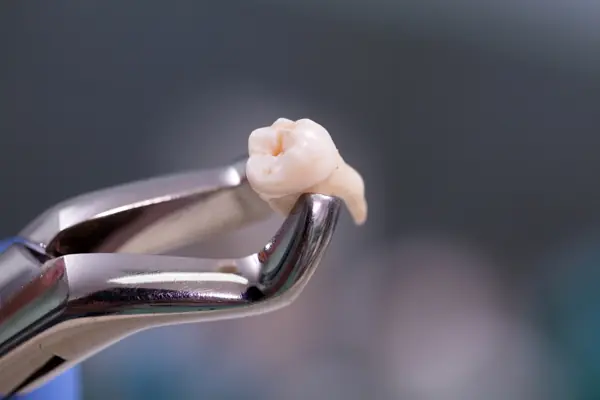
No. Molars are permanent teeth and follow the same rule. Because molars carry most of the chewing load, a missing molar causes the most noticeable changes: the tooth above or below it over-erupts, the teeth on either side tip into the space, chewing shifts to the other side, and the jaw bone under the gap resorbs. What you can see and feel in the months after a molar extraction is bone and gum healing, not a tooth – our jaw-healing timeline explains each stage.
Why does it sometimes feel like a tooth is growing back?
Three things get mistaken for regrowth: a sharp edge of bone (a sequestrum) working its way out of the socket in the first weeks; a retained root tip left behind during a difficult extraction, which shows up on an X-ray; and, in children and teens, a permanent tooth erupting in a spot where a baby tooth was pulled years earlier. All three are worth a quick look; none is a new adult tooth.
Will science ever regrow teeth?
Researchers are testing drugs that switch tooth-bud genes back on and stem-cell scaffolds that grow tooth-like structures in the lab, and the first human safety trial of a tooth-regrowth antibody was reported to begin in Japan in 2024. Nothing is available to patients, and realistic estimates are a decade or more away. Plan on replacement, not regrowth.
What to do about a missing permanent tooth
- Dental implant – a titanium root with a crown; the only option that also stops the bone from shrinking. Typical timing is 3–4 months after extraction, or the same day in selected cases.
- Dental bridge – a fixed replacement anchored to the neighboring teeth; faster and no surgery, but it does not preserve bone.
- Partial denture – removable, lowest cost, good for several missing teeth. See our dentures vs implants comparison.
- Do nothing – acceptable for some back teeth, but drifting and bone loss make later treatment more complex, so we still recommend a plan within the first year.
When to see a dentist
See us if a child’s baby tooth has been out for six months with no adult tooth, if an extraction site is still painful after a week, if you can feel a hard point in a healed socket, or to talk through replacing a missing tooth before the neighbors move. Our extraction aftercare instructions cover the first week.
Frequently asked questions
Can adult teeth grow back?
No. Permanent teeth cannot regenerate once lost, because no replacement tooth buds exist after the permanent set has formed.
How long does it take for a tooth to grow back?
Only baby teeth are replaced, usually within weeks to six months. Permanent teeth never grow back.
Can a molar tooth grow back after extraction?
No. A missing molar should be replaced with an implant, bridge or partial denture to stop drifting and bone loss.
Can wisdom teeth grow back after removal?
No. What looks like a regrown wisdom tooth is an extra (supernumerary) molar that was already present.
Do teeth grow back at 20, 30 or 40?
No. After the permanent teeth have erupted (complete by the early teens, wisdom teeth by 17–25), no new teeth form at any age.
Is it possible to regrow teeth in the future?
Early human trials of tooth-regrowth drugs were reported to begin in 2024, but no treatment is available and none is expected for years.
Lost a tooth? Let’s make a plan
Crescent Family and Cosmetic Dentistry performs tooth extractions and wisdom teeth removal and replaces missing teeth with implants, bridges and dentures at 434 N Guignard Dr, Sumter – (803) 773-5411 · 656 Bultman Dr, Sumter – (803) 778-2337 · 1211 Greenlawn Dr, Columbia – (803) 784-1304.