The Future of Crescent Dentistry: 3D Printing and AI in the Midlands.
3D printing and artificial intelligence (AI) are changing dentistry by improving how dental restorations are designed, how diagnostic images are reviewed, and how treatment is planned. For patients in Columbia, Sumter, and the South Carolina Midlands, these developments could mean more personalized dental care, streamlined appointments, and better communication about treatment options.
At Crescent Family and Cosmetic Dentistry, we already use digital X-rays, 3D imaging, and CEREC technology to support patient care. As 3D printing and AI continue evolving, we’re following how these technologies may further improve dentistry while keeping clinical judgment and patient needs at the center of treatment.
How Is Technology Changing the Future of Dentistry?
Modern dentistry is moving toward more personalized digital workflows.
Traditional dental treatment often involves physical impressions, laboratory models, and several steps between diagnosis and restoration placement.
Digital technology can simplify portions of this process by allowing dentists to capture, evaluate, and share detailed information electronically.
Two developments receiving particular attention are 3D printing and artificial intelligence.
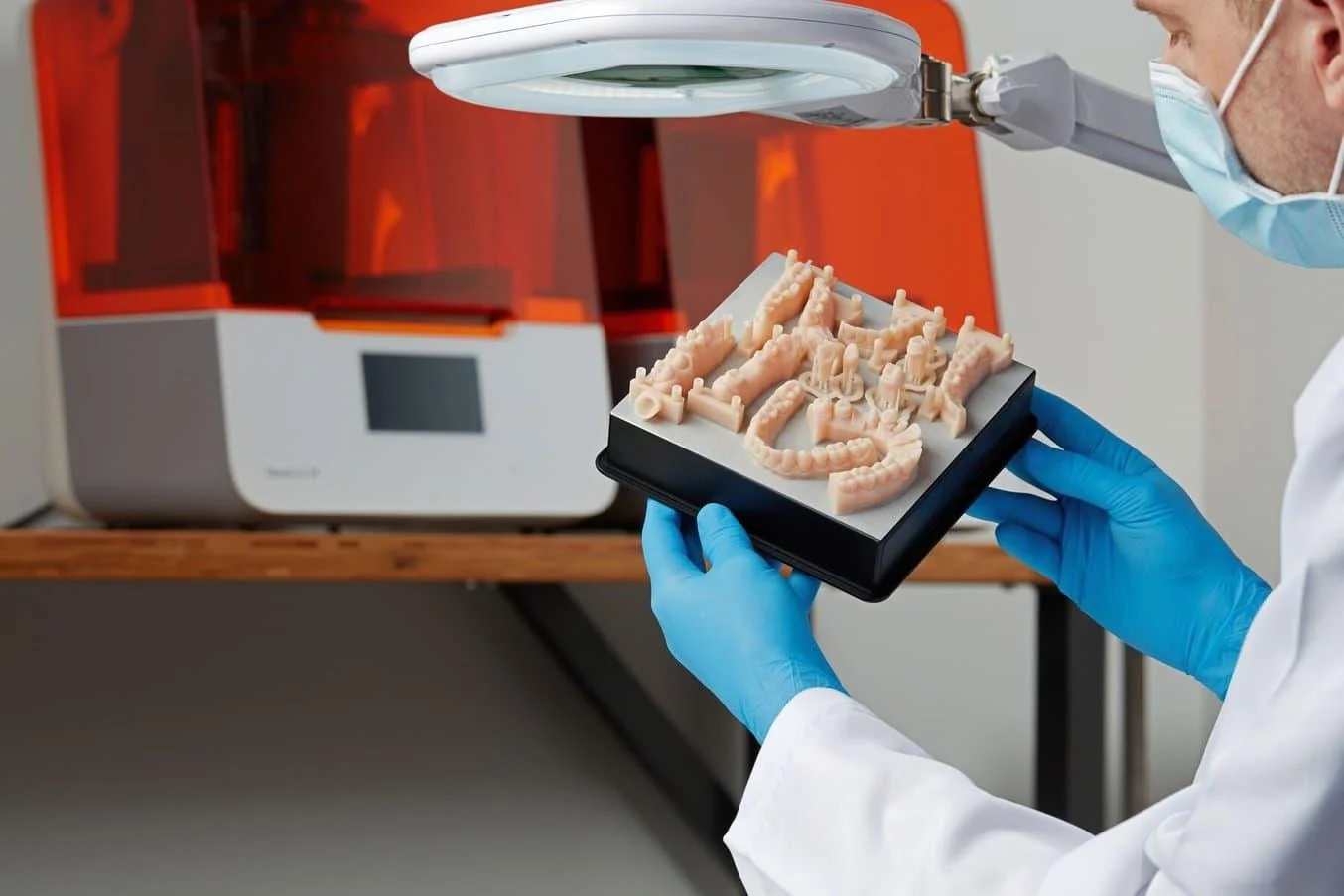
3D printing creates physical dental models, appliances, or restorations from digital designs.
Artificial intelligence analyzes information and identifies patterns that may help dental professionals perform certain clinical and administrative tasks.
Although these technologies work differently, both can support more efficient dental care.
However, new technology doesn’t automatically mean better treatment.
The most important consideration is whether a particular tool improves diagnosis, comfort, safety, or treatment outcomes.
At Crescent Family and Cosmetic Dentistry, we believe technology should support thoughtful dental care rather than replace the relationship between patients and their dentists.
What Digital Technology Does Crescent Family and Cosmetic Dentistry Already Use?
Before exploring future developments, it’s helpful to understand the digital tools already available within our practice.
Our published dental technology services include several systems designed to improve diagnosis and treatment planning.
CEREC Same-Day Dental Restorations
CEREC uses computer-aided design and computer-aided manufacturing, commonly called CAD/CAM.
After collecting digital information about a tooth, specialized software helps create a restoration design.
Our CEREC milling equipment then shapes a selected ceramic block into a custom restoration.
For appropriate cases, this technology allows us to create and place certain crowns and veneers during the same visit.
This is particularly convenient for patients who want to reduce the number of appointments needed for restorative treatment.
CBCT 3D Dental Imaging
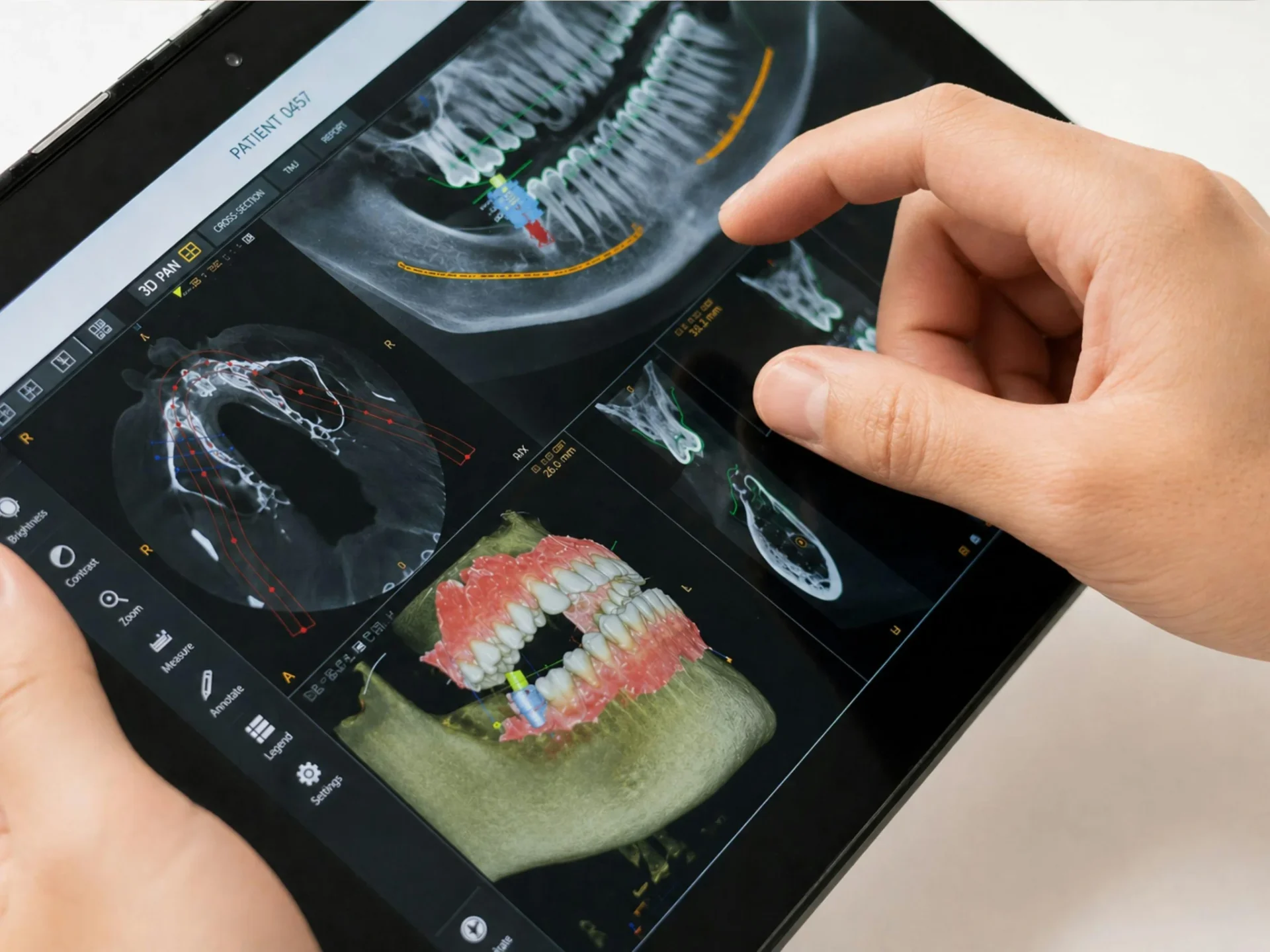
Cone-beam computed tomography, or CBCT, produces three-dimensional images of dental and surrounding anatomical structures.
These images can help us assess jawbone dimensions, tooth positioning, and important anatomical relationships.
CBCT is particularly useful for selected complex treatment-planning situations, including dental implants.
However, 3D imaging is not necessary for every dental appointment.
Digital Dental X-Rays
Our digital X-rays allow us to review diagnostic images on a computer monitor.
They generally require less radiation exposure than conventional film-based imaging systems when appropriate equipment settings are used.
Digital images also make it easier to explain findings directly to patients.
These technologies provide an existing foundation for understanding how future digital dentistry may develop.
What Is 3D Printing in Dentistry?
Dental 3D printing is a manufacturing process that builds an object from a computer-generated design, usually by forming material in successive layers.
Instead of creating a dental model entirely through conventional laboratory techniques, a dentist or dental laboratory can use digital information to produce a customized object.
The process generally involves three stages.
1. Capturing Digital Information
The dentist obtains information about the patient’s teeth or oral anatomy.
Depending on the procedure, this may involve an intraoral scan or appropriate three-dimensional imaging.
2. Designing the Dental Appliance
Specialized software converts the information into a digital model.
A dental professional or technician uses the model to design the required appliance, restoration, or surgical guide.
3. Printing and Finishing the Object
A compatible 3D printer creates the designed object using a material approved or otherwise legally marketed for its intended dental application.
The object may then require washing, curing, polishing, or other finishing steps.
The final product must be inspected before clinical use.
Importantly, 3D printing is different from our existing CEREC milling technology.
Milling removes material from a solid ceramic block, while printing builds an object layer by layer.
Both methods have applications in digital dentistry, but they are not interchangeable for every restoration.
How Could 3D Printing Improve Dental Care in the Midlands?
Dental laboratories and practices increasingly use 3D printing for customized devices.
Some applications are already established, while others continue to develop.
Custom Dental Models
Printed dental models can reproduce a patient’s teeth and surrounding structures.
These models may help dentists evaluate treatment options, plan procedures, and explain proposed changes.
For patients undergoing complex restorative work, a physical model can make the treatment easier to visualize.
Surgical Guides for Dental Implants
A surgical guide is a customized device that can help direct implant placement according to a previously prepared treatment plan.
Using appropriate digital imaging and planning software, a clinician can design a guide suited to the patient’s anatomy.
A 3D printer may then manufacture the guide using a compatible material.
However, guided surgery still requires appropriate clinical evaluation and professional expertise.
Nightguards and Oral Appliances
Dental laboratories can use 3D printing to create certain custom nightguards, retainers, and other oral appliances.
The designs can be based on digital information captured from the patient’s teeth.
For patients with bruxism, or teeth grinding, these manufacturing methods may provide additional options for producing protective appliances.
Dentures and Temporary Restorations
Certain dental materials and printing systems can also produce dentures, temporary crowns, and other selected restorations.
These applications may simplify manufacturing workflows.
However, not every 3D-printed material is suitable for permanent use or for every patient’s biting forces.
Clinical performance, material selection, and proper finishing remain essential.
Will 3D Printing Make Dental Crowns Available Faster?
3D printing could streamline production of certain dental restorations, but it does not automatically make every crown faster or more suitable.
Some printed materials are intended for temporary restorations, while specific permanent restorative materials have also received regulatory clearance.
Material durability, aesthetics, clinical indications, and manufacturing requirements determine what can be produced.
At Crescent Family and Cosmetic Dentistry, our CEREC system already supports same-day ceramic restorations for suitable patients.
Because this technology mills restorations from solid ceramic blocks, it represents a different manufacturing approach from 3D printing.
The future may involve different manufacturing methods working together, with dentists selecting the process that best fits each treatment.
Patients should not assume a printed crown is automatically stronger, cheaper, or more accurate than a milled ceramic crown.
How Is Artificial Intelligence Being Used in Dentistry?
Artificial intelligence is already being used in dental practices for selected imaging, administrative, and patient communication tasks.
According to an American Dental Association survey published in July 2026, approximately 43% of responding dentists reported using AI for at least one practice-related task.
The survey also found that approximately 23% used AI for imaging and diagnostic applications.
These findings show growing adoption, but they do not mean every dental practice currently uses AI.
AI-Assisted Dental X-Ray Analysis
Some AI software systems analyze dental radiographs and highlight areas that may deserve closer attention.
Depending on the particular system’s authorized purpose, these areas might involve suspected cavities, bone-level changes, or other findings.
This can provide additional information for the dentist to review.
However, an AI-generated highlight is not automatically a confirmed diagnosis.
Treatment Planning Support
AI-enabled tools may assist with analyzing anatomical measurements, organizing digital models, or identifying patterns in dental information.
These capabilities could support selected orthodontic, restorative, and implant-planning workflows.
The appropriate applications depend on the software’s intended use and clinical validation.
Administrative Efficiency
AI is also being used for appointment scheduling, documentation support, and insurance-related tasks.
Reducing repetitive administrative work could allow dental teams to spend more time communicating with patients.
However, efficiency improvements depend on how the technology is implemented and supervised.
Can AI Detect Cavities Better Than a Dentist?
AI may help identify suspicious findings on certain dental images, but it should not be considered a replacement for a comprehensive dental examination.
Dental diagnosis involves more than recognizing patterns on an X-ray.
Dentists also consider symptoms, medical history, visual examination findings, cavity risk, and other clinical information.
For example, a shadow on an X-ray doesn’t always mean a tooth needs a filling.
A dentist must determine whether the finding represents active disease, how advanced it is, and whether monitoring or treatment is appropriate.
AI systems can also produce false-positive or false-negative findings.
The American Dental Association has published standards and guidance addressing how dental imaging AI should be evaluated for accuracy, safety, bias, and reliability.
At Crescent Family and Cosmetic Dentistry, we believe final treatment decisions must remain grounded in professional clinical judgment.
Could AI Help Patients Understand Their Dental Treatment?
One potentially useful application of AI is improving communication.
Dental X-rays can be difficult for patients to interpret without assistance.
AI-assisted imaging systems may visually mark areas that require discussion, allowing dentists to explain findings more clearly.
For example, a patient might better understand why a specific tooth needs additional evaluation when the relevant image is displayed and discussed.
Digital treatment models can also help illustrate restorative options.
However, visual information must be presented accurately.
A highlighted area should not be described as definite disease unless the clinical evidence supports that conclusion.
Our priority is making sure patients understand what we find and why a particular treatment may be recommended.
What Are the Benefits of Combining 3D Printing and AI?
The two technologies may complement each other in selected digital dentistry workflows.
A possible future process could involve:
- Capturing accurate digital information about a patient’s teeth.
- Using appropriate software to assist with measurements or design.
- Having a dental professional review and approve the treatment plan.
- Manufacturing an appliance using a compatible 3D printing system.
- Evaluating the completed appliance for fit, function, and safety.
This approach could make certain manufacturing and planning processes more efficient.
It might also improve communication between dental offices and laboratories.
However, these potential benefits are not guaranteed.
Accurate scanning, validated software, appropriate materials, and professional oversight remain necessary.
Will AI and 3D Printing Reduce Dental Treatment Costs?
These technologies may reduce some laboratory and production expenses, but they do not necessarily lower the final price paid by patients.
Dental technology involves equipment purchases, software licensing, training, maintenance, and material expenses.
Printed dental appliances may also require specialized cleaning, curing, and quality-control procedures.
A more efficient manufacturing process doesn’t eliminate the costs associated with clinical examinations, treatment planning, or professional care.
Similarly, AI software may improve certain workflows while introducing additional subscription and implementation costs.
For Midlands patients, the most useful approach is to compare complete treatment estimates rather than assume a digitally manufactured restoration is automatically less expensive.
At Crescent Family and Cosmetic Dentistry, we encourage patients to ask about treatment costs, available alternatives, and appropriate payment options.
Are 3D-Printed Dental Materials Safe?
Dental materials manufactured through 3D printing must be appropriate for their intended clinical use.
The FDA regulates dental devices, including certain printed crowns, dentures, surgical guides, and other products.
However, not all printing materials are suitable for use inside the mouth.
Material safety depends on factors such as composition, intended use, manufacturing procedures, and proper post-processing.
For example, a resin intended for producing a demonstration model should not automatically be used to manufacture a permanent dental crown.
Improper processing can also affect the properties of a printed appliance.
Patients should expect dental professionals and laboratories to use suitable materials and follow applicable manufacturing requirements.
Technology should never come at the expense of patient safety.
What About Patient Privacy When Dentists Use AI?
Digital dentistry involves collecting sensitive information, including dental images and healthcare records.
When AI systems are involved, patient privacy becomes an important consideration.
Dental practices evaluating AI technology should consider:
- How patient information is stored and transmitted
- Whether vendors receive access to identifiable records
- Whether information is used for software training
- What security protections are available
- Whether the system supports applicable healthcare privacy requirements
Patients should be able to ask how their dental information is handled.
Responsible technology adoption includes protecting personal information, not simply introducing new software.
Will AI Eventually Replace Human Dentists?
AI is not a substitute for a qualified dental professional.
Dentistry involves clinical judgment, physical examinations, hands-on procedures, and personalized decision-making.
Software cannot independently address every factor affecting a patient’s oral health.
For example, choosing whether to restore or extract a damaged tooth requires considering its structure, periodontal support, prognosis, treatment alternatives, and the patient’s goals.
Even when AI identifies a possible concern, a clinician must evaluate the finding.
The future of dentistry is better understood as combining useful technology with human expertise.
Patients still need a dental team that listens to their concerns, explains options, and provides appropriate treatment.
What Does the Future of Dental Technology Mean for Columbia and Sumter Patients?
For families throughout the South Carolina Midlands, technological developments may create opportunities for more convenient and personalized dental care.
More Efficient Restorative Appointments
Digital scanning and manufacturing may reduce certain laboratory steps.
Depending on the treatment, patients may benefit from fewer visits or streamlined appointments.
Our existing CEREC technology already offers this benefit for selected restorations.
More Detailed Treatment Planning
Three-dimensional imaging and digital models can provide valuable information for complex restorative procedures.
Appropriate use can help clinicians evaluate anatomy and communicate planned treatments.
Better Patient Education
Digital images and visual treatment models may make dental conditions easier to understand.
Patients can participate more actively in decisions when they understand the findings and available options.
Greater Manufacturing Flexibility
As suitable 3D-printing materials and systems continue developing, dental professionals may gain additional choices for manufacturing customized appliances and restorations.
However, every new option should be assessed for clinical suitability.
How Is Crescent Family and Cosmetic Dentistry Preparing for the Future?
At Crescent Family and Cosmetic Dentistry, our interest in dental technology begins with how it benefits our patients.
We already use digital imaging, CBCT, and CEREC technology to support diagnosis and restorative care.
These tools demonstrate how digital workflows can improve certain aspects of treatment planning, manufacturing, and communication.
As 3D printing and AI become more established, we believe it is important to evaluate their evidence, safety, and practical benefits.
That does not mean every new technology belongs in every appointment.
Nor does it mean we currently provide every AI-assisted or 3D-printed treatment discussed in this guide.
Our approach remains focused on selecting appropriate tools for patients’ individual dental needs.
Whether we’re planning a crown, evaluating a missing tooth, or providing preventive care, clinical judgment remains central to our recommendations.
Frequently Asked Questions About AI and 3D Printing in Dentistry
Does Crescent Family and Cosmetic Dentistry currently use 3D printing?
Our published technology includes CEREC CAD/CAM milling, digital X-rays, and CBCT imaging. In-office 3D-printing availability has not been established, so patients should ask our team about current manufacturing options.
Is a 3D-printed dental crown better than a traditional crown?
Not automatically. Performance depends on the material, restoration design, manufacturing quality, and tooth location. Milled ceramic crowns remain an established option.
Can AI find cavities that dentists miss?
AI may help identify suspicious image findings, but it can also make mistakes. A dentist must interpret those findings alongside the patient’s examination and clinical history.
Are 3D dental scans necessary for every patient?
No. CBCT is generally reserved for situations where three-dimensional information provides a meaningful diagnostic or treatment-planning benefit.
Will dental appointments become faster with AI?
Some administrative and clinical workflows may become more efficient. However, appointment length still depends on the treatment and individual patient needs.
Is AI-assisted dentistry safe?
AI can support dental care when appropriately validated and supervised. Safety depends on the particular system, its intended use, data protection, and professional oversight.
Experience Modern Dental Care at Crescent Family and Cosmetic Dentistry
The future of dentistry isn’t simply about adding more technology. It’s about using the right tools to improve diagnosis, treatment planning, patient comfort, and long-term oral health.
At Crescent Family and Cosmetic Dentistry, we’re proud to serve patients throughout Columbia, Sumter, and surrounding South Carolina Midlands communities.
Our practice already incorporates digital X-rays, three-dimensional imaging, and CEREC technology to support more efficient and personalized dental care.
As artificial intelligence and 3D printing continue developing, we’ll remain focused on understanding where these innovations can provide meaningful clinical benefits.
Whether you need a dental crown, are considering implants, or simply want to maintain your family’s oral health, our team can explain the technologies and treatment options relevant to your needs.
We believe modern dentistry works best when digital tools support careful clinical decisions, clear communication, and individual attention.
Interested in experiencing modern dental care in the Midlands?
Schedule a consultation with Crescent Family and Cosmetic Dentistry. Our team can evaluate your dental needs, explain your treatment options, and help you plan the next steps toward a healthier smile.