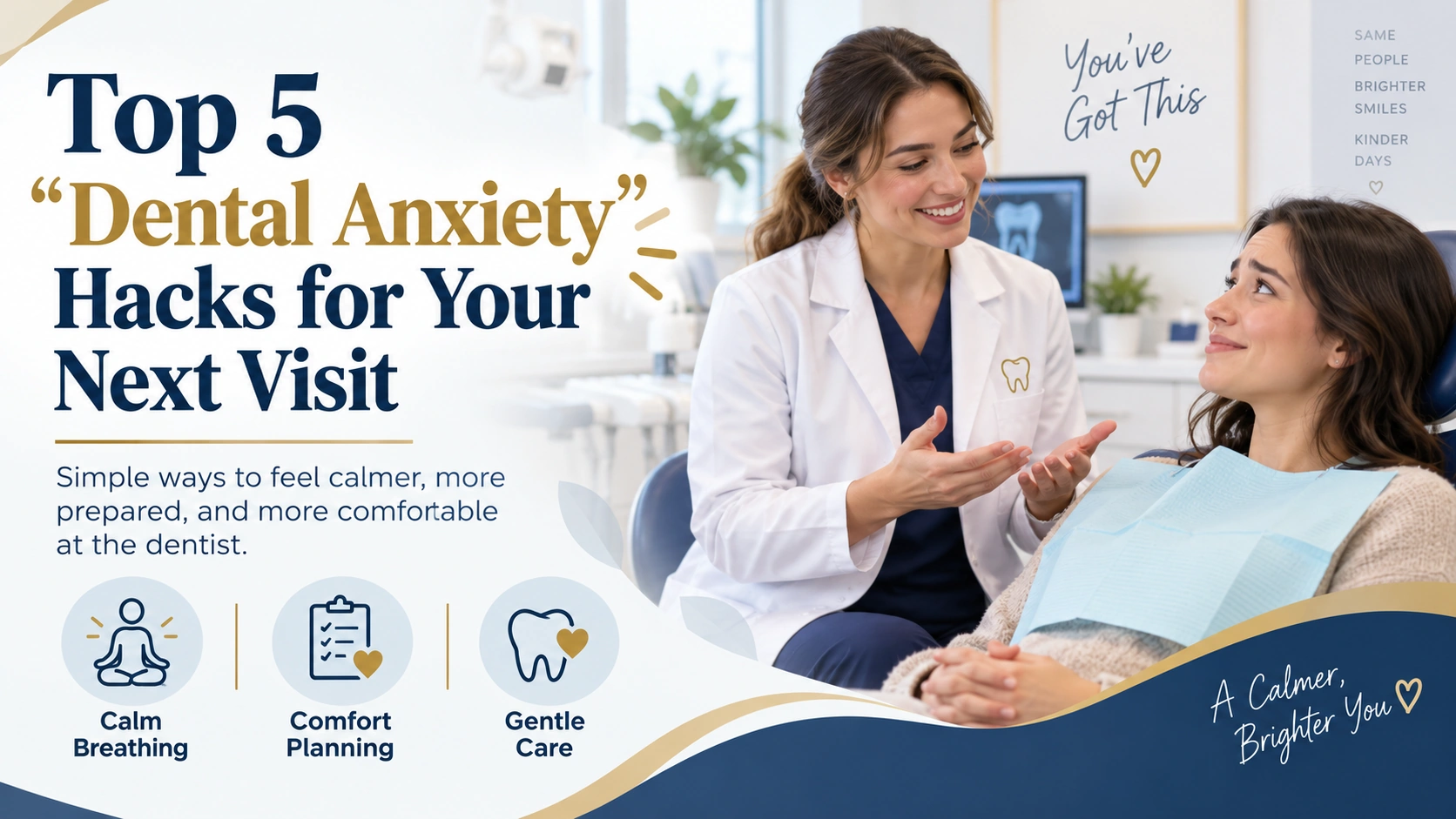
Top 5 “Dental Anxiety” Hacks for Your Next Visit
Does your heart start beating a little faster the moment someone mentions a dental appointment?
Maybe it is the sound of dental equipment. Maybe you had an uncomfortable experience years ago. Perhaps you dislike not knowing what is going to happen once you sit in the dental chair.
Or maybe you cannot explain it at all. You simply feel nervous.
Dental anxiety is something many people experience, and it can range from mild nervousness to intense fear that makes scheduling an appointment difficult.
At Crescent Family and Cosmetic Dentistry, we understand that telling someone to “just relax” is rarely helpful. Dental anxiety is real, and managing it often requires a combination of communication, preparation, and finding strategies that give you a greater sense of control.
The problem is that avoiding dental care because of anxiety can allow relatively manageable problems to become more complicated.
Instead of waiting until a tooth hurts badly enough that you have no choice but to seek treatment, try these five practical dental anxiety hacks before your next visit.
Hack #1: Tell Us You Are Nervous Before You Sit in the Chair
This may be the most important strategy on the list.
Do not hide your dental anxiety.
Some patients feel embarrassed about being afraid of dental treatment. They may think they are supposed to tolerate everything quietly or worry that the dental team will judge them.
We would much rather know how you are feeling.
When you tell us that you are nervous, we can adapt the way we communicate and approach your appointment.
For example, you can tell us:
- You had a difficult dental experience in the past
- You are afraid of injections
- Certain sounds make you uncomfortable
- You dislike feeling out of control
- You are worried that treatment will hurt
- You have a strong gag reflex
- You need additional explanation before treatment
- You prefer not to see dental instruments
The more we understand about what specifically makes you uncomfortable, the better we can work with you.
Be Specific About Your Fear
Instead of simply saying, “I hate the dentist,” try identifying what you actually dislike.
Is it pain?
Needles?
The sound of the drill?
Embarrassment about the condition of your teeth?
Not knowing what is happening?
Feeling trapped in the chair?
Different fears require different solutions.
Someone who is anxious about pain may benefit from understanding how we keep them comfortable.
Someone who feels overwhelmed by uncertainty may feel better when each step is explained before it happens.
Someone who dislikes dental sounds may prefer headphones.
Finding the actual trigger makes anxiety easier to manage.
Hack #2: Create a Stop Signal With Your Dental Team
One of the most uncomfortable parts of dental treatment for anxious patients can be the feeling that they cannot communicate once treatment begins.
You may be lying back with your mouth open while instruments are being used.
That can create a sense of lost control.
A simple stop signal can make a surprisingly large difference.
Before treatment begins, agree on a signal such as raising your left hand.
If you raise your hand, the dental team knows you need a moment.
You may need to:
- Swallow
- Ask a question
- Take a short break
- Adjust your position
- Explain discomfort
- Simply collect yourself
Knowing you have a reliable way to pause treatment can reduce the feeling that you are trapped.
Why Control Matters With Dental Anxiety
Anxiety often increases when people feel they have no control over what is happening.
A stop signal gives some of that control back.
You are still working cooperatively with your dental team, but you know there is a clear way to communicate.
For some patients, simply knowing the signal exists is enough to make the appointment feel significantly easier.
Hack #3: Bring Headphones and Control What You Hear
Dental offices contain unfamiliar sounds.
Even routine equipment can sound intimidating when you cannot see exactly what is happening.
For some anxious patients, sound is one of the biggest triggers.
Headphones can help.
Ask whether you can listen to:
- Music
- A podcast
- An audiobook
- Relaxing nature sounds
- A familiar playlist
Choose something predictable and comforting rather than something intense or distracting.
The goal is not necessarily to block out every sound.
You still need to be able to communicate when necessary.
Instead, headphones can reduce how much attention your brain gives to dental noises.
Build a “Dental Appointment Playlist”
If music helps you relax, create a playlist specifically for dental appointments.
Choose songs you already associate with positive experiences.
Familiar music can give your mind something predictable to focus on while you are in an unfamiliar situation.
Avoid constantly checking how much time has passed.
Instead, allow yourself to focus on the music and let the dental team handle the appointment.
Hack #4: Use Slow Breathing Before and During the Appointment
When anxiety increases, breathing often becomes faster and shallower.
That can make you feel even more anxious.
You may notice:
- A racing heartbeat
- Muscle tension
- Sweaty hands
- Lightheadedness
- A feeling of panic
- Difficulty sitting still
Slow, controlled breathing can help interrupt that cycle.
Try breathing gently through your nose when possible.
Take a slow breath in, pause briefly, and then breathe out slowly.
The exact number of seconds matters less than keeping the breathing comfortable and controlled.
Do not force yourself to take enormous breaths.
The goal is simply to slow things down.
Start Before You Enter the Office
Do not wait until you are already extremely anxious.
Try slow breathing:
- Before leaving home
- While sitting in your car
- In the waiting room
- Before treatment begins
- During short breaks
Relax your shoulders while you breathe.
Many people unknowingly tense their shoulders, hands, legs, or jaw when nervous.
Periodically check your body and release that tension.
Avoid Holding Your Breath
Some patients hold their breath when they anticipate discomfort.
This can increase tension and make the experience feel more stressful.
Focus instead on steady breathing.
Giving your mind a simple task such as following each breath can also reduce how much attention you give to anxious thoughts.
Hack #5: Stop Waiting Until Something Hurts
This may sound less like an anxiety hack, but it can be one of the most powerful strategies.
Avoiding dental appointments because you are nervous often creates a cycle.
You feel anxious, so you postpone the appointment.
A small dental problem develops.
You continue postponing care because you are still nervous.
The problem becomes larger.
Eventually, pain forces you to schedule an urgent appointment.
Now the treatment may be more complicated than it would have been earlier.
That experience reinforces your belief that dental visits are stressful.
And the cycle begins again.
Routine Visits Can Help Break the Cycle
Regular examinations and cleanings can help you become more familiar with the dental environment when you are not already dealing with severe pain.
These appointments also give us an opportunity to identify concerns earlier.
A small cavity may be simpler to manage than a tooth that has developed a deep infection.
Mild gum inflammation may be easier to address than advanced periodontal disease.
Preventive dentistry can therefore help reduce both treatment complexity and the anxiety associated with emergency care.
Bonus Hack: Schedule Your Appointment at the Right Time
Timing can influence anxiety more than people realize.
If possible, choose an appointment time when you are less likely to feel rushed.
Some patients prefer morning appointments because they do not spend the entire day anticipating the visit.
Others feel calmer later in the day.
Think about your own routine.
Avoid scheduling an appointment immediately before an important meeting, major event, or stressful commitment if you know that will make you feel rushed.
Giving yourself enough time can make the entire experience feel more manageable.
Bonus Hack: Limit Your Pre-Appointment Internet Research
Searching online for dental procedures can sometimes help patients understand treatment.
It can also dramatically increase anxiety.
Online forums and social media tend to amplify unusual experiences because dramatic stories receive more attention.
Reading ten frightening stories at midnight before your appointment is unlikely to help.
If you have questions about a procedure, write them down.
Then ask us.
We can explain what applies to your specific situation rather than leaving you to compare yourself with strangers online.
Bonus Hack: Do Not Be Embarrassed About Your Teeth
Some people are not actually afraid of dental treatment.
They are afraid of being judged.
Maybe you have not visited a dentist in several years.
Perhaps you have multiple broken teeth.
Maybe your gums bleed, you have significant tartar buildup, or you are embarrassed about bad breath.
That embarrassment can become strong enough to keep people away from dental care.
Please understand that dental professionals spend every day helping people with oral health problems.
Our purpose is not to lecture you about the past.
We need to understand where your oral health is today so we can help you move forward.
The fact that you scheduled an appointment is already progress.
What If You Have a Strong Gag Reflex?
A sensitive gag reflex can make dental visits particularly stressful.
Tell us before treatment begins.
Different positioning, shorter treatment intervals, breathing techniques, and adjustments to how certain procedures are performed may help.
Trying to hide your gag reflex usually makes the experience more stressful.
Communication gives us the opportunity to work around it.
What If You Are Afraid of Needles?
Fear of injections is extremely common.
If needles are your main concern, tell us.
Do not force yourself to watch.
Some patients prefer to close their eyes, look in another direction, listen to music, or focus on breathing.
We can also explain what to expect if knowing the steps makes you feel more comfortable.
Other patients prefer fewer details.
Both approaches are valid.
Tell us which style works better for you.
Should You Bring Someone With You?
For some patients, having a trusted friend or family member accompany them to the office can provide reassurance.
Simply knowing someone familiar is nearby can make the appointment feel less intimidating.
Whether that person can remain with you during treatment depends on the procedure, office policies, available space, and clinical circumstances.
But emotional support before and after the appointment can still be valuable.
What About Sedation Dentistry?
For patients with significant dental anxiety, relaxation techniques alone may not always be enough.
Depending on the patient, procedure, medical history, and available treatment options, sedation or other anxiety-management approaches may be considered.
Sedation dentistry is not automatically appropriate for everyone.
If your anxiety is severe enough that it prevents you from receiving necessary dental care, discuss it openly with your dentist.
We can talk about what options may be appropriate for your individual circumstances.
Build Trust One Appointment at a Time
You do not have to transform from an anxious dental patient into someone who loves dental appointments overnight.
A more realistic goal is making each experience a little easier.
Start with communication.
Learn which strategies help you feel more comfortable.
Ask questions.
Use your stop signal.
Bring your headphones.
Practice controlled breathing.
Most importantly, allow yourself to build trust with your dental team gradually.
A positive routine appointment can help change how you approach the next one.
Several positive experiences can begin replacing memories of older negative experiences.
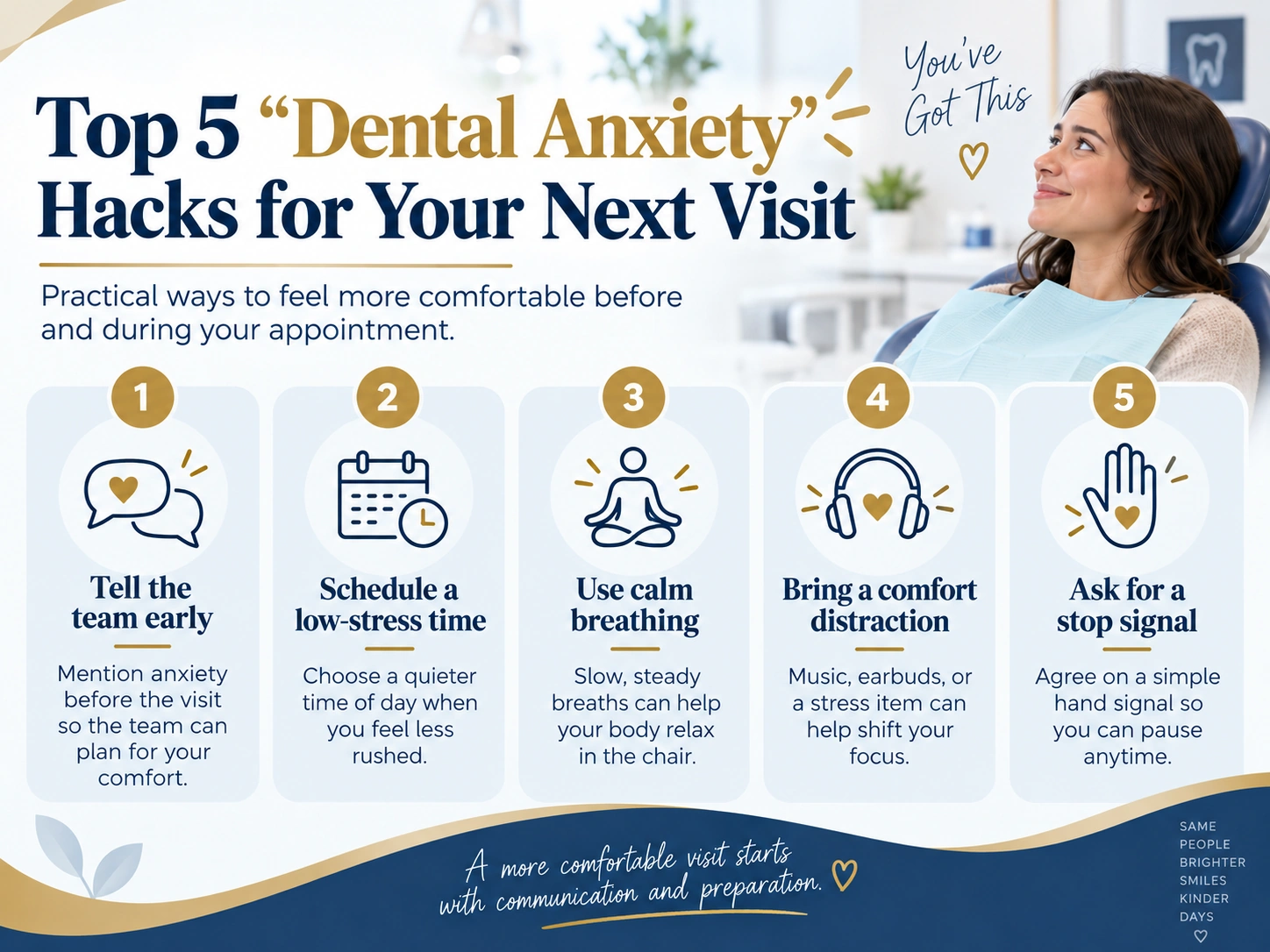
Your 5-Hack Checklist Before Your Next Visit
Before your next appointment, remember these five strategies:
1. Tell us you are anxious.
Give us the opportunity to understand what makes you uncomfortable.
2. Agree on a stop signal.
A simple raised hand can give you a greater sense of control.
3. Bring headphones.
Music, podcasts, or an audiobook can help redirect your attention.
4. Practice slow breathing.
Use steady breathing before and during your visit to manage physical tension.
5. Keep regular dental appointments.
Preventive visits can help reduce the likelihood that your next dental experience begins with an emergency.
These strategies may sound simple, but small changes can make dental care feel much more manageable.
Nervous About the Dentist? Tell Us Before We Begin
At Crescent Family and Cosmetic Dentistry, we know that walking through the door can sometimes be the hardest part of the appointment.
You do not need to pretend you are comfortable when you are not.
Tell us what makes you nervous. Tell us about previous experiences that have influenced how you feel about dental treatment. Tell us what helps you stay calm.
That information helps us understand how to better support you.
Whether it has been six months or several years since your last dental appointment, the goal is the same: determine where your oral health stands today and help you move forward.
If dental anxiety has been keeping you away from the dentist, schedule a visit with Crescent Family and Cosmetic Dentistry. Let our team know about your concerns when you book so we can work with you toward a calmer, more comfortable dental experience.