The Cost of Ignoring Gum Disease: The Financial Link to Heart Health Costs
Most people think of gum disease as a dental problem. Bleeding gums, bad breath, tenderness, and loose teeth may seem like issues that only affect the mouth. But at Crescent Family and Cosmetic Dentistry, we encourage our patients to look at gum health as part of their overall health.
Gum disease can progress quietly, sometimes without causing significant discomfort until the condition becomes more advanced. When left untreated, it can lead to tooth loss, more complex dental treatment, and potentially contribute to broader health concerns.
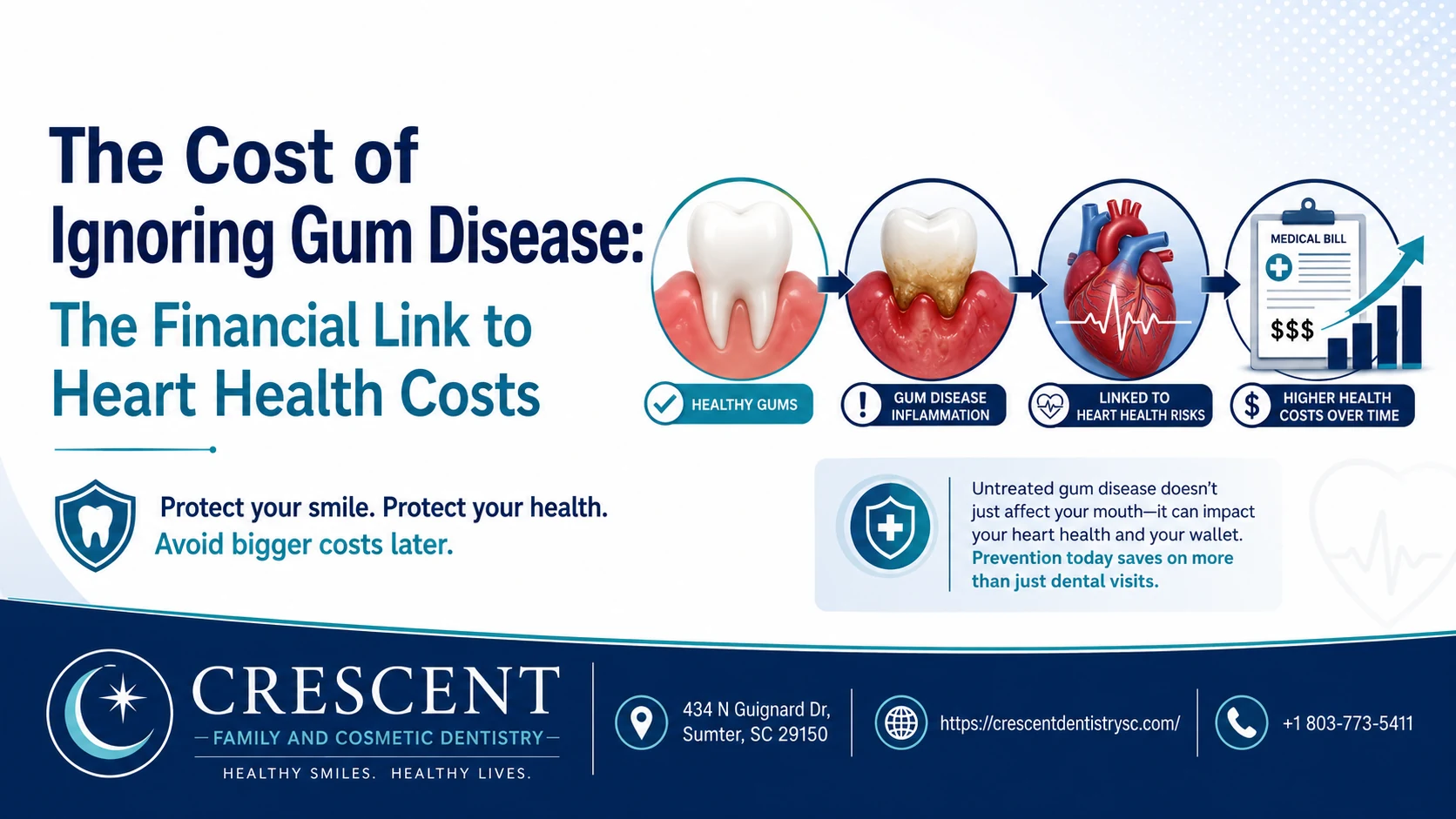
Researchers have also found associations between periodontal disease and cardiovascular conditions. While gum disease does not automatically mean someone will develop heart disease, chronic inflammation and bacteria associated with periodontal infections may affect other areas of the body.
Beyond the health consequences, ignoring gum disease can also become expensive.
Preventive dental care is usually far less complicated than treating advanced periodontal disease, replacing lost teeth, or managing serious health problems later. Understanding the possible financial connection between oral health and cardiovascular care can give patients another important reason to protect their gums early.
Gum Disease Often Starts Small
Gum disease typically begins with gingivitis, the earliest stage of periodontal disease.
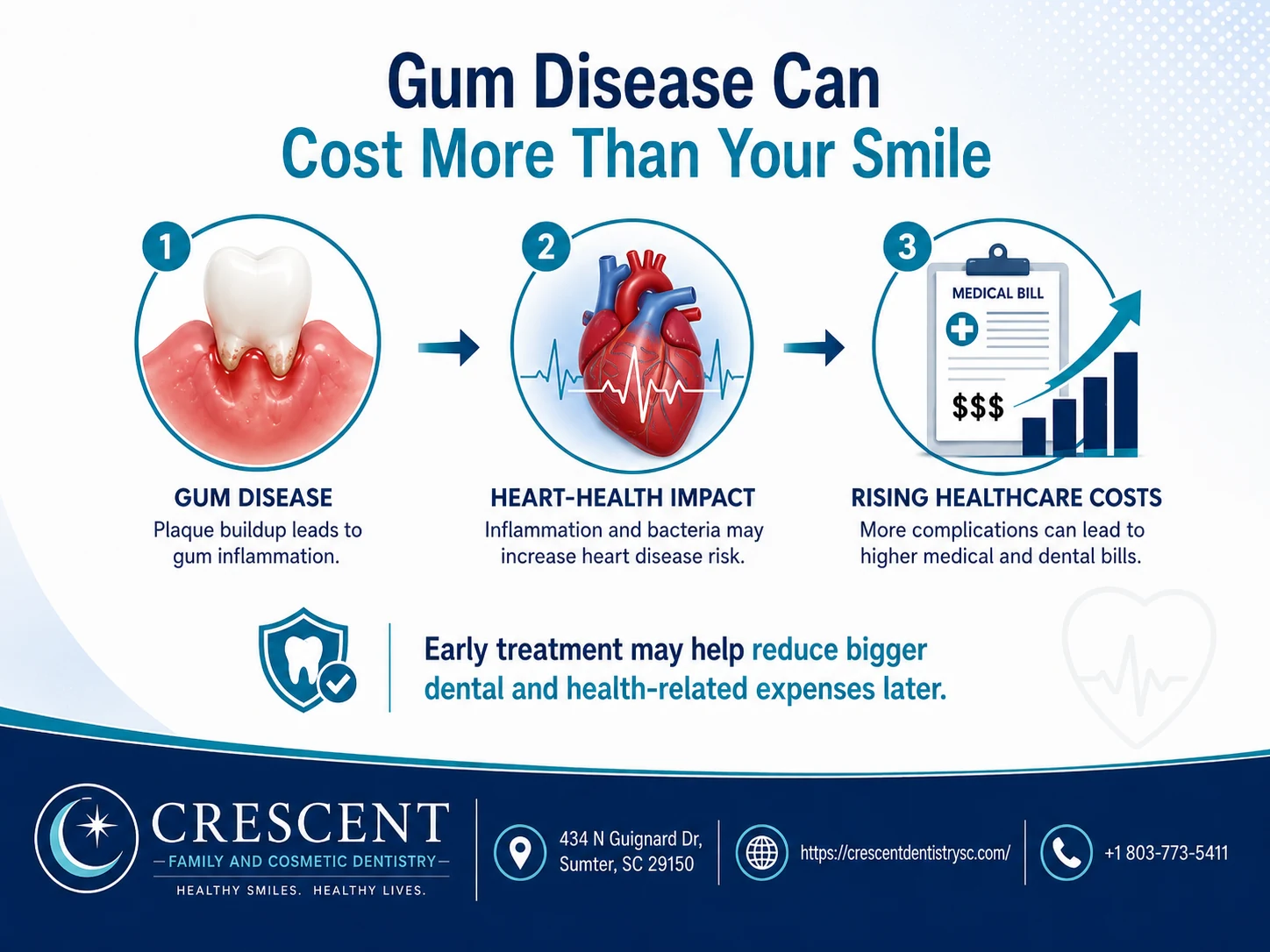
Plaque naturally forms on teeth throughout the day. When plaque is not consistently removed through brushing, flossing, and professional dental cleanings, bacteria can irritate the gum tissue.
Early warning signs may include:
- Red or swollen gums
- Bleeding while brushing or flossing
- Persistent bad breath
- Tender gums
- Gum recession
- Increased tooth sensitivity
At this stage, many people delay treatment because the symptoms seem manageable.
That delay can become costly.
When gingivitis progresses into periodontitis, bacteria can move deeper below the gumline. The tissues and bone supporting the teeth may begin to deteriorate. Treatment then becomes more involved because the goal is no longer simply preventing disease. We must also work to control an existing infection and protect the remaining supporting structures.
The Dental Cost of Waiting
One of the biggest financial mistakes patients can make is assuming that avoiding the dentist saves money.
In reality, untreated problems often become more expensive.
A routine dental examination and professional cleaning are relatively straightforward preventive services. If gum disease progresses, patients may require periodontal therapy such as scaling and root planing, more frequent periodontal maintenance visits, or referral to a periodontal specialist.
Advanced disease can also result in tooth loss.
Once teeth are lost, additional treatment may be needed to restore chewing ability, appearance, and bite stability. Depending on the situation, treatment could involve dental bridges, dentures, dental implants, bone grafting, or other restorative procedures.
The financial difference between prevention and reconstruction can be substantial.
We would much rather help our patients maintain healthy gums than see them require extensive restorative treatment because periodontal disease was allowed to progress.
What Does Gum Disease Have to Do With the Heart?
The mouth is not isolated from the rest of the body.
Periodontal disease involves inflammation caused by bacterial infection around the gums and supporting structures of the teeth. Researchers continue to study how chronic oral inflammation may interact with cardiovascular health.
People with periodontal disease have been found in some studies to have higher rates of certain cardiovascular conditions. Scientists are examining several possible explanations, including inflammation and the movement of oral bacteria or bacterial byproducts into the bloodstream.
It is important to understand what this means.
Gum disease should not be described as a direct cause of heart disease. Cardiovascular disease is influenced by many factors, including age, genetics, smoking, blood pressure, cholesterol, diabetes, diet, physical activity, and other health conditions.
However, the connection between oral inflammation and systemic health gives patients another reason to take periodontal disease seriously.
Maintaining healthy gums is one part of maintaining overall health.
Cardiovascular Care Can Carry Significant Financial Costs
Heart-related medical conditions can require long-term care.
Depending on the diagnosis, patients may face expenses associated with physician visits, diagnostic testing, prescription medications, hospital care, procedures, rehabilitation, and ongoing monitoring.
For people living with chronic cardiovascular conditions, these costs may continue for years.
Insurance can reduce some expenses, but deductibles, copays, medications, missed work, transportation, and other indirect costs may still create a substantial financial burden.
No dental treatment can guarantee that a patient will avoid cardiovascular disease. However, reducing chronic inflammation wherever possible is generally a sensible component of preventive health.
Taking care of your gums is one area where you can take meaningful action.
Prevention Is Usually Less Expensive Than Treatment
Preventive dentistry works best before patients experience significant symptoms.
Regular dental visits allow us to look for early changes in gum health that patients may not notice at home.
We can evaluate:
- Gum inflammation
- Periodontal pocket depths
- Gum recession
- Bleeding points
- Bone levels
- Plaque and tartar accumulation
- Tooth mobility
- Areas that are difficult to clean
Detecting problems early often allows us to recommend more conservative care.
That is beneficial for your health and your budget.
Waiting until a tooth becomes loose or gum disease becomes painful can limit treatment options and increase the amount of care required.
The Hidden Cost of Tooth Loss
The expense associated with advanced periodontal disease does not end with treating the gums.
Tooth loss can create additional problems.
When a tooth is missing, nearby teeth may shift. Bite forces can change. Bone in the area may gradually decrease because it is no longer receiving the same stimulation from a natural tooth root.
Patients may also change how they eat because chewing becomes uncomfortable or inefficient.
Replacing missing teeth can help restore function, but replacement carries additional costs.
Options may include bridges, partial dentures, full dentures, or dental implants. The best choice depends on oral health, bone availability, personal preferences, and other factors.
In many cases, preserving a healthy natural tooth is more straightforward than replacing one after it has been lost.
That is why periodontal prevention matters financially as well as medically.
Gum Disease Can Affect Everyday Quality of Life
There are also less obvious costs associated with poor periodontal health.
Persistent bad breath may affect social confidence. Gum recession may change the appearance of the smile. Tooth sensitivity can make eating and drinking uncomfortable.
Advanced gum disease may interfere with chewing certain foods.
Patients may also need to take time away from work for more extensive appointments if the disease progresses.
These indirect costs are difficult to calculate, but they are real.
Preventive care helps reduce the likelihood that dental problems will begin affecting daily routines, confidence, nutrition, or professional responsibilities.
Who May Be at Greater Risk?
Some people are more susceptible to periodontal disease than others.
Risk factors may include:
- Smoking or tobacco use
- Poor oral hygiene
- Diabetes
- Dry mouth
- Certain medications
- Family history of periodontal disease
- Hormonal changes
- Poor nutrition
- Chronic stress
- Irregular dental visits
Age can also influence periodontal risk.
Patients with one or more risk factors may need more frequent monitoring or professional cleanings.
Our goal at Crescent Family and Cosmetic Dentistry is to identify each patient’s individual risk level rather than relying on a one-size-fits-all approach.
Bleeding Gums Should Not Be Considered Normal
One of the most common warning signs we hear patients dismiss is bleeding during brushing or flossing.
Many people assume bleeding gums are simply the result of brushing too hard.
Occasional irritation can happen, but consistent bleeding often signals inflammation.
Healthy gums generally should not bleed regularly during normal brushing and flossing.
If your gums frequently bleed, it is worth having them evaluated.
Addressing inflammation early may prevent gingivitis from progressing into more serious periodontal disease.
Home Care Makes a Financial Difference
Professional dentistry is important, but what patients do between appointments matters just as much.
Brushing twice a day with fluoride toothpaste helps remove plaque from tooth surfaces. Cleaning between teeth with floss, interdental brushes, or another recommended device helps remove bacteria from areas a toothbrush cannot easily reach.
Patients should also replace toothbrushes or electric toothbrush heads regularly and avoid aggressive brushing that can damage gum tissue.
If we identify areas where plaque repeatedly accumulates, we can demonstrate techniques that make home care more effective.
Small improvements performed consistently can reduce the likelihood of needing more complicated treatment later.
Regular Dental Visits Can Help Catch Problems Earlier
One reason gum disease becomes expensive is that patients often wait until symptoms become severe before seeking care.
Periodontal disease may progress without significant pain.
By the time teeth become loose, gums recede dramatically, or chewing becomes uncomfortable, substantial damage may already have occurred.
Routine dental examinations allow us to monitor changes over time.
Your dental records, X-rays when appropriate, periodontal measurements, and clinical examinations help us identify patterns that would be difficult to notice without regular visits.
Early detection can mean simpler treatment, fewer complications, and potentially lower long-term costs.
Oral Health Should Be Part of Your Overall Health Strategy
More patients are recognizing that dental care and medical care should not be viewed as completely separate.
The mouth is part of the body.
Inflammation, nutrition, chronic disease, medications, and lifestyle habits can all influence oral health. Likewise, oral conditions can affect comfort, nutrition, confidence, and quality of life.
For patients managing cardiovascular disease, diabetes, or other chronic conditions, communication between dental and medical providers may be beneficial.
Always tell your dentist about changes in your medical history, medications, surgeries, or diagnoses.
This information helps us provide safer and more personalized dental care.
Investing in Prevention Can Protect More Than Your Smile
There is no way to predict every future dental or medical expense.
What we can do is reduce preventable risks.
Maintaining healthy gums may help patients avoid the escalating dental costs associated with advanced periodontal disease, tooth loss, and restorative treatment.
At the same time, supporting healthy gums helps reduce chronic oral inflammation, which is another reason periodontal care deserves attention as part of overall wellness.
Prevention does not guarantee perfect health, but it gives patients a much better opportunity to identify and manage problems before they become more complicated.
Protect Your Gum Health With Crescent Family and Cosmetic Dentistry
At Crescent Family and Cosmetic Dentistry, we believe good dental care should focus on keeping problems small whenever possible.
If your gums bleed, feel tender, appear swollen, or seem to be pulling away from your teeth, do not wait for the problem to become painful.
A periodontal evaluation can help us determine what is happening and recommend the appropriate next step.
Protecting your gums today may help you avoid more complicated dental treatment tomorrow. More importantly, maintaining good oral health supports your overall commitment to long-term wellness.
Schedule an appointment with our team at Crescent Family and Cosmetic Dentistry and let us help you keep your gums, teeth, and smile healthier for years to come.