Why Your Toddler’s Teeth Are “Crowded”: The 2026 Early-Intervention Guide
Crowded toddler teeth can develop when there isn’t enough room in the jaw for baby teeth to sit comfortably side by side. Genetics, jaw development, tooth size, and early dental changes can all contribute. However, crowded baby teeth don’t automatically mean your child needs orthodontic treatment.
At Crescent Family and Cosmetic Dentistry, we help parents understand what’s happening as their children’s teeth develop. If your toddler’s teeth look crooked, overlap, or have no spaces between them, an early dental evaluation can help determine whether the alignment is a normal developmental variation or something that needs closer attention.
Worried About Your Toddler’s Crowded Teeth?
Get expert advice and early dental care to support your child’s healthy smile. Call today to schedule an evaluation!
Is It Normal for Toddlers to Have Crowded Teeth?
Some toddlers have closely positioned or slightly overlapping baby teeth, and this does not always indicate a serious problem.
Most children develop 20 primary teeth by approximately age three, although eruption timing varies. As these teeth emerge, parents may notice that some look uneven or sit closer together than expected.
Baby teeth play an important role in chewing, speech development, and maintaining space for permanent teeth.
Unlike a perfectly aligned adult smile, a developing toddler’s mouth can change considerably over time.
However, spacing is an important part of healthy dental development.
Permanent teeth are generally larger than the baby teeth they replace. Children who have natural spaces between their primary teeth may have more room available when their permanent teeth begin emerging.
When baby teeth are already crowded, there may be a greater chance of future alignment problems.
This doesn’t mean braces are inevitable. It simply means the child’s dental development deserves monitoring.
What Causes Crowded Teeth in Toddlers?
Several factors can influence how baby teeth develop and fit together.
Understanding the possible causes helps parents recognize why one child’s teeth may appear perfectly spaced while another child’s teeth overlap.
1. Genetics and Family Dental History
Genetics is one of the main factors influencing tooth size, jaw dimensions, and dental alignment.
A child may inherit relatively large teeth, a smaller dental arch, or a combination of characteristics that limits available space.
If one or both parents experienced significant dental crowding, their child may have an increased likelihood of developing similar alignment concerns.
However, family history alone cannot predict whether a toddler will eventually require orthodontic treatment.
2. Limited Space in the Dental Arch
The dental arch is the curved arrangement of teeth along the upper or lower jaw.
When the available arch space is smaller than the combined width of the teeth, crowding can occur.
Parents may notice:
- Front teeth overlapping
- Teeth rotating slightly as they emerge
- Little or no spacing between baby teeth
- One tooth appearing behind another
- Uneven positioning along the gumline
The severity of crowding depends on the relationship between tooth size and available space.
3. Differences in Tooth Eruption
Baby teeth don’t always emerge at exactly the same time or angle.
One tooth may erupt slightly before its neighboring tooth, temporarily creating an uneven appearance.
Sometimes, alignment becomes more apparent as additional teeth emerge.
However, teeth erupting significantly outside their expected position should be evaluated, particularly if they interfere with the bite or neighboring teeth.
4. Early Loss of Baby Teeth
Premature tooth loss can contribute to future crowding.
If a toddler loses a baby tooth because of decay or an injury, adjacent teeth may gradually shift toward the empty space.
This movement can reduce the room available for the permanent tooth developing underneath.
The amount of space lost depends on which tooth is missing, the child’s age, and the surrounding teeth.
This is one reason we encourage parents to protect baby teeth even though they will eventually fall out.
5. Unusual Tooth Size or Development
Occasionally, dental crowding involves differences in the number, size, or shape of developing teeth.
Examples include extra teeth, unusually shaped teeth, or two baby teeth that have developed together.
These conditions are less common than ordinary tooth-size and jaw-size differences, but they may affect alignment.
A dental examination can help determine whether further evaluation is necessary.
Why Are Spaces Between Baby Teeth Important?
Parents sometimes worry when they see noticeable gaps between their toddler’s front teeth.
However, small spaces between baby teeth are often a healthy developmental feature.
These gaps can provide additional room when larger permanent teeth begin replacing primary teeth.
For example, a child with spaces between their front baby teeth may have more room available for permanent incisors than a child whose baby teeth already overlap.
That doesn’t guarantee straight permanent teeth, but spacing is one factor dentists consider when assessing future crowding risk.
No gaps between baby teeth doesn’t automatically mean something is wrong.
What matters is the overall relationship between tooth size, jaw development, bite alignment, and eruption patterns.
At Crescent Family and Cosmetic Dentistry, we look at these factors together rather than judging dental development based on one visible feature.
Can Pacifiers and Thumb Sucking Cause Crowded Teeth?
Prolonged pacifier use and thumb sucking can influence how the teeth and jaws develop.
These habits are common during infancy and early childhood. However, frequent or prolonged sucking can place pressure on developing oral structures.
Potential effects include:
- An anterior open bite, where front teeth don’t meet when biting
- Upper front teeth protruding forward
- A posterior crossbite, where upper and lower back teeth don’t align normally
- Changes in the shape or width of the upper dental arch
These changes aren’t necessarily the same as dental crowding, although certain bite and arch-development problems can affect available space.
The American Academy of Pediatric Dentistry recommends helping children discontinue nonnutritive sucking habits by 36 months of age.
Parents should avoid using punishment or criticism to stop thumb sucking.
Instead, positive reinforcement, identifying triggers, and gradually changing routines may help.
If your toddler continues using a pacifier or sucking their thumb regularly, we can discuss how the habit may be affecting their bite.
At What Age Should Parents Worry About Crowded Teeth?
Parents don’t need to wait until permanent teeth arrive to ask about alignment concerns.
In fact, the American Dental Association recommends a child’s first dental visit within six months of the first tooth appearing and no later than their first birthday.
These early appointments allow dentists to monitor tooth development and identify possible problems.
Ages 1–2: Monitoring Early Eruption
At this stage, the focus is primarily on healthy eruption, preventing cavities, and helping parents establish effective oral care routines.
Slightly uneven tooth positioning usually doesn’t require immediate correction.
However, noticeable bite problems, unusual tooth development, or persistent discomfort should be evaluated.
Ages 2–3: Evaluating Baby Tooth Alignment
As more primary teeth emerge, the overall dental arch becomes easier to assess.
A dentist can look for overlapping teeth, limited space, crossbites, and the effects of oral habits.
For most toddlers, the next step is observation rather than active orthodontic treatment.
Ages 4–6: Watching for Developmental Changes
By this stage, most children have their complete primary dentition.
Dental examinations can help determine whether crowding remains stable or whether other bite concerns are developing.
As permanent teeth approach eruption, spacing becomes increasingly important.
Around Age 7: Orthodontic Evaluation
The American Association of Orthodontists recommends a child’s first orthodontic checkup when a problem is recognized and no later than age seven.
This doesn’t mean every seven-year-old needs braces.
An orthodontist can assess permanent tooth eruption, bite development, and whether treatment would be beneficial now or later.
Children with significant problems may benefit from an earlier referral.
What Are the Warning Signs of Toddler Dental Crowding?
Some alignment differences are minor, while others deserve closer attention.
Parents should schedule a dental evaluation if they notice:
- Significant overlapping: Teeth appear tightly stacked or rotated.
- Crossbite: Upper teeth sit inside lower teeth when biting.
- Difficulty chewing: The child struggles to bite or chew comfortably.
- Unusual eruption: A tooth emerges in an unexpected location.
- Early tooth loss: A baby tooth is lost well before its expected time.
- Cleaning difficulties: Overlapping areas consistently trap food or are difficult to brush.
Parents should also mention persistent mouth breathing, habitual snoring, or disrupted sleep to their child’s pediatrician.
These symptoms can have several causes and do not prove that dental crowding or jaw structure is responsible.
An evaluation helps determine whether additional dental or medical assessment is needed.

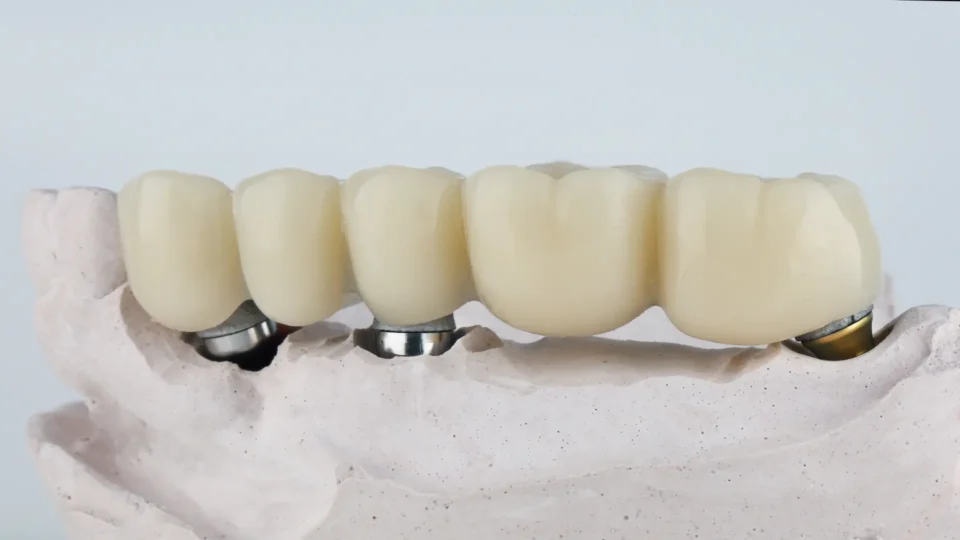
What is the Best Option to Replace Missing Teeth: Implants, Bridges, or Dentures?
Losing a tooth can leave you with a lot of questions, and one of the biggest is what to replace…
What Is Early-Intervention Dentistry for Crowded Teeth?
Early intervention means identifying developing dental concerns and taking appropriate action at the right stage.
For toddlers, intervention often involves monitoring, preventive care, and managing factors that could affect normal development.
It does not automatically mean braces, jaw expanders, or other orthodontic appliances.
The American Academy of Pediatric Dentistry emphasizes assessing developing teeth throughout childhood and choosing treatment according to the child’s individual condition.
Monitoring Tooth and Jaw Development
Regular examinations allow us to observe changes in dental alignment as children grow.
We may evaluate tooth position, spacing, bite relationships, and eruption patterns.
Some concerns remain stable and only require continued observation.
Addressing Oral Habits
If prolonged thumb sucking or pacifier use is affecting the bite, we can help parents develop an age-appropriate plan for changing the habit.
The goal is to reduce ongoing pressure on developing teeth without creating unnecessary stress for the child.
Preventing Premature Tooth Loss
Treating cavities and protecting damaged baby teeth can help preserve natural spacing.
When a primary tooth is lost prematurely, a dentist may assess whether a space maintainer is appropriate.
These appliances are not necessary after every lost baby tooth. The recommendation depends on the location of the tooth, the child’s dental development, and the likelihood of space loss.
Referring for Orthodontic Assessment
Certain bite abnormalities, including significant crossbites or developing jaw discrepancies, may warrant an orthodontic referral.
The orthodontist can determine whether early treatment has a clear benefit or whether monitoring is preferable.
Does Your Toddler Need Braces or a Palatal Expander?
Most toddlers with crowded baby teeth do not need braces.
Orthodontic appliances are generally used when there is a specific diagnosed problem and treatment is appropriate for the child’s stage of development.
A palatal expander, for example, may be recommended for selected children with upper-jaw width problems or certain crossbites.
However, expansion is not automatically appropriate simply because baby teeth are close together.
Similarly, extracting baby teeth to create space should never be considered without a comprehensive evaluation and a clear long-term treatment plan.
Starting orthodontic treatment unnecessarily early can increase appointments, expense, and treatment burden without providing a meaningful benefit.
At Crescent Family and Cosmetic Dentistry, we believe parents should understand the reason behind any recommended treatment.
Sometimes the most appropriate approach is simply to monitor development until more information becomes available.
Can Crowded Baby Teeth Straighten Out Naturally?
Some minor alignment differences change as a child’s mouth develops.
However, significant crowding does not necessarily disappear on its own.
Jaw growth, tooth eruption, and changes in the dental arches influence how teeth fit together over time.
A toddler whose teeth appear slightly uneven may develop an acceptable bite without orthodontic intervention.
Another child with substantial crowding may continue experiencing space limitations as permanent teeth emerge.
There is no reliable way for parents to predict the outcome simply by looking at their child’s smile.
Regular dental evaluations make it easier to identify meaningful changes and determine whether a referral is needed.
How Can Parents Support Healthy Tooth Development at Home?
Parents cannot change inherited tooth size or jaw structure, but they can support healthy development and reduce preventable dental problems.
Establish Consistent Brushing Habits
Brush your child’s teeth twice daily using a soft-bristled toothbrush.
For children younger than three, use a smear of fluoride toothpaste approximately the size of a grain of rice.
For children ages three through six, use a pea-sized amount.
Parents should dispense the toothpaste and assist with brushing.
Clean Between Teeth That Touch
When neighboring baby teeth touch, begin cleaning between them daily.
Flossing is particularly important when teeth are tightly positioned because a toothbrush may not adequately clean those contact areas.
Protect Baby Teeth From Decay
Limit frequent sugary snacks and drinks, encourage water, and schedule regular dental examinations.
Untreated cavities can damage baby teeth and sometimes lead to premature tooth loss.
Encourage Healthy Oral Habits
Help your child gradually stop prolonged pacifier use or thumb sucking, particularly when these habits are affecting their bite.
Choose a supportive, age-appropriate approach rather than using punishment.
Avoid At-Home Tooth Straightening Methods
Never attempt to move a toddler’s teeth using pressure, homemade appliances, or products advertised to reshape the dental arch.
Tooth movement and jaw development require professional assessment.
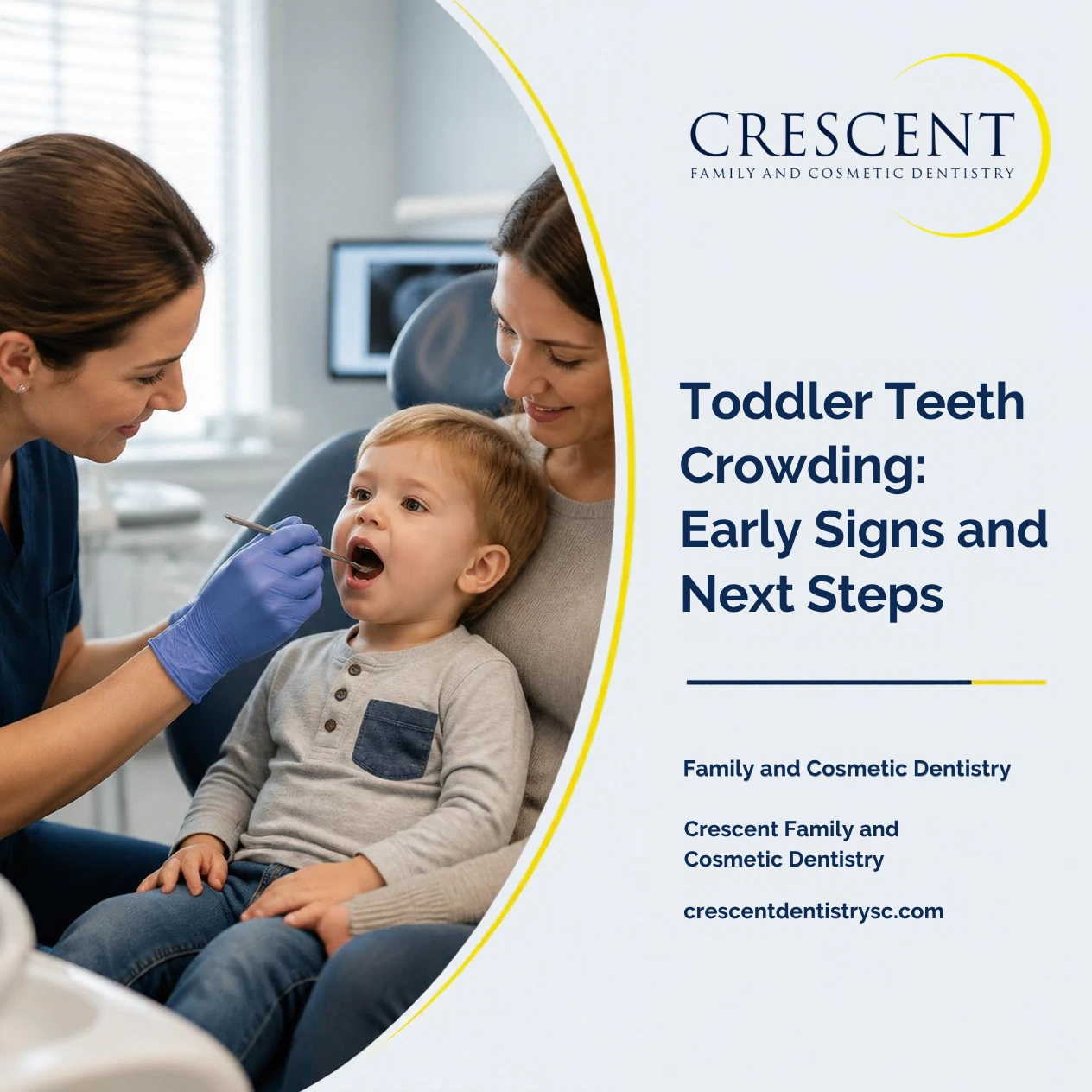
What Happens During an Early Dental Crowding Evaluation?
An early dental appointment should focus on understanding your child’s development and addressing your concerns.
At Crescent Family and Cosmetic Dentistry, we want children to feel comfortable while parents receive clear explanations about their oral health.
During an examination, we may assess:
- Tooth position: Whether the primary teeth are aligned, rotated, or overlapping.
- Available spacing: Whether the arches appear to have adequate room.
- Bite relationships: How the upper and lower teeth fit together.
- Oral habits: Whether thumb sucking or pacifier use may be influencing development.
- Dental health: Whether cavities or damaged teeth could affect future spacing.
Dental X-rays are not automatically required for every toddler with crowding.
Imaging is considered when clinical findings suggest it would provide useful information and when it is appropriate for the child’s age and ability to cooperate.
Following the examination, we can discuss whether routine monitoring, preventive treatment, or specialist evaluation is the next appropriate step.
Frequently Asked Questions About Toddler Teeth Crowding
Is it bad if my toddler’s baby teeth have no gaps?
Not necessarily. Some children naturally have closely spaced baby teeth. However, a lack of spacing may indicate a greater chance of future crowding, particularly when permanent teeth begin erupting.
Can crowded baby teeth cause crooked permanent teeth?
Crowded primary teeth can be associated with future alignment problems, but they do not guarantee crooked permanent teeth. Genetics, tooth size, jaw development, and eruption patterns all influence the outcome.
Should a three-year-old see an orthodontist?
Most three-year-olds do not require routine orthodontic treatment. However, significant crossbites, unusual jaw relationships, or other concerning findings may justify an earlier specialist evaluation.
Can thumb sucking make a toddler’s teeth crooked?
Yes. Frequent, prolonged thumb sucking may affect tooth positioning and bite development. The effects depend on the habit’s duration, frequency, and intensity.
Will my toddler need braces if their teeth overlap?
Not necessarily. Mild overlapping may only require monitoring. Whether orthodontic treatment becomes necessary depends on how the teeth and jaws develop as permanent teeth emerge.
Help Your Child’s Smile Develop With Crescent Family and Cosmetic Dentistry
Noticing crowded or overlapping teeth in your toddler can raise plenty of questions. You may wonder whether the teeth will straighten naturally, whether your child has enough jaw space, or whether orthodontic treatment will eventually become necessary.
At Crescent Family and Cosmetic Dentistry, we help families in Columbia, Sumter, and surrounding South Carolina communities understand their children’s changing dental needs.
Our team takes time to evaluate tooth development, examine bite relationships, and explain any concerns we identify. Whether your child needs routine preventive care, continued monitoring, or an orthodontic referral, we focus on recommendations appropriate for their age and oral health.
Early dental visits also help children become comfortable with professional care while giving parents practical guidance on brushing, flossing, nutrition, and oral habits.
Concerned about your toddler’s crowded teeth? Schedule a dental evaluation with Crescent Family and Cosmetic Dentistry.
We can help you understand your child’s developing smile and determine whether any additional care is necessary.
Give Your Toddler a Healthier Smile!
Early detection can help prevent future dental problems. Book your child’s dental checkup today!