The Cost of Digital Impressions: Saving You Time and Remake Fees
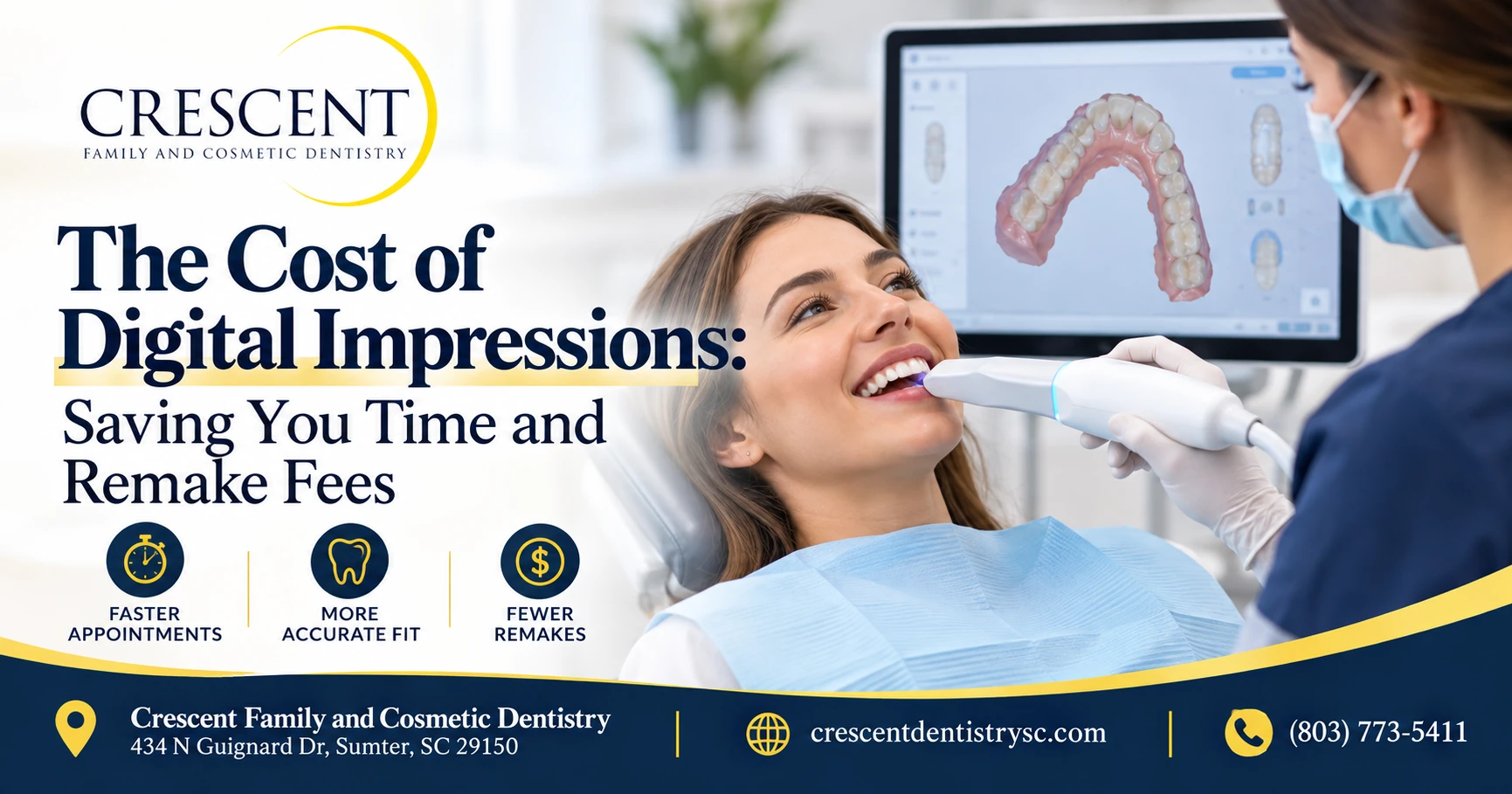
Digital dental impressions can make restorative and orthodontic treatment more efficient by replacing trays of impression material with a detailed three-dimensional scan of your teeth. For many patients, that means a more comfortable appointment, quicker transfer of information to the dental laboratory, and less chance that an impression will need to be taken again.
At Crescent Family and Cosmetic Dentistry, digital technology is about more than convenience. When used for the right treatment, digital impressions can help streamline the process from the dental chair to the finished restoration.
Save Time and Money on Dental Impressions!
Get precise digital impressions without messy molds or costly remakes. Call today to schedule your appointment!
What Are Digital Dental Impressions?
A digital impression is a three-dimensional representation of your teeth and surrounding oral structures created with an intraoral scanner.
Instead of filling a tray with impression material and holding it over your teeth while the material sets, the dentist or dental team moves a small scanner around your mouth. The scanner captures a series of images or measurements that software combines into a detailed digital model.
Depending on the treatment, this digital model may be used to help create:
- Dental crowns
- Bridges
- Inlays and onlays
- Clear aligners
- Nightguards and other occlusal appliances
- Some implant restorations
- Surgical guides
- Other custom dental appliances
The American Dental Association notes that intraoral scanners are commonly used for digital impressions for crowns, fixed partial dentures, aligners, occlusal appliances, and implant-related treatment.
Rather than mailing or transporting a physical impression to a dental laboratory, the scan can often be transmitted electronically.
That seemingly small difference can change several stages of the treatment process.
How Much Do Digital Impressions Cost?
There generally is not one universal standalone price for a digital impression.
In many dental offices, digital scanning is part of the overall treatment being provided. For example, if you are receiving a crown, the cost of capturing the impression may already be incorporated into the restorative procedure rather than appearing as a separate “digital impression” charge.
The patient’s final cost can depend on:
- The type of dental treatment
- Whether additional imaging is required
- The restoration or appliance being made
- Laboratory charges
- Dental insurance benefits
- Whether the procedure is considered restorative, cosmetic, or orthodontic
- The individual dental practice
The technology itself represents a significant investment for dental offices. The ADA reported in its overview of digital dentistry that intraoral scanner purchase prices could range from several thousand to more than $20,000 depending on the system.
However, the price of the scanner is not the same thing as the amount a patient pays.
For patients, the more useful question is often not simply, “Does a digital impression cost more?” but rather, “What does digital scanning change about the overall treatment process?”
That is where potential savings in time, repeat appointments, and remakes become important.
How Can Digital Impressions Save You Time?
One of the biggest benefits of digital impressions is efficiency.
With a conventional impression, several steps need to go correctly. The correct tray must be selected. Impression material is mixed or dispensed. The tray is placed into the mouth and held in position while the material sets. The impression is then removed and inspected.
If an important area did not reproduce clearly, another impression may be necessary.
Digital scanning works differently.
The dental team can usually see the scan developing on a screen as it is being taken. If one small section is missing or unclear, that area can often be rescanned without repeating the entire process.
The completed file can then be sent electronically to a compatible dental laboratory.
Research comparing the two methods has found that digital scanning can offer efficiency advantages in many situations, although the exact amount of time saved varies according to the procedure and scanning system.
A systematic review examining digital and conventional impression techniques found that patients generally preferred digital impressions, while procedure-time findings varied between studies.
A later systematic review of tooth-supported restorations found similar clinical times overall between the methods but significantly greater patient comfort with digital scanning.
So digital does not automatically mean that every scan will take fewer minutes in the dental chair. The larger efficiency benefit may come from the entire workflow.
Why Does Sending the Impression Digitally Matter?
Traditional impressions have to move physically from the dental practice to the dental laboratory.
That may involve packaging the impression, preparing the laboratory prescription, arranging delivery or shipping, and waiting for the impression to arrive before fabrication begins.
With a digital workflow, the scan can often be transferred electronically.
The laboratory receives the information without waiting for a physical package to arrive.
For treatments such as crowns and bridges, that can remove one logistical step from the process.
Digital files also do not experience some of the physical issues associated with impression materials and models. There is no tray to become damaged in transit, and the digital scan itself can be stored and retrieved electronically.
That does not mean the final restoration is automatically completed immediately. The laboratory still needs time to design and manufacture the restoration.
But getting the information from the dentist to the laboratory can be much more direct.
Can Digital Impressions Reduce Remakes?
They can help reduce certain causes of remakes, although no impression method can eliminate remakes completely.
A crown or other custom restoration has to fit accurately. Problems with margins, contacts, bite, shape, or other features may sometimes mean that a restoration has to be adjusted or remade.
Impression quality is one part of that equation.
A large practice-based study involving 3,750 single-unit crowns reported an overall crown remake rate of about 3.8%. Common reasons for rejecting crowns included problems with proximal fit, margins, and esthetics.
Another National Dental Practice-Based Research Network study found that lower reported crown remake rates were associated with optical, or digital, impressions among other factors.
In a separate clinical study evaluating crown acceptance, crowns made from digital scans had a slightly higher clinical acceptance rate than those produced using the conventional impression techniques examined in the study.
That does not mean a crown made from a digital scan can never require a remake.
Tooth preparation, gum position, saliva or bleeding, scanner technique, laboratory design, material selection, manufacturing, bite relationships, and other factors can all influence the final result.
Digital scanning simply gives the dentist another tool for identifying impression problems before the information reaches the laboratory.
How Does the Dentist Catch Problems Before the Scan Is Sent?
One of the practical advantages of scanning is immediate visual feedback.
Once a conventional impression has been removed from the mouth, the dentist has to examine the physical impression carefully. A small void, tear, bubble, or poorly captured margin can compromise the information being sent to the laboratory.
With digital impressions, the three-dimensional image is displayed on a screen.
The dentist can inspect areas such as:
- The prepared tooth
- The restoration margin
- Adjacent teeth
- Opposing teeth
- Bite relationship
- Areas that appear incomplete
If part of the scan is missing, the team may be able to scan that section again.
That is very different from discovering after a conventional impression has set that an important detail did not record properly.
It can potentially prevent an additional full impression and another period of waiting.
What Do “Remake Fees” Actually Mean for the Patient?
This part deserves some clarification.
A remake does not automatically mean that the patient receives another bill.
Dental laboratories and dental practices have their own policies regarding adjustments, warranties, laboratory charges, and remakes. In some situations, the practice or laboratory absorbs the cost. In others, additional charges may apply depending on why the restoration has to be replaced.
Insurance coverage also varies.
So it would be misleading to say that choosing a digital impression automatically saves every patient a specific “remake fee.”
The more consistent benefit is reducing the possibility of avoidable repetition.
If accurate digital information helps prevent an impression from needing to be retaken or helps the laboratory produce an acceptable restoration the first time, the patient may avoid:
- Another impression appointment
- More time away from work or school
- Additional travel
- Another period wearing a temporary restoration
- Delays while a replacement restoration is manufactured
- Possible additional expenses depending on the circumstances
The value is therefore both financial and practical.
Sometimes the biggest saving is simply not having to come back unnecessarily.
Are Digital Impressions More Comfortable?
For many patients, yes.
Traditional impression trays can feel bulky. The impression material may cover much of the teeth and palate, and patients need to wait while it sets.
Some people tolerate this easily.
Others dislike it considerably, especially patients with a sensitive gag reflex, anxiety, difficulty breathing comfortably through the nose, or strong reactions to the taste or texture of impression materials.
Digital scanning eliminates the tray and unset impression material.
A systematic review found that patients generally reported greater comfort and less nausea and anxiety with digital impressions than conventional techniques.
More recent research continues to show a patient preference for digital workflows in many applications. A 2025 systematic review involving implant-supported fixed restorations found better patient-reported outcomes for digital impressions in areas including comfort, nausea, unpleasant taste, anxiety, and overall satisfaction.
That can be especially useful for someone who has struggled with traditional impressions previously.
Can Digital Impressions Help Patients With a Strong Gag Reflex?
They may.
A traditional upper impression can extend across the palate and toward the back of the mouth. For patients with a strong gag reflex, keeping a tray in place until the material sets can be challenging.
An intraoral scanner still has to move throughout the mouth, so digital scanning does not completely eliminate the possibility of gagging.
However, there is no large tray filled with impression material sitting over the teeth.
The dental team can also pause during scanning if necessary.
That degree of control may make the process easier for patients who have previously found impressions uncomfortable.
Research on children is particularly interesting in this area. A 2026 systematic review and meta-analysis involving 337 pediatric patients found that digital impressions were associated with less reported discomfort, breathing difficulty, and gag reflex, and the children were more likely to prefer digital scanning over conventional impressions.

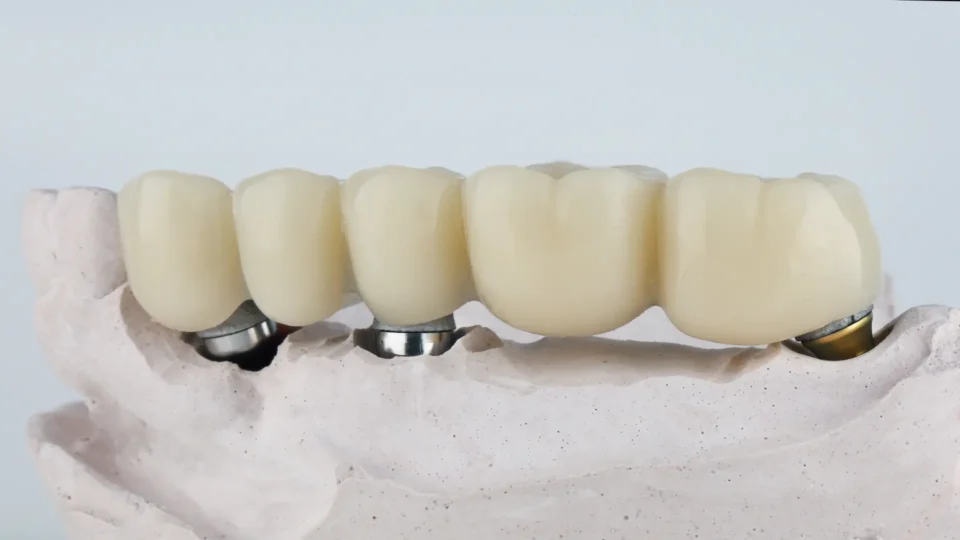
What is the Best Option to Replace Missing Teeth: Implants, Bridges, or Dentures?
Losing a tooth can leave you with a lot of questions, and one of the biggest is what to replace…
Are Digital Impressions Always More Accurate?
Not necessarily.
Digital dentistry is highly useful, but “digital” should not be interpreted as automatically superior for every patient and every type of treatment.
The accuracy of an intraoral scan can depend on:
- The scanner
- The size of the area being scanned
- The location of the teeth
- Moisture control
- Visibility of preparation margins
- Operator technique
- The type of restoration
- Whether teeth or implants are being scanned
- The length of an implant-supported restoration
For individual crowns and shorter tooth-supported restorations, digital impressions can provide excellent clinical results. A systematic review found digital and conventional techniques comparable in clinical time and marginal fit for tooth-supported prostheses, while digital scanning scored higher for patient comfort.
More extensive cases can be different.
The ADA has noted that although intraoral scanners can produce accurate impressions for individual crowns and shorter fixed restorations, some complete-arch applications may be less predictable than conventional impressions.
More recent research on full-arch cases also shows that the answer depends heavily on the clinical situation and technology being used.
The goal is not to use digital scanning simply because it is newer. It is to choose the impression method that makes sense for the individual treatment.
What Treatments Commonly Use Digital Impressions?
Digital scanning has become useful across many areas of modern dentistry.
Dental Crowns
After preparing a tooth for a crown, the dentist needs an accurate record of the prepared tooth, surrounding teeth, and bite.
A digital scan can send this information directly into the restoration design and laboratory workflow.
Bridges
Digital impressions may also be used when designing certain fixed bridges, depending on the number of teeth involved and the clinical situation.
Clear Aligners
Orthodontic aligner treatment relies on detailed models of the teeth.
Digital scanning can create the three-dimensional model used to evaluate tooth position and plan aligner movement without requiring traditional impressions.
Nightguards
Patients who grind or clench their teeth may need a custom nightguard. Digital scans can sometimes provide the dental laboratory with the model needed to fabricate the appliance.
Implant Restorations
Digital scanning is increasingly used for certain implant crowns and bridges.
However, complex full-arch implant cases can have different accuracy requirements, so conventional impressions, photogrammetry, digital scanning, or a combination of techniques may be recommended depending on the case.
Does Digital Scanning Mean You Will Get Your Crown the Same Day?
Not automatically.
Digital impressions and same-day crowns are related technologies, but they are not the same thing.
A dental office may digitally scan a tooth and electronically send the file to an outside dental laboratory. In that situation, the final crown still has to be fabricated and returned to the office.
Other practices may combine digital scanning with in-office design and milling systems.
The availability of same-day treatment therefore depends on the equipment, restoration material, complexity of the case, and workflow used by the dental practice.
Digital impressions can make information transfer faster without necessarily turning every restorative procedure into a same-day service.
What Happens During a Digital Impression Appointment?
The process is generally straightforward.
First, the dentist prepares the teeth as required for your treatment.
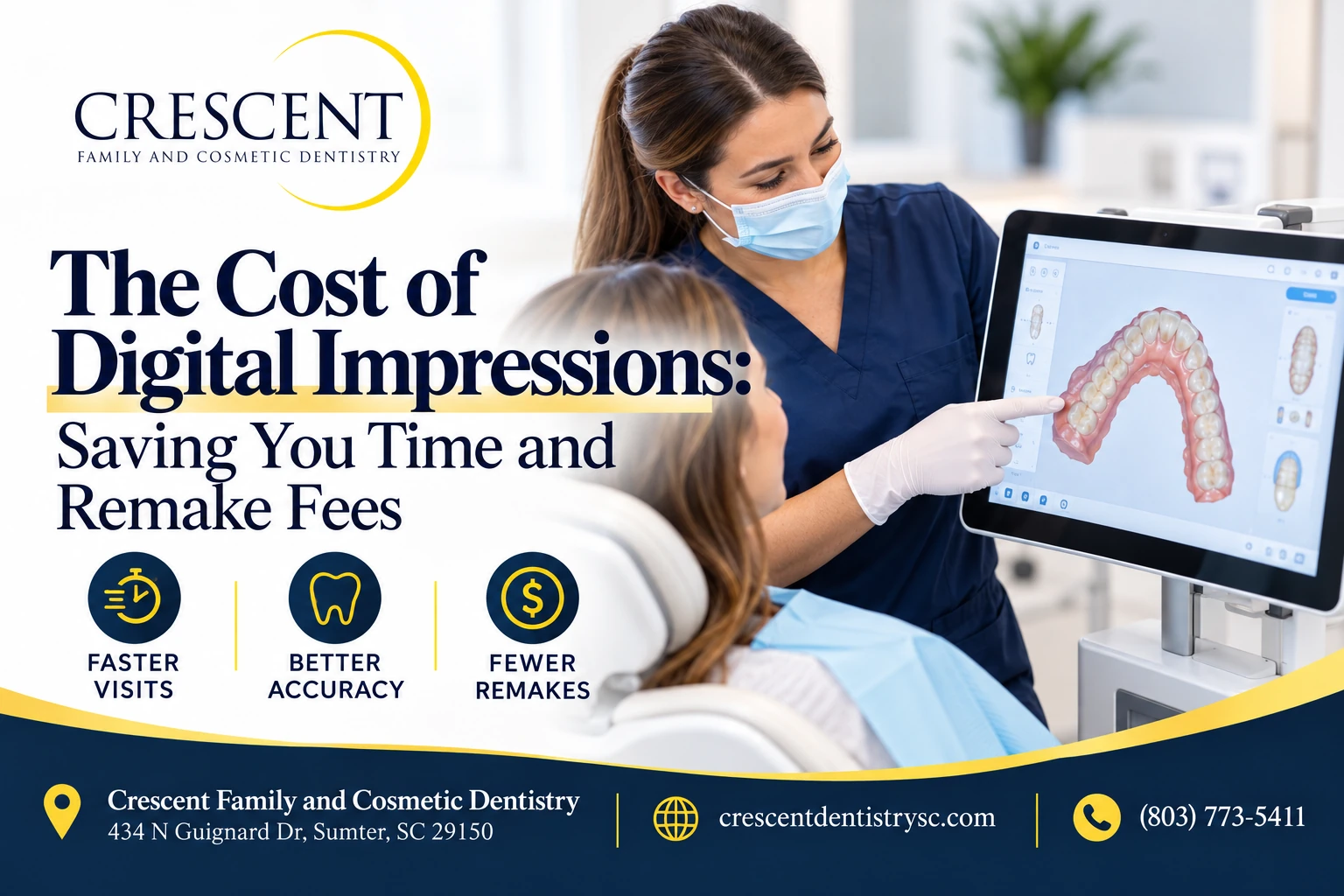
The dental team then uses the intraoral scanner to capture the necessary areas. You may see a three-dimensional model of your teeth appearing on a monitor as the scan progresses.
The dentist checks the scan for completeness and detail.
If another image is needed, the relevant area can often simply be rescanned.
Once the dentist is satisfied with the information, the digital file can be used for treatment planning or transferred to a dental laboratory.
For many patients, the process feels considerably different from biting into a tray of impression material and waiting for it to harden.
Is Paying for Digital Dentistry Worth It?
The value of digital impressions should be considered as part of the entire treatment rather than as one piece of equipment.
For an individual patient, benefits may include:
- Greater comfort
- No impression material setting in the mouth
- Easier scanning for patients with gagging concerns
- Immediate inspection of impression quality
- The ability to rescan a small area
- Electronic transmission to the laboratory
- Less risk of certain impression errors
- Potentially fewer repeat visits
- A more streamlined restorative workflow
There are still circumstances where a conventional impression may be preferable.
Ultimately, the best impression technique is the one that gives the dentist and laboratory the information required to create an appropriate restoration or appliance.
FAQs About Digital Dental Impressions
Are digital impressions more expensive than regular impressions?
Not necessarily. Digital scanning is often incorporated into the overall cost of treatment rather than charged as a separate service. Costs vary by procedure and dental office.
Will a digital impression prevent my crown from needing a remake?
No method can guarantee that a crown will never need adjustment or replacement. Digital scanning can help identify certain impression problems before the scan is sent to the laboratory.
How long does a digital dental scan take?
Scanning time varies according to how many teeth need to be captured and the type of treatment. Some digital workflows are faster overall, while research shows that chairside scanning time is not shorter in every situation.
Are digital impressions better for people who gag easily?
Many patients find them easier because there is no large tray filled with impression material. Studies generally report greater patient comfort and less gagging or nausea with digital impressions.
Can digital impressions be used for crowns?
Yes. Crowns are one of the most common uses for intraoral digital scanning.
Are traditional dental impressions still used?
Yes. Conventional impressions remain useful and may be preferred for certain complex restorative, removable, or implant cases.
Experience a More Efficient Dental Workflow at Crescent Family and Cosmetic Dentistry
A dental impression might seem like a small part of treatment, but the quality of that impression can influence everything that comes next. Digital scanning gives dentists the ability to capture detailed information, review it immediately, correct missing areas, and communicate electronically with dental laboratories.
For patients, those advantages can mean something even more practical: less time spent dealing with impressions, fewer opportunities for unnecessary repeat appointments, and a smoother path toward receiving the final restoration or appliance.
At Crescent Family and Cosmetic Dentistry, our team uses modern dental technology when it can improve the patient experience and support predictable treatment. We also recognize that every case is different, so the impression technique and treatment workflow should be selected according to your individual dental needs.
If you need a crown, bridge, dental appliance, or another treatment that requires an impression, contact Crescent Family and Cosmetic Dentistry to schedule an evaluation. We can explain the process, expected costs, and whether digital impressions are appropriate for your treatment.
Tired of Uncomfortable Dental Impressions?
Experience faster, more comfortable digital scanning with fewer adjustments. Call now to get started!