
“The Military Move Toothache”: How Relocation Stress Triggers Dental Emergencies
A toothache during a military move feels unfair.
You are already dealing with orders, housing, school changes, movers, paperwork, pets, kids, base access, and a new routine. Then a tooth that was “kind of bothering you” suddenly becomes painful right when you are trying to get settled in Sumter or Columbia.
Here is the honest answer: relocation stress does not usually create a dental problem from nothing. More often, it exposes a problem that was already there.
A small cavity, cracked filling, gum infection, wisdom tooth issue, or clenching habit can stay quiet for months. Then stress, poor sleep, schedule disruption, skipped dental care, and travel eating habits can push it over the edge.
For Shaw AFB families moving into the Midlands, this is common enough that it deserves a name: the military move toothache.
Crescent Family & Cosmetic Dentistry serves patients in Sumter and Columbia, South Carolina, including many military families who are trying to figure out what is urgent, what can wait, and how dental insurance may affect the next step.
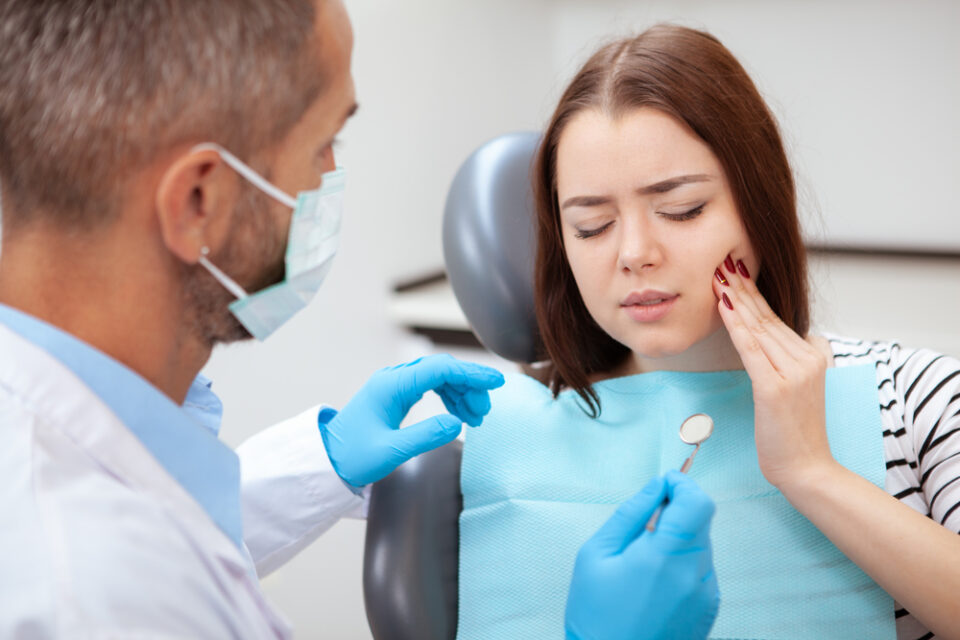
Toothache after a PCS move? Act fast.
Stress, disrupted routines, and travel can lead to unexpected dental pain. Our team is ready to provide relief when you need it most.
The direct answer: why teeth flare up during a PCS or relocation
Military moves can trigger dental emergencies because they combine several risk factors at once:
- More stress and jaw clenching
- Less sleep
- Delayed cleanings or unfinished treatment
- More fast food, coffee, energy drinks, and snacks
- Dry mouth from stress, medications, or travel
- Interrupted routines for brushing, flossing, retainers, and nightguards
- Difficulty finding a new dentist quickly
The American Dental Association notes that stress can contribute to teeth grinding, also called bruxism, and that grinding can cause jaw pain, headaches, tooth wear, and damaged teeth. Mayo Clinic also lists damaged teeth, jaw pain, headaches, and sleep disruption among possible bruxism problems.
That matters during a move because many people clench without realizing it. They do not wake up thinking, “I damaged my tooth last night.” They wake up with a sore jaw, sensitive molar, headache, or sharp pain when chewing.
In stressful appointments, how a dentist’s tone builds patient trust can matter just as much as the explanation itself, especially when someone is already dealing with pain, relocation pressure, and uncertainty.
Stress does not “invent” cavities, but it can reveal them
Most dental emergencies have been building for a while.
A cavity may have been slowly getting deeper.
A filling may have been leaking around the edge.
A crown may have had a small crack.
A wisdom tooth may have been partially trapped.
Gum inflammation may have been worsening quietly.
Then the move happens.
You miss your normal cleaning. You stop wearing your nightguard for a few weeks because it is packed in a box. You drink more coffee. You chew ice on the drive. You sleep poorly. You clench through the night.
Now that weak tooth is under more pressure than usual.
This is why a military move toothache often feels sudden, even when the dental problem was not sudden.
The most common dental problems that flare up during a move
1. Cracked teeth from clenching or chewing
A cracked tooth may hurt when you bite down, release your bite, chew on one side, or drink something cold.
This is one of the classic “it only hurts sometimes” dental problems. That does not mean it is minor. Cracks can spread, and once bacteria reach the nerve, the tooth may need a root canal or extraction.
Call a dentist soon if biting pain keeps coming back. Waiting until the tooth hurts constantly can limit your options.
2. Tooth sensitivity that turns into a toothache
A little cold sensitivity may come from gum recession, whitening products, clenching, enamel wear, or a small cavity.
But sensitivity that lingers, wakes you up, or turns into throbbing pain is different. That can mean the nerve inside the tooth is irritated or infected.
A good rule: brief sensitivity is usually less concerning than pain that lingers.
3. Abscessed tooth or dental infection
This is the one not to play around with.
A dental abscess is a pocket of infection. Mayo Clinic explains that an abscess can result from an untreated cavity, injury, or prior dental work, and treatment often involves draining the infection and treating the source.

Call a dentist promptly if you have:
- Swelling in the gum, jaw, or face
- A pimple-like bump on the gum
- Throbbing tooth pain
- Bad taste or drainage
- Fever
- Pain that keeps worsening
Go to urgent medical care or the ER if swelling affects breathing, swallowing, vision, or spreads rapidly. A hospital may not be able to fix the tooth, but spreading infection can become serious.
4. Wisdom tooth flare-ups
Relocation stress does not cause wisdom teeth, but it can make a partially erupted wisdom tooth flare up.
Food and bacteria can get trapped under the gum flap behind a back molar. That can cause swelling, bad taste, jaw soreness, difficulty opening, or pain that feels like it is coming from the whole side of the mouth.
This is especially common in younger adults and service families who have had dental care delayed during transitions.
5. Broken fillings or crowns
Old dental work can fail at inconvenient times.
A filling may chip. A crown may loosen. A temporary crown may come off. A tooth with a large old filling may fracture around the filling.
Do not assume “it does not hurt” means “it is fine.” A broken restoration can expose the tooth to bacteria and make a simple repair more complicated.

Best and Worst Foods for Your Teeth Explained
If teeth could talk, they would probably have strong opinions about your snack drawer. As dentists, we don’t just see…
Why military families near Shaw AFB are especially vulnerable
Military life adds a few dental-specific problems that civilians may not deal with as often.
You may be moving between dentists. Records may be at another office. Insurance may be confusing. A spouse may be trying to schedule care while also handling housing, school enrollment, and work. Kids may be overdue for cleanings. Adults may postpone their own dental care because everyone else’s needs come first.
And then there is the timing problem.
Dental pain rarely waits until your boxes are unpacked.
For families relocating to the Sumter area near Shaw Air Force Base, the first step is not necessarily committing to major treatment. Often, the first step is simply getting the tooth evaluated so you know whether it is urgent, watch-and-wait, or something that needs a treatment plan.
What you can do at home until you are seen
Home care can help you stay comfortable, but it cannot cure a cracked tooth, deep cavity, abscess, or failing crown.
Reasonable short-term steps include:
- Brush and floss gently around the area
- Rinse with warm salt water
- Avoid chewing on the painful side
- Avoid very hot, cold, hard, or sticky foods
- Use over-the-counter pain relievers as directed on the label, if you can take them safely
- Wear your nightguard if you already have one and it still fits properly
Do not put aspirin directly on the gum or tooth. It can burn the tissue.
Do not use leftover antibiotics without a dentist or physician telling you to. Antibiotics may temporarily calm some infections, but they usually do not fix the source of the dental problem.
Most importantly: do not wait on swelling.
What can wait and what cannot
Usually can wait a few days, but should be checked
- Mild cold sensitivity that goes away quickly
- Small chip with no pain
- Food getting caught around a tooth
- Mild gum soreness after flossing
- Lost filling with no pain, if the tooth is protected and you can be seen soon
Should be seen soon
- Pain when biting
- Toothache lasting more than a day
- Broken tooth
- Lost crown
- Sensitivity that lingers
- Jaw soreness with morning headaches
- Pain around a wisdom tooth
- Gum swelling near one tooth
Should not wait
- Facial swelling
- Fever with dental pain
- Trouble swallowing or breathing
- Rapidly worsening pain
- Drainage or pus
- Trauma to a tooth
- A permanent tooth knocked loose or knocked out
The goal is not to scare you. The goal is to help you avoid turning a manageable dental problem into a more expensive one.
The TRICARE Dental piece: do not assume “covered” means “free”
For many military families, the cost question is just as stressful as the toothache.
The TRICARE Dental Program is administered by United Concordia and is available to eligible military families, including eligible family members of active duty service members, National Guard and Reserve members, and their families.
But dental benefits still depend on the procedure, network status, eligibility, plan rules, annual maximums, and cost-shares.
So before you approve treatment, ask the dental office:
- Is this urgent or can it be planned?
- What procedure codes are being recommended?
- What is my estimated TRICARE Dental patient portion?
- Are there lower-cost alternatives?
- What happens if I wait?
- Is this a temporary fix or a long-term solution?
A good dental office should be able to explain this clearly. If a dentist cannot explain why you need treatment, ask more questions.
How to reduce the risk of a move-related dental emergency
The best time to deal with dental problems is before the moving truck arrives. But if that window has passed, you still have options.
Before a move
Try to schedule a dental exam before relocation if you have:
- A tooth that occasionally aches
- A cracked filling
- Wisdom tooth symptoms
- Bleeding gums
- A crown that feels loose
- A history of clenching or grinding
- Unfinished treatment
Ask for a copy of recent X-rays and your treatment plan before leaving your previous dentist.
During the move
Keep these items out of the moving boxes:
- Toothbrush and floss
- Nightguard or retainer
- Orthodontic aligners
- Dental insurance information
- Recent dental records, if available
- Temporary dental cement from a pharmacy, if you have a crown that has loosened before
After arriving in Sumter or Columbia
Do not wait for a crisis to establish care.
This is especially true if you already know you have a “watch area,” old crown, deep filling, gum disease history, or wisdom tooth issue.
The honest bottom line
A military move does not usually cause a dental emergency by itself.
It creates the perfect conditions for an existing dental problem to flare up: stress, clenching, disrupted sleep, skipped routines, delayed care, and diet changes.
If you are new to the Midlands, stationed near Shaw AFB, or settling your family in Sumter or Columbia, a toothache is not something you have to decode alone. Crescent Family & Cosmetic Dentistry can help you determine whether the problem is urgent, what your options are, and what your estimated out-of-pocket cost may look like before treatment begins.
The best dental visit during a move is not the one where you are pressured into care. It is the one where you leave understanding what is happening, what can wait, and what should not.
FAQs
Can stress really cause tooth pain?
Yes, stress can contribute to clenching and grinding, which can make teeth sore, crack weak teeth, irritate the jaw muscles, and trigger headaches. Stress usually reveals or worsens a problem rather than creating one from nothing.
Why did my tooth start hurting right after moving?
Common reasons include clenching, a cracked tooth, a deep cavity, gum inflammation, a sinus-related pressure issue, or an old filling or crown starting to fail. A dental exam is the only way to know which one is causing it.
Is a toothache always an emergency?
No. Some toothaches can be evaluated during a regular dental visit. But swelling, fever, severe pain, drainage, trauma, or trouble swallowing should be treated urgently.
What should I do if I have a toothache near Shaw AFB?
Call a local dentist and explain your symptoms clearly. Mention swelling, fever, pain level, whether biting hurts, and whether the pain wakes you up. If you are using TRICARE Dental, ask for an estimated patient portion before treatment when possible.
Can I wait until my military move is fully finished?
Sometimes, yes. But do not wait if the pain is worsening, the tooth is broken, there is swelling, or you cannot chew normally. Waiting can turn a simpler problem into a root canal, crown, extraction, or implant conversation.
Will antibiotics fix a dental infection?
Usually, antibiotics alone do not fix the source of a dental infection. The tooth often needs dental treatment, such as drainage, root canal treatment, or extraction, depending on the situation.
Military move causing tooth pain?
Relocation stress can trigger sudden dental emergencies. Get fast, compassionate care before a small ache becomes a major problem.