How Much Does a Dental Implant Cost in the Midlands in 2026?
A Local Price Guide for Sumter and Columbia, SC
Most people asking about dental implant cost are not just price shopping.
They are usually asking a more practical question: “What am I actually going to pay to replace this tooth, and what surprise costs should I watch for?”
Here is the straightforward answer.
Concerned About the Cost of Dental Implants in the Midlands in 2026?
Get transparent pricing, expert guidance, and a personalized treatment plan from trusted local implant specialists. Restore your smile with confidence and flexible financing options available.
How much does a dental implant cost in the Midlands, SC?
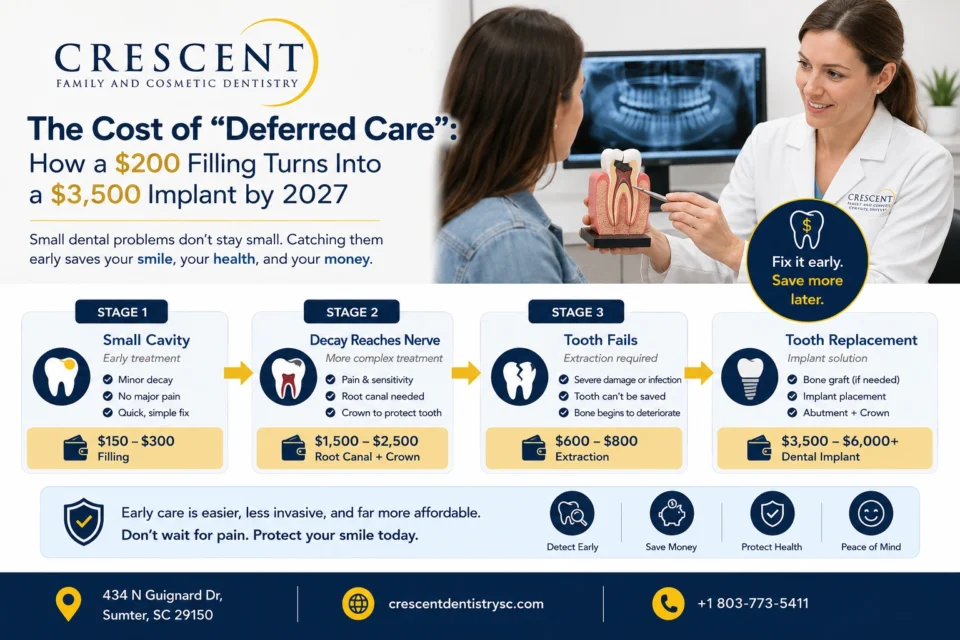
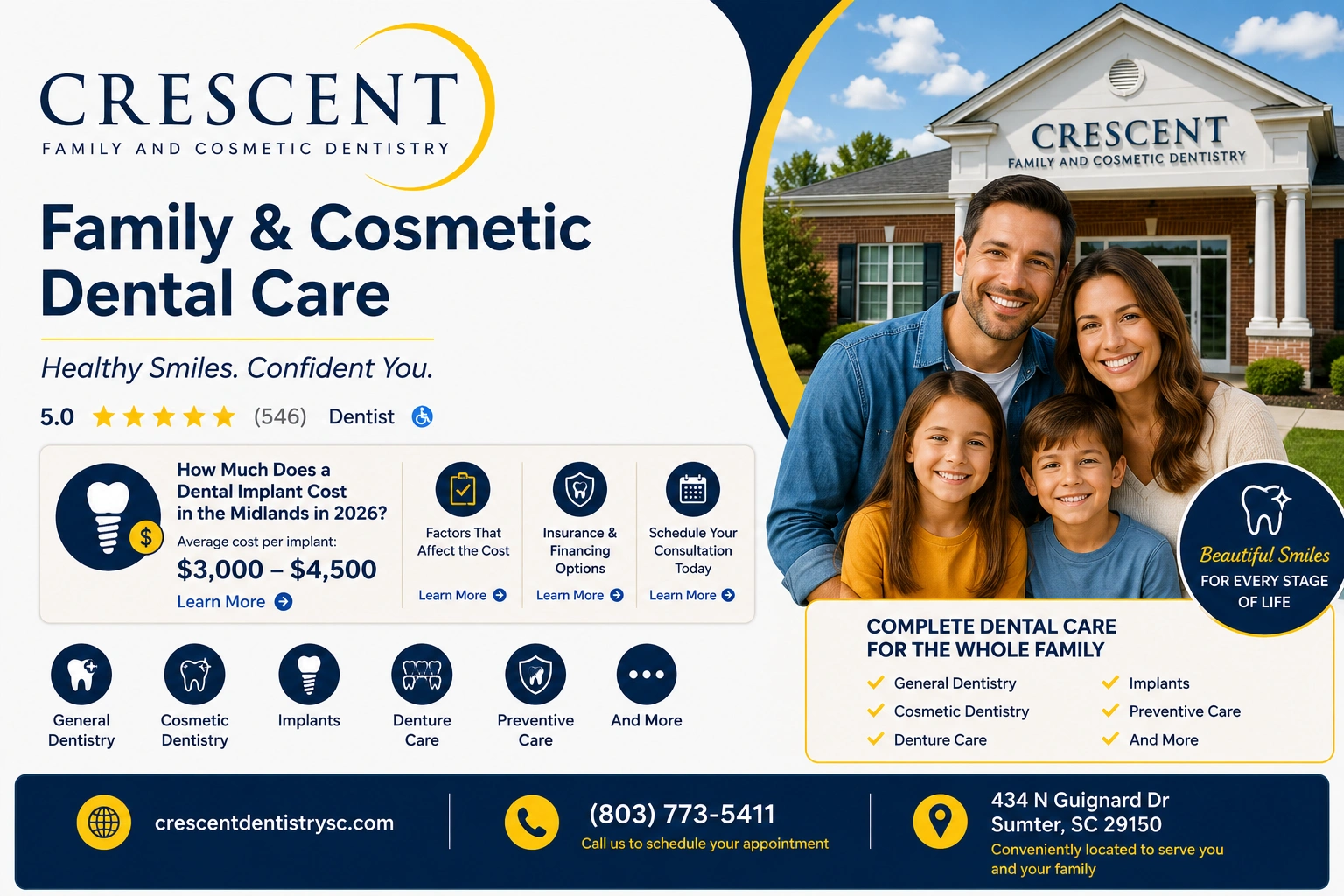
In the Midlands, including Sumter and Columbia, SC, a complete single-tooth dental implant typically costs about $3,000 to $6,000 per tooth in 2026.
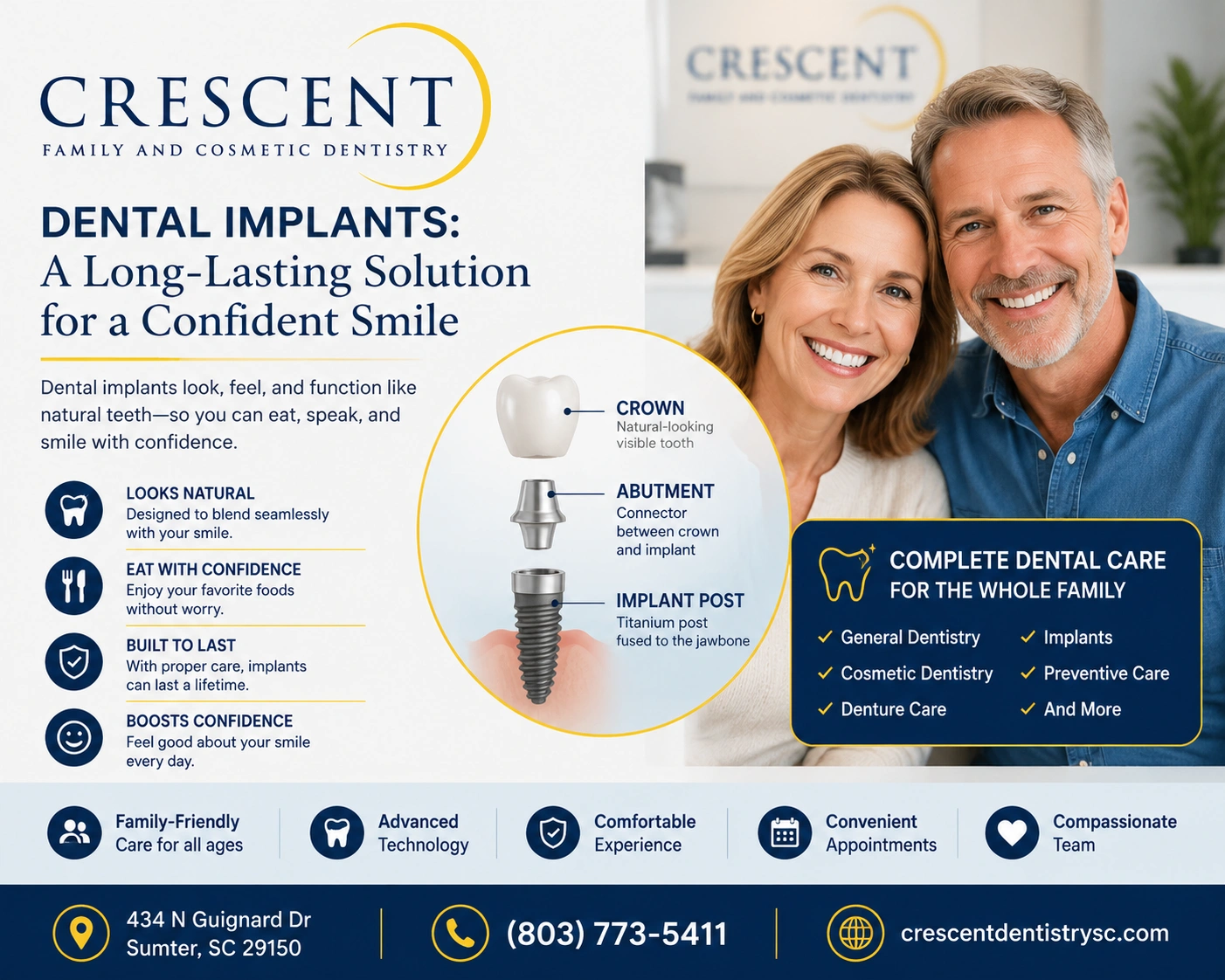
That usually includes three main parts:
| Part of the implant | What it does |
| Implant post | The titanium or ceramic post placed in the jawbone |
| Abutment | The connector between the implant and the crown |
| Crown | The visible tooth-shaped restoration |
Published South Carolina implant pricing shows single-tooth implant costs commonly falling around $2,400 to $5,500, while broader 2026 national guides commonly place complete single implants around $3,000 to $6,000. A Columbia-area implant provider publicly lists a standard single tooth implant starting at $3,749, which fits within that general Midlands range.
These numbers are planning ranges, not a diagnosis or quote. Your actual cost depends on your bone, gums, bite, tooth location, and whether you need additional treatment first.
At Crescent Family & Cosmetic Dentistry, with offices in Sumter and Columbia, we encourage patients to ask for a written treatment plan that separates the implant, abutment, crown, imaging, extractions, grafting, and any sedation fees. That is the only way to compare implant costs honestly.
Why dental implant prices vary so much
A dental implant is not one single item. It is a treatment process.
Mayo Clinic describes an implant as a post that replaces the root portion of a missing tooth, with a crown attached by an abutment to create the appearance and function of a real tooth.
That is why two patients can both say, “I need an implant,” but have very different costs.
1. Some patients only need the implant, abutment, and crown
This is usually the simplest case.
You may be in this category if:
- The tooth is already missing
- The bone is strong enough
- The gums are healthy
- There is enough space for the crown
- Your bite does not need major correction
These cases are more likely to fall in the $3,000 to $5,000 range.
2. Some patients need an extraction first
If the damaged tooth is still present, it may need to be removed before or during implant planning.
A simple extraction may add less than a complex surgical extraction. A cracked molar, infected tooth, or tooth broken below the gumline can make the case more involved.
3. Some patients need bone grafting
Bone loss is common after a tooth has been missing for a while. If there is not enough bone to support the implant, a bone graft may be recommended.
Cleveland Clinic explains that dental bone grafting can add density and volume to the jawbone and may be needed before implant treatment.
Bone grafting can add hundreds to several thousand dollars depending on the size of the defect, the material used, and whether a sinus lift or more advanced grafting is needed. This is also where dental implants and facial structure become part of the conversation, because maintaining adequate bone support can influence both implant planning and how the surrounding facial tissues are supported over time.
4. Front teeth can cost more than back teeth
Front implants are more visible. The color, gumline, contour, and shape matter a lot.
A back molar implant is mostly about strength and function. A front tooth implant has to function well and blend naturally when you smile. That extra cosmetic planning can affect the fee.
5. Sedation may or may not be included
Some patients are comfortable with local anesthetic only. Others need oral sedation, IV sedation, or a specialist involved.
Sedation can make treatment easier for anxious patients, but it may add cost.
Typical 2026 dental implant cost ranges in the Midlands
Here is a practical planning guide.
| Implant treatment | Typical 2026 cost range |
| Single dental implant with crown | $3,000–$6,000 |
| Extraction, if needed | Often $150–$600+ |
| Bone graft, if needed | Often $400–$2,500+ |
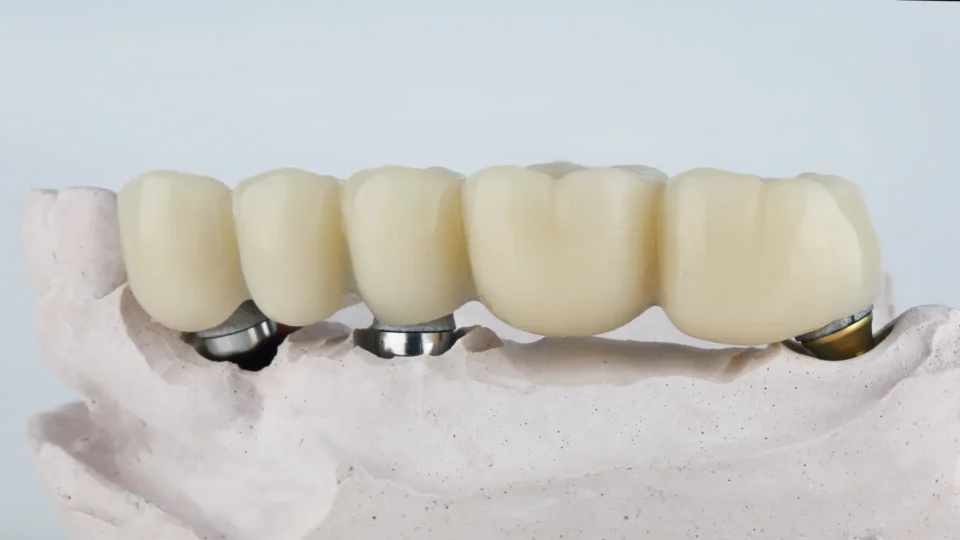
| Implant-supported bridge | Often $6,000–$15,000+ |
| Implant-supported denture | Often $8,000–$25,000+ |
| Full-arch fixed implant teeth / All-on-X | Often $18,000–$35,000+ per arch |
Full-mouth implant pricing varies the most because the design can be completely different from patient to patient. A removable implant denture is not the same as a fixed zirconia full-arch bridge. The number of implants, the material, the lab work, and the condition of the bone all matter.
National 2026 implant pricing guides commonly place full-mouth or full-arch implant treatment in a very wide range, often from the mid-five figures upward depending on technique and materials.
What should be included in a dental implant estimate?
Before you compare prices, ask what the quote includes.
A complete implant plan may include:
- Consultation
- 3D imaging or X-rays
- Tooth extraction
- Bone grafting
- Implant placement
- Healing cap or temporary tooth
- Abutment
- Final implant crown
- Lab fees
- Follow-up visits
- Nightguard, if needed for grinding
- Sedation, if requested or required
A low advertised price may only include the implant post. That does not mean the dentist is being dishonest, but it does mean you need to ask better questions.
The cheapest implant quote is not always the least expensive long term.
Does dental insurance cover dental implants?
Sometimes, but not always.
Some dental insurance plans help pay for part of implant treatment. Others exclude implants but may cover the crown, extraction, or other related procedures. Coverage depends on your plan, annual maximum, missing tooth clause, waiting periods, and whether the procedure is considered medically necessary or elective.
Many dental plans have annual maximums that are much lower than the full cost of implant treatment, so even when coverage exists, patients may still have significant out-of-pocket costs.
Before starting treatment, ask for a benefits review and a written estimate. Do not assume “covered” means “paid in full.”

Dental Implants and Facial Structure: What Changes and What Stays the Same
Most people think about dental implants in terms of teeth. Will they look natural? Will they feel secure? What often…
Are dental implants worth the cost?
For many patients, yes. But not for everyone.
Dental implants can be a strong long-term option because they do not rely on neighboring teeth for support, can feel more stable than removable appliances, and help replace the missing tooth root area. The Journal of the American Dental Association describes implants as an option for replacing missing or badly diseased teeth and notes that they can offer comfort and stability.
That said, implants are not magic. They require healthy gums, enough bone, good home care, and regular dental maintenance.
You may be a good fit for an implant if:
- You are missing one or more teeth
- You want a fixed replacement option
- You have healthy enough gums
- You have enough bone or are willing to consider grafting
- You do not have uncontrolled gum disease
- You are committed to cleaning around the implant
You may need a different option, or additional treatment first, if you have active gum disease, uncontrolled diabetes, heavy smoking, severe bone loss, or bite problems that put too much force on the implant.
Dental implant vs. bridge vs. partial denture: cost comparison
Dental implants are not the only way to replace a missing tooth.
| Option | Typical cost | Best for | Tradeoff |
| Dental implant | Higher upfront cost | Long-term single tooth replacement | Requires surgery and healing time |
| Dental bridge | Moderate to high cost | Missing tooth with strong neighboring teeth | Usually requires reshaping adjacent teeth |
| Partial denture | Lower upfront cost | Multiple missing teeth or budget concerns | Removable and often less stable |
A bridge may make sense if the neighboring teeth already need crowns. A partial denture may be reasonable if cost is the main concern or several teeth are missing. An implant often makes sense when the goal is a fixed, independent replacement that does not involve cutting down nearby healthy teeth.
For patients weighing dental implants vs. bridges, the best fix depends on the condition of the neighboring teeth, bone support, budget, and whether preserving adjacent healthy teeth is a priority.
Most people do not need the most expensive option. They need the option that fits their mouth, health, budget, and expectations.
When should you not wait?
A missing tooth is not always an emergency. But waiting too long can make treatment more complicated.
Call a dentist if:
- A tooth is cracked, loose, or painful
- You have swelling or drainage near a tooth
- A missing tooth is affecting your bite or chewing
- Teeth are shifting into the open space
- You were told you may need an extraction
- You want an implant but the tooth has been missing for months or years
If an infection is present, that should be evaluated promptly. If the tooth is already missing and comfortable, you may have more time to compare options, but it is still smart to get an exam before bone loss or shifting creates a more expensive problem.
The honest bottom line
In Sumter, Columbia, and the surrounding Midlands, a complete single dental implant in 2026 usually costs around $3,000 to $6,000.
The final price depends on whether you need an extraction, bone graft, sedation, temporary tooth, or more complex cosmetic planning.
The most important thing is not finding the lowest number. It is understanding exactly what is included and whether the plan is right for your mouth.
If you are comparing dental implant options in the Midlands, Crescent Family & Cosmetic Dentistry can help you understand whether an implant, bridge, partial denture, or another treatment makes the most sense. Our teams in Sumter and Columbia, SC can review your tooth, bone support, bite, and budget before you make a decision.
FAQs
How much is one dental implant in Columbia or Sumter, SC?
Most single dental implants in the Midlands fall around $3,000 to $6,000 for the implant, abutment, and crown. More complex cases may cost more.
Why did one office quote me less than another?
One quote may only include the implant post, while another may include the abutment, crown, imaging, extraction, grafting, and follow-up visits. Ask for an itemized estimate before comparing.
Is a dental implant cheaper than a bridge?
Usually, no. A bridge often costs less upfront. But an implant may be a better long-term value if it avoids reshaping healthy neighboring teeth.
Does getting a dental implant hurt?
The area is numbed during the procedure. Most patients feel pressure, not sharp pain. Soreness afterward is normal and usually manageable, but every case is different.
Can I get an implant if I have bone loss?
Sometimes, yes. Bone loss does not automatically rule out implants, but you may need bone grafting or a different implant design.
Will insurance pay for my dental implant?
Some plans help with part of the cost, but many do not cover the full procedure. Ask your dental office to check your benefits before treatment begins.
Need a Clear Answer on Dental Implant Costs in the Midlands?
Avoid hidden fees and confusing quotes. Get honest pricing, advanced implant care, and expert recommendations to help you make the right decision for your smile.